
Vladyslav Pobyva
May 11, 2026
Vladyslav Pobyva
May 11, 2026

2026 looks like the year of major shifts — we’ll need to rethink many proven strategies that are gradually becoming stale and outdated. The mobile app marketing trends of the previous year can show us exactly which direction to move in and where to focus most of our efforts.
The industry has entered a new phase, shaped by privacy restrictions, mature AI, and the rising costs of B2C and mobile customer acquisition.
This article analyzes how the market is changing to help you make your own app marketing predictions and prepare for the future. Use it as your mobile app marketing guide to refine your app marketing strategy for 2026 and beyond.
But first, a brief market overview.
In 2025, we witnessed several major milestones in mobile marketing happening simultaneously:
Global app marketers invested around $78 billion into user acquisition, which is 13% higher year over year.
73% of marketers reported that significant privacy changes were impacting their app marketing strategy.
More than 51% of surveyed marketing teams now use AI to optimize content and critical operations.
Remarketing and retention have taken center stage, with marketers spending 37% more year over year — $31.3 billion in 2025 — on re-engagement initiatives.
The following mobile app marketing insights highlight the key shifts and signals that every B2C marketer must consider when adapting to the market in 2026. Let’s take a closer look.
To stay competitive in mobile marketing, you need to provide seamless transitions across customer channels and platforms. Users no longer stay in one app or on one website page for long; they are constantly searching for the next best action.
Today’s customer journey typically spans multiple devices and touchpoints, including ads, social media, websites, email, and apps. Users expect omnichannel outreach and cross-platform experiences that allow them to move freely from discovery to purchase.
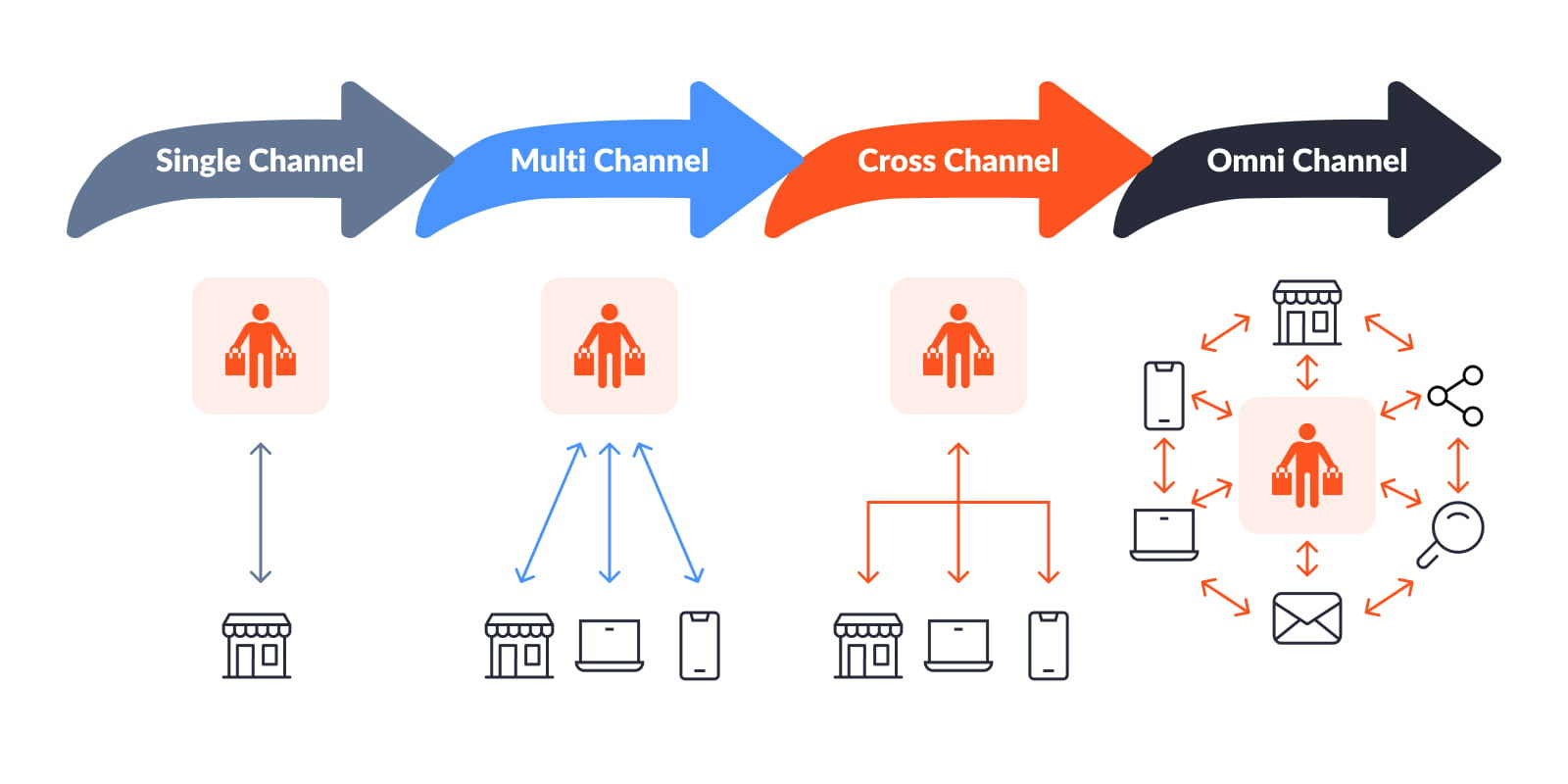
Market data clearly supports this:
It's your task to move potential customers seamlessly through your app marketing funnel and across other touchpoints.
AI has matured enough to be used safely in critical operations and marketing decisions. Instead of simply assisting with analysis, AI now recognizes context and sentiment, segments users, and enables behavior-based targeting.
Overall, AI continues to gain momentum:
However, AI is never fully autonomous. While its adoption is impressive, it still requires human-in-the-loop management, especially for strategic and high-impact decisions.
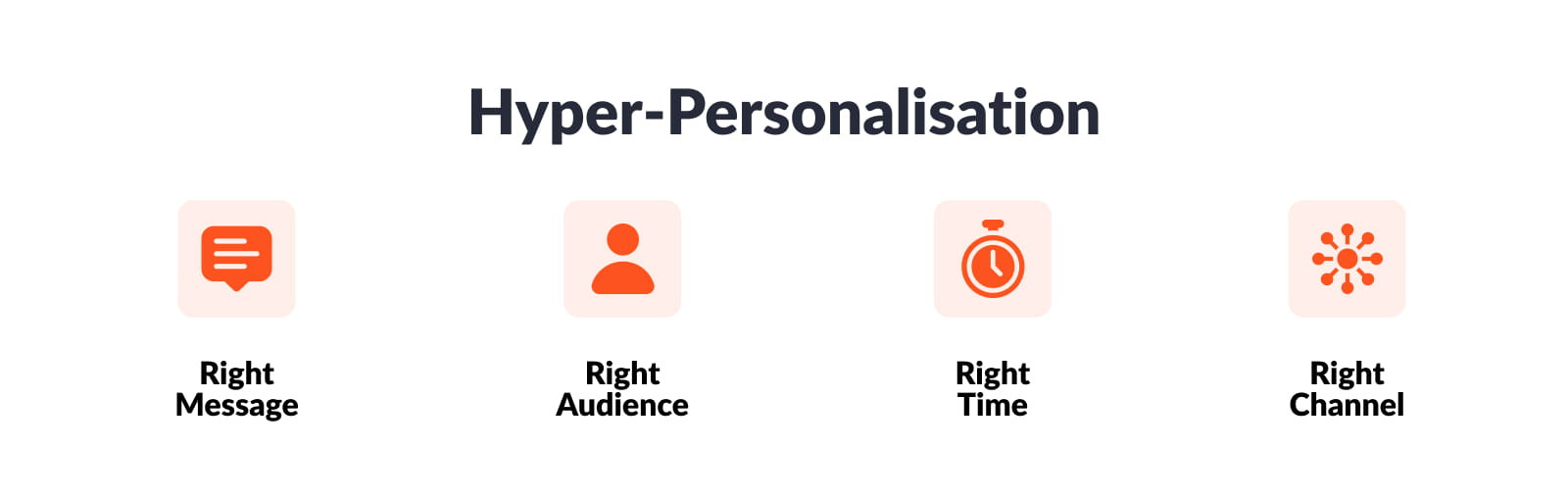
Behavioral/contextual analytics, in-depth AI targeting, and real-time user screening drive hyper-personalization. Instead of simply grouping lookalike audiences by age, location, or basic preferences, you can treat each potential customer individually. Even the basic chatbots have evolved to support complex, personalized messaging.
Here’s what the latest mobile app marketing insights show:
Furthermore, companies that focus on individual experiences and personalized re-engagement reportedly achieve:
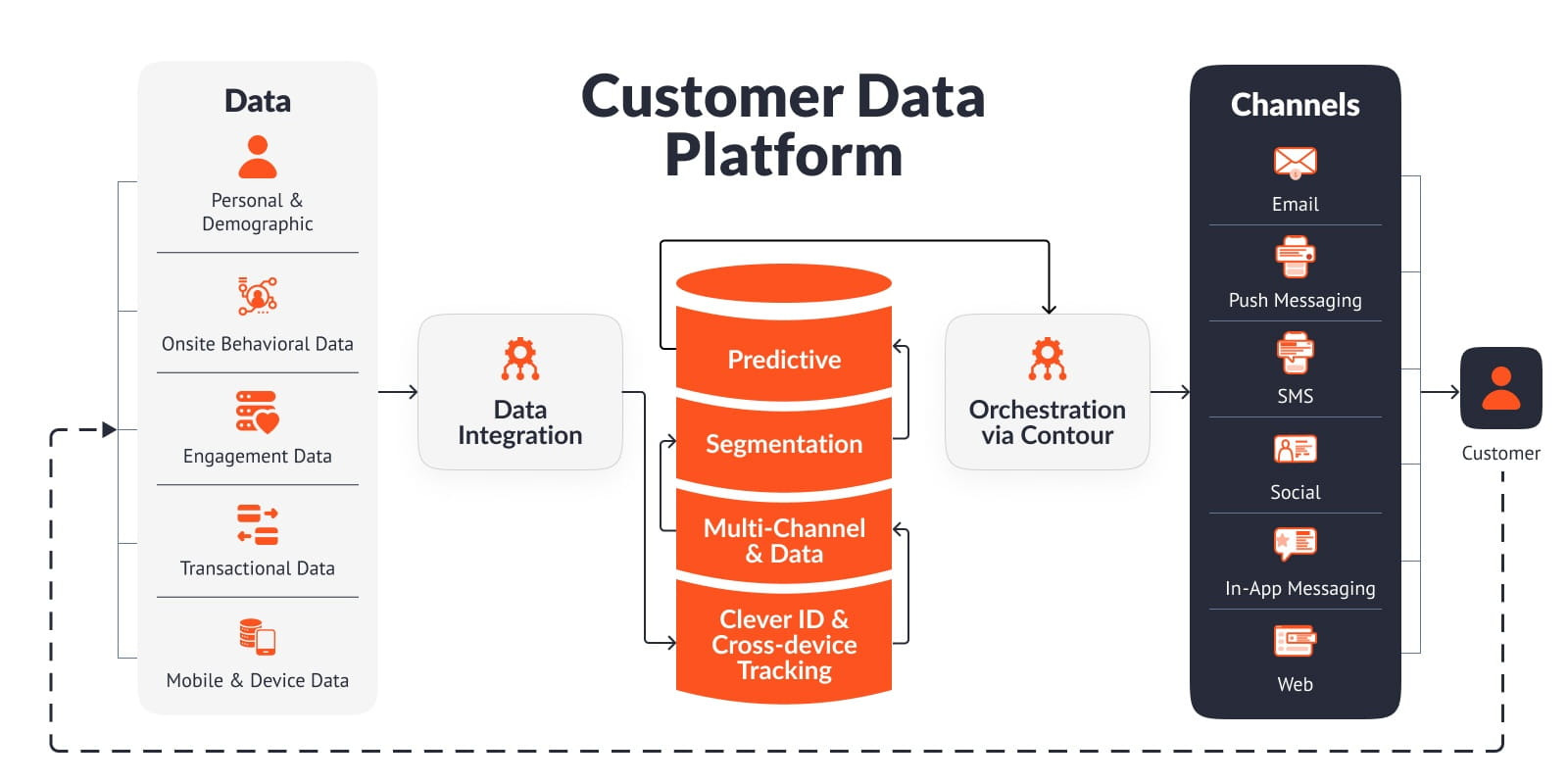
Most marketing teams today are overwhelmed with data: they now use 230% more data than in 2020. At the same time, 56% of the same teams report lacking the tools needed for proper analysis and value realization. Specifically, the teams must collect fragmented data from dozens of tools and systems.
The average organization uses 20+ platforms to manage marketing data, while only 3% of marketers can fully unify customer data across channels. This creates a paradox where companies are data-rich but insight-poor.
It has also become more challenging to access high-quality data, with 42% of marketers dealing with siloed or difficult-to-access information.
The main challenge, however, is data quality:
More relevant mobile app marketing insights show that acquiring new customers is becoming increasingly expensive and less predictable. Customer retention, on the other hand, offers sustainability and significantly higher ROI in the long run.
Here are the key numbers:
Returning users are more likely to convert and are much cheaper to re-engage through profile-based win-back campaigns and in-app engagement strategies such as personalized push notification strategy, user lifecycle messaging, and other custom loyalty-building mechanics.
Thus, re-engagement outperforms acquisition, while retention delivers real ROI — repeat users can generate up to 40% more revenue than new users.
Creative elements have become essential to personalized campaigns, now driving tangible results rather than just a small fraction of extra value. With growing privacy demands limiting targeting options, the quality of creatives can help offset these limitations and optimize campaign performance.
Users have also refined their expectations. People are exposed to thousands of ads daily, and attention spans continue to shrink — only highly relevant and engaging creatives can break through the noise.
The performance data shows that:
With paid acquisition going slightly out of the spotlight, marketers are rediscovering the power of owned channels, which include push notifications, email outreach, and direct messaging, even via SMS, for added impact.
Unlike paid app install campaigns, these channels give you direct access to your audience without recurring acquisition costs.
The performance gap is already visible in the data:
The growing importance of personalization, omnichannel interactions, and content quality leads to one conclusion: user experience has become one of the strongest marketing outcomes. The experience you offer must be accessible, relevant, and consistent.
Market stats show the following:
Takeaway: users form impressions within milliseconds, and if onboarding feels confusing, slow, or irrelevant, they leave without hesitation. The quality of user experience today directly translates into real marketing results and tangible profits.
There is a major shift in prioritized KPIs. Installs, clicks, impressions, and other vanity metrics are being overshadowed by the indications of real, long-term value — engagement, retention, and revenue. Organic traffic remains important, but the raw number of downloads doesn’t equal value.
Let’s take a look at the numbers:
This has led marketing teams shift focus on metrics that reflect real value creation, such as:
Marketing automation has become accessible to nearly everyone — thanks to the mature AI, businesses can now automate customer communication and interactions easily and safely. However, this has created a highly competitive environment in which everyone is innovating, making differentiation harder.
Here’s what related mobile app marketing insights reveal:
To leverage all of the mobile app marketing insights above, you need a reliable partner who knows how to turn data into real business value. Reteno enables intelligent lifecycle messaging and customer retention through advanced technology.
Reteno will help you:
Your mobile growth strategy is only as efficient as the timing and relevance of your decisions. The collection of app growth insights above serves as your checklist of priorities for competitive B2C mobile marketing. And if you need some professional guidance, be sure to contact Reteno for hands-on mobile app growth optimization.
(1).png)
(1).png)
.png)

Myroslav Protsan
|
July 18, 2025
Uncover the role of mobile engagement in app retention, how it works behind the scenes, and how to apply it to grow a loyal user base

Reteno
|
September 21, 2022
Learn how to measure your success in promoting a mobile app: the main KPIs to your attention

Are your pushes as compelling as they could be? Find out with our free preview tool. Instantly see how your notifications will display on iOS and Android, in both expanded and collapsed views.
This is your chance to fine-tune your messages to ensure they're not just seen but felt. Make every character and every push work harder for your engagement goals


