
George Johnson
Expert Writer
March 23, 2026
George Johnson
Expert Writer
March 23, 2026

According to a recent report by McKinsey, companies that successfully implement omnichannel marketing retain 89% of their customers. It’s clear that the more often consumers encounter your product and messaging across channels, the more likely they are to make a purchase. That’s why implementing an omnichannel customer engagement strategy has become essential in today’s competitive market.
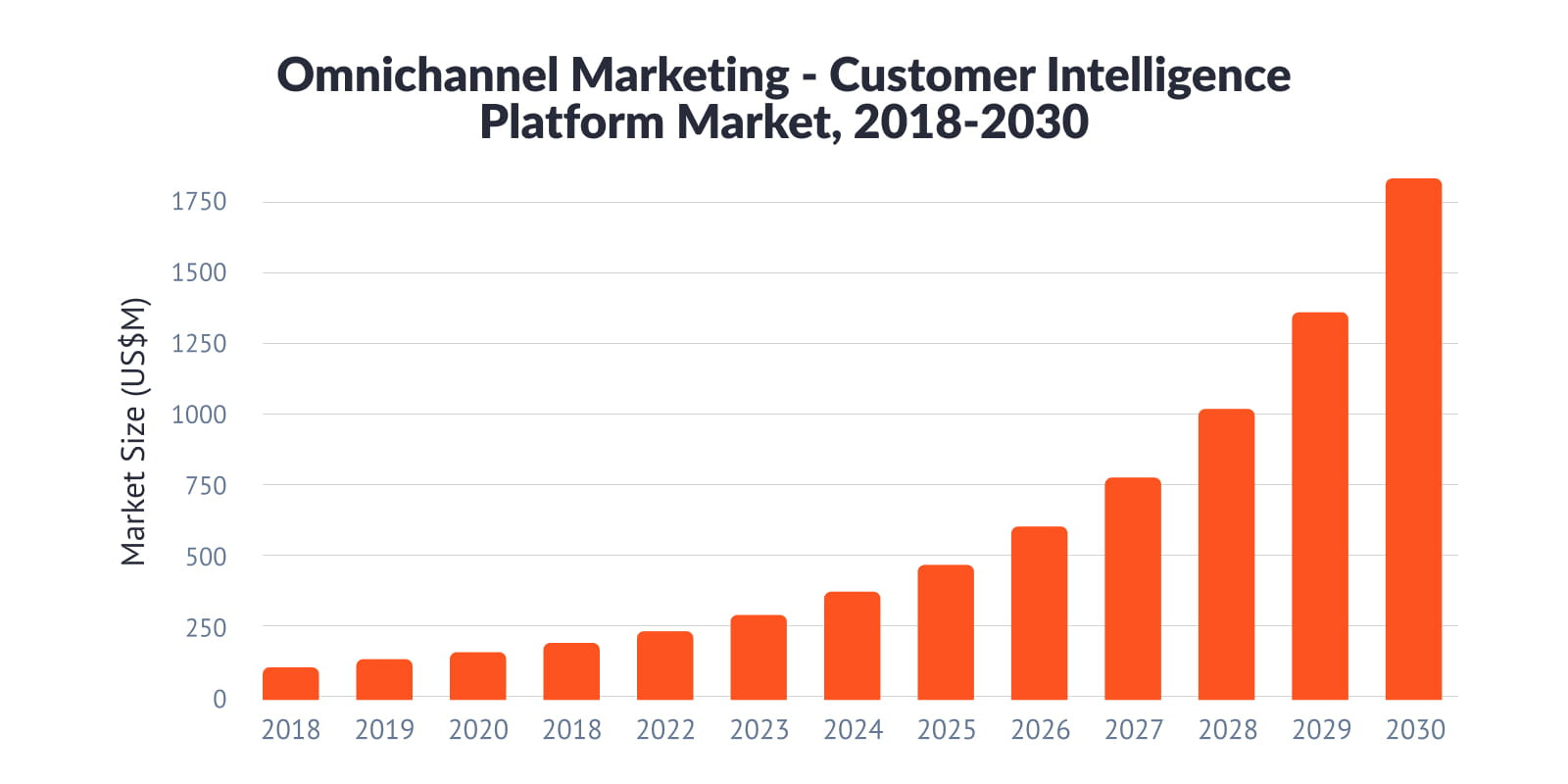
In this guide, you’ll learn about the benefits, approaches, and best practices of omnichannel customer engagement from Reteno’s marketing experts with years of industry experience. Read on for more!
Omnichannel customer engagement is a cross-channel strategy that provides customers with a seamless and integrated experience across all brand interactions. Although it may seem similar to multichannel marketing, there’s a key difference:
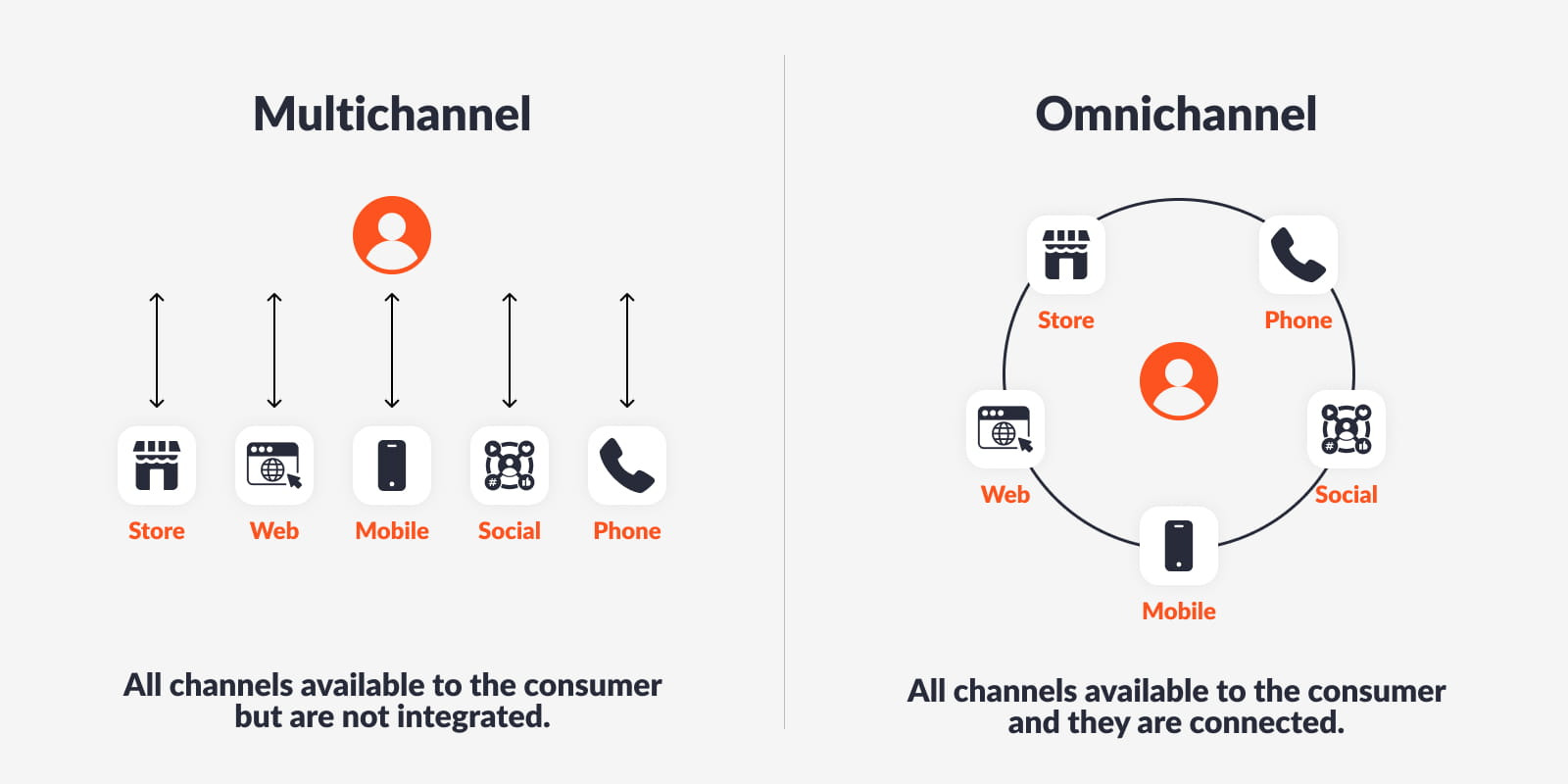
For example, if a user adds an item to their cart on a desktop but doesn't see it reflected in the mobile app, it creates a negative experience. That’s why you should focus on omnichannel engagement. It solves this issue by ensuring that every interaction is a natural continuation of the previous one.
Omnichannel customer engagement integrates all communication channels into a single platform, combining customer data to create a unified customer profile. Instead of treating an email subscriber and a mobile app user as two separate individuals, an omnichannel customer engagement platform uses event tracking and behavioral data to recognize them as the same customer. This allows marketers to deliver consistent experiences across all channels.
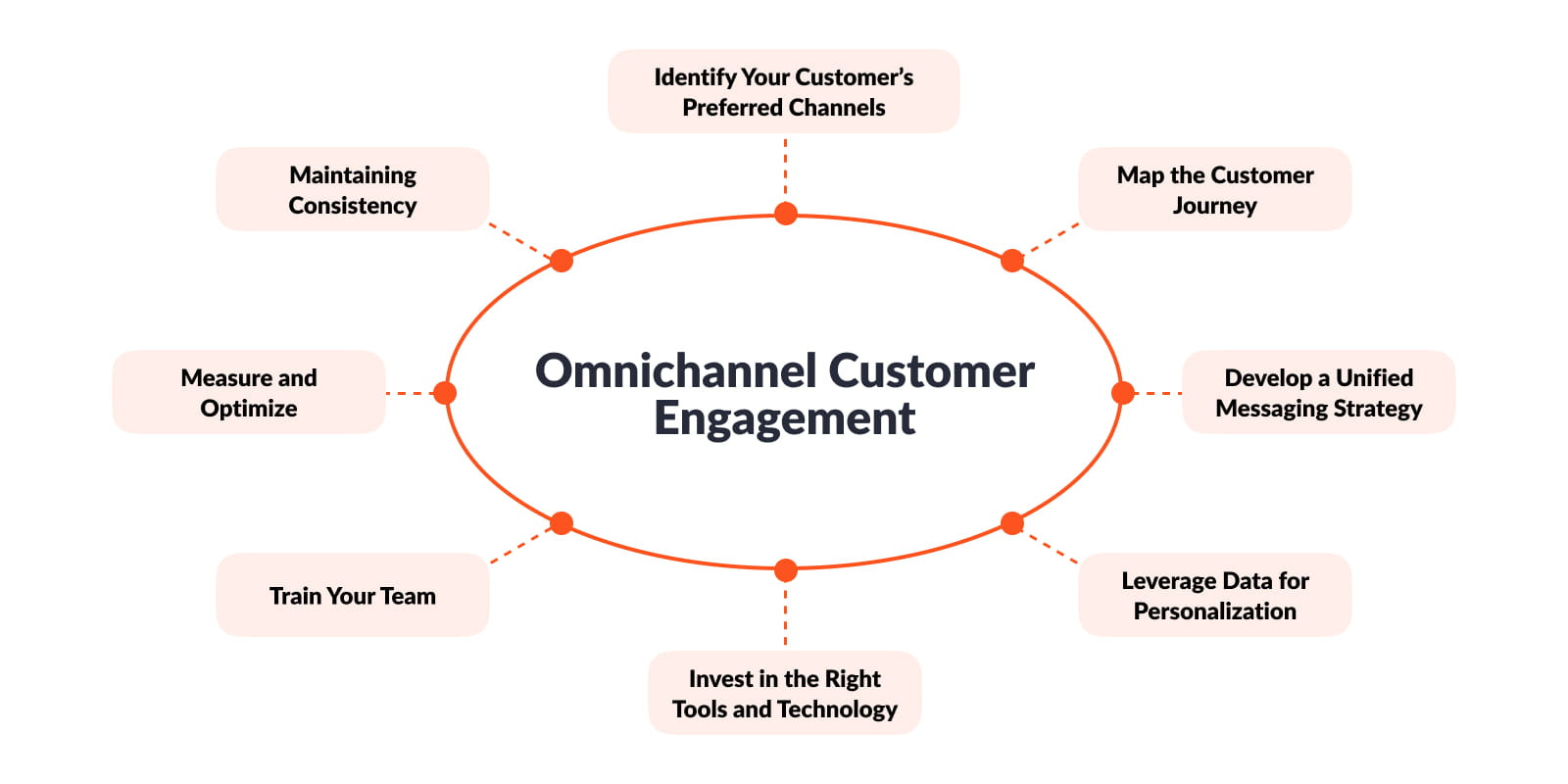
The process usually includes six main steps:
For example, Starbucks is one of the largest companies successfully implementing omnichannel engagement. Customers are often asked to enter their email addresses to access free Wi-Fi in Starbucks’ brick-and-mortar stores. Since these emails are connected to loyalty programs, Starbucks gains immediate visibility into users’ activities and purchases. This allows the brand to send relevant promotions, rewards, and other personalized offers.
Let’s take a look at the advantages of implementing an omnichannel strategy.
Users receive the same experience across all channels: chatbots, emails, mobile apps, social media, and more. Synchronizing user engagement across platforms creates consistency, which strengthens brand recognition and builds trust. That’s what you should be targeting.
A well-designed omnichannel customer journey often leads to improved retention. By using lifecycle messaging across multiple channels, brands remain visible and helpful without being intrusive. As a result, the churn rate naturally decreases.
Omnichannel marketing removes friction across all customer touchpoints. This makes it easier for customers to stay connected with your brand and continue purchasing. When the buying process is simple and intuitive, people have little reason to look for alternatives.
An omnichannel customer engagement platform enables you to collect higher-quality data. You can observe how users interact across different channels, gaining a complete view of their behavior. This improves your customer segmentation and increases marketing precision.
Implementing standard omnichannel customer engagement models gives support teams access to a unified interaction history. This allows them to resolve issues faster, eliminating the need for customers to repeat their problems multiple times. As a result, businesses benefit from higher customer satisfaction (CSAT) and a stronger Net Promoter Score (NPS).
Successful omnichannel engagement requires combining the right technology with proven industry practices. Reteno’s marketing experts recommend focusing on the following areas.
Don’t try to be everywhere at once. Instead, identify which channels are the most popular among your audience and focus your efforts there first. For example, if customers frequently use your mobile app, prioritizing push notification best practices and in-app messaging is more effective than sending marketing emails.
Reteno supports multiple channels, including mobile push, email, SMS, web push, in-app messaging, app inbox, and messengers. This allows you to cover every communication channel effectively.
You cannot improve what you don’t understand. That’s why detailed customer journey mapping is essential. By visualizing the user’s path from discovery to purchase, you can identify the best moments to engage and prevent users from abandoning their carts.
Reteno’s unified customer profiles and event-driven workflows help map user behavior comprehensively. Integrated events and triggers highlight key actions such as onboarding completion, cart abandonment, or churn risk — all crucial for optimizing your omnichannel engagement strategy.
Every brand follows a specific tone of voice that helps it stand out from hundreds of competitors. If your brand voice is playful in physical stores but overly formal in online messaging, the experience becomes inconsistent. All your communication should maintain a unified style to create a cohesive brand image.
As Reteno unifies user identities into a single profile, you’ll be able to easily segment your user base and target each group with personalized messages.
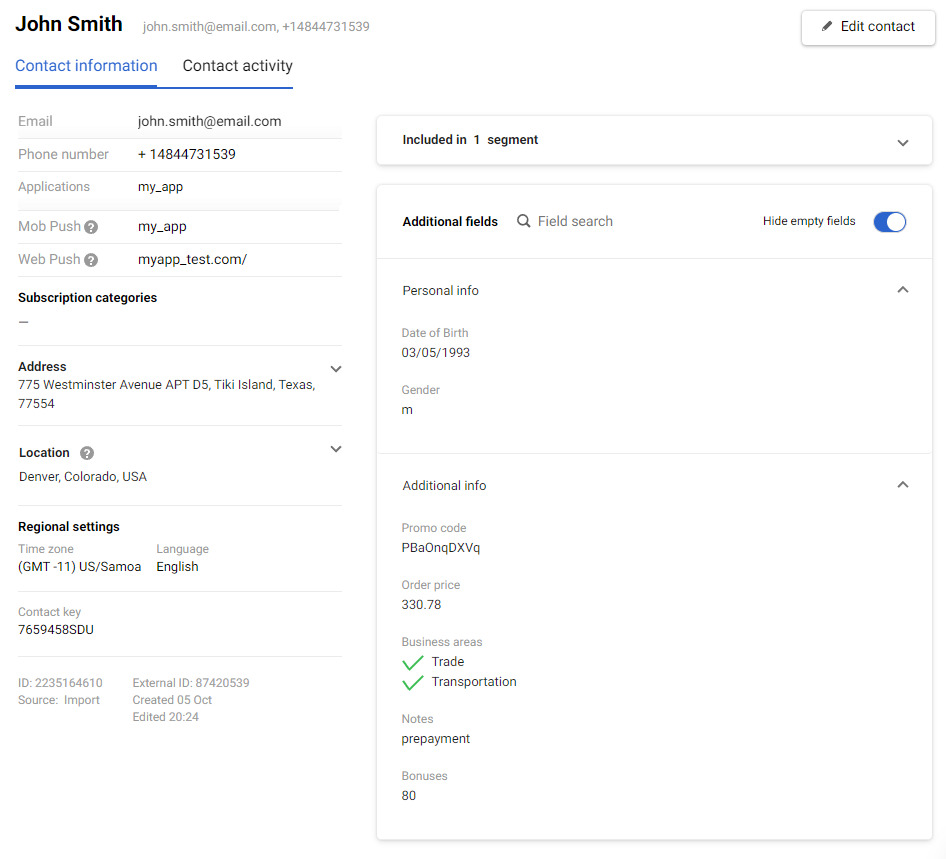
Disconnected tools often disrupt the user experience in omnichannel customer engagement. You need a platform with integrated personalization engines and unified user events. This ensures your workflow decisions reflect the latest customer behavior rather than scattered, siloed data sources. A single source of truth prevents inconsistent messaging and keeps your team aligned.
Generic messaging no longer works. You need to use behavioral data from customer profiles to enable personalization. This includes names, purchase history, visited locations, and many other valuable data points.
Use Reteno’s AI-powered personalization to deliver individualized content, product recommendations, and optimized message timing. This increases the relevance of your messages and encourages users to take action.
When users encounter a problem, they typically have two options:
Most users prefer resolving issues independently. Integrating chatbots and FAQ hubs into your omnichannel engagement strategy allows customers to find solutions faster. Reteno supports custom widgets that can direct users to your self-service hub or connect them with an agent.
Track and optimize key metrics like customer lifetime value (LTV/CLV), repeat purchase rate, and other indicators relevant to your business. Reteno’s A/B testing automation helps optimize messaging, timing, and campaign sequences, allowing you to quickly discover what works best for your customers.
Let’s take a look at how modern brands apply omnichannel customer engagement.
Target integrates online browsing, mobile engagement, and physical stores through a unified omnichannel fulfillment experience. Customers can:
Real-time inventory signals are shared across online and offline systems, so customers never feel frustration caused by inaccurate availability data. This improves the post-pickup experience and reduces abandoned orders.
Starbucks has built one of the most successful omnichannel customer engagement programs by connecting its mobile app, website, and physical stores through the Starbucks Rewards program. Customers can:
In the U.S., Starbucks Rewards has reached 34.3 million active users, with app users visiting physical stores at a significantly higher frequency. Data shows that app users make weekly visits far more often than non-members. If you’re looking for a way to increase active users on your mobile app, this approach is one of the most effective.
Nike uses its Nike Membership ecosystem (mobile app combined with online and physical stores) to create a cohesive omnichannel customer engagement strategy:
Nike’s strategy removes traditional channel silos. Instead of separate online and in-store experiences, customers move fluidly between them, with membership acting as the bridge.
Most businesses struggle with fragmented customer experiences and inconsistent messaging across various platforms. As a result, they experience reduced conversions and lose potential customers. Fortunately, these challenges can be prevented with the right approach.
Reteno solves these issues by unifying customer data and orchestrating personalized omnichannel customer engagement across every touchpoint. With intelligent segmentation and real-time event tracking, Reteno empowers brands to deliver targeted experiences at scale. You’ll get access to:
Combine these channels, and you’ll create a personalized omnichannel engagement strategy that keeps customers connected with your brand. Ready to improve your engagement? Let’s talk!
Omnichannel customer engagement is the modern marketing standard that helps businesses retain customers by providing a consistent experience. By combining industry best practices with Reteno’s technological solutions, you can easily meet user expectations and create seamless interactions across every channel.
Book a free demo today and try it for yourself!
(1).png)
(1).png)
.png)
.jpg)
Alex Anikienko
|
July 2, 2025
Unlock 3× campaign ROI with the data-backed guide to full-funnel messaging automation

Kseniia Petrina
|
October 31, 2022
Learn the secrets of attracting new customers through your existing audience

Are your pushes as compelling as they could be? Find out with our free preview tool. Instantly see how your notifications will display on iOS and Android, in both expanded and collapsed views.
This is your chance to fine-tune your messages to ensure they're not just seen but felt. Make every character and every push work harder for your engagement goals


