
George Johnson
Expert Writer
March 16, 2026
George Johnson
Expert Writer
March 16, 2026

Mobile push notifications and in-app messages are powerful digital tools. Specialists in mobile app marketing leverage them for user onboarding, proactive support and alerts, content updates, abandoned cart recovery, mobile engagement, promotional messages, customer feedback requests, you name it. And their effectiveness can be increased exponentially when personalization is applied.
This article defines personalized text messaging, explains its importance for marketing campaigns, describes how to implement personalized communication with your customers, and walks through best practices for message personalization, illustrated with real-life examples.
Today, many business strategies revolve around lifecycle marketing. This approach prioritizes guiding consumers throughout their customer journey, from initial awareness or brand loyalty and advocacy. Digital-first brands put this into practice through timely, relevant messages delivered via email, in-app messaging, SMS, and mobile push notifications.
Simple as it may seem, many entrepreneurs fail to achieve the results they expect. Why? They rely on the outdated batch-and-blast approach, which aims to reach as many consumers as possible with identical messages. While it achieves reach, such communication often feels impersonal and detached. As a result, recipients ignore, delete, or never even open these messages. You can avoid this outcome by switching to tailored, omnichannel messaging and implementing email personalization, push notification personalization, and other forms of dynamic content.
In contrast, personalized messaging adopts a customer-centric approach. Marketers create a verified email list and then they send personalized emails and push notifications. These messages include details like name, age, location, and device type. They also offer product recommendations based on the customer’s purchase history, preferences, and interests. These personalized messages form the backbone of event-based marketing, where company-client interactions are filled with event-triggered messages sent when the recipient reaches a milestone, buys a product, abandons a shopping cart, installs an app, visits a certain webpage, and more.
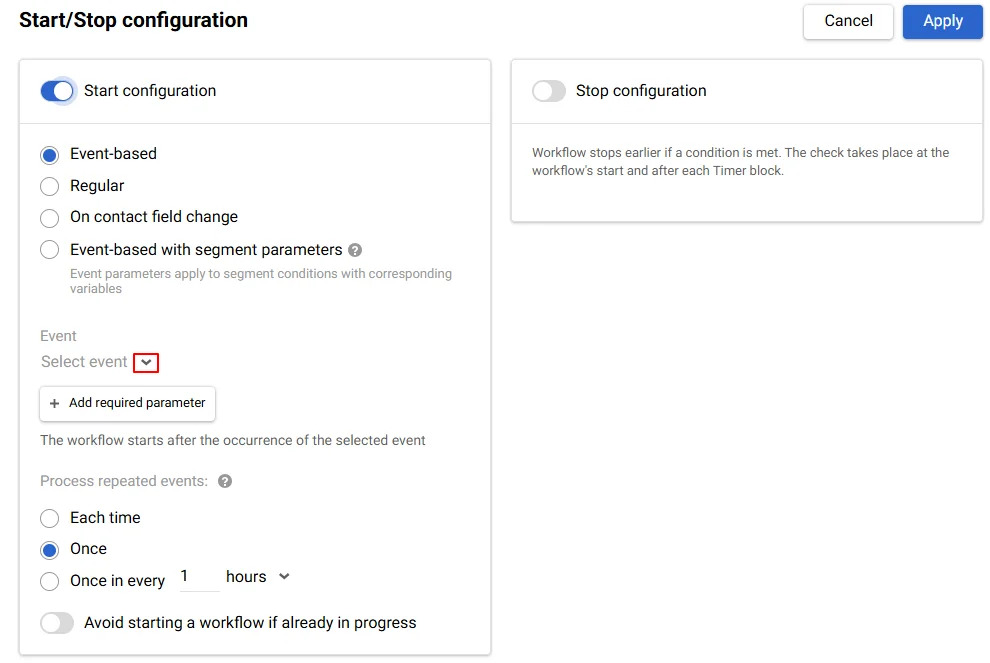
By implementing message personalization at scale, companies gain several key advantages:
The final point is not only the outcome of personalized messages. In fact, it is also a necessary prerequisite.
When gathering customer data, follow this five-step framework.
The most accurate and reliable data is the data your company collects directly. This includes email communications, lead forms, surveys, customer support interactions, and user activity on your website, app, or social media pages. These interactions provide valuable insights into customer preferences and pain points.
User behavior can be monitored through website and app analytics. Google Analytics, for example, provides data on which pages users visit most frequently, how long they stay, and which actions they take. Apps often include analytics capabilities that provide various engagement metrics and support in-app behavior monitoring.
Event tracking for websites is impossible without dedicated tools (such as Google Tag Manager, Heap, and others) and vendor-specific SDKs (for apps). They enable you to set up event parameters, deploy tracking snippets, and automatically capture user interactions to be later used in personalized messaging.
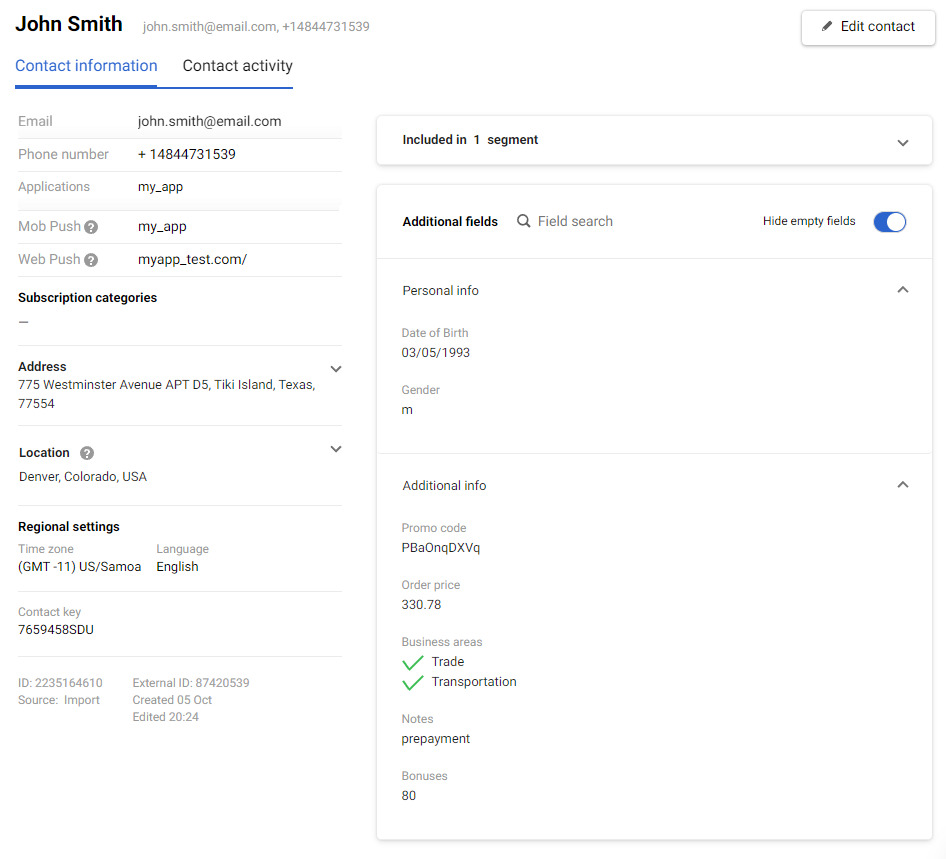
The best channels to discover those are your website and social media analytics solutions, as well as your CRM. Besides, you shouldn't ignore direct questionnaires, surveys, polls, and sign-in forms. These sources help you learn not only the customer's name and user ID but also their technographic data (the device they use), preferred contact channel, and more. After obtaining all this vital information for personalized messaging, define each data type and store specific attributes (e.g., "birthday", "last product purchased", etc.) in your CRM's custom fields to generate behavioral signals for real-time message personalization.
The baseline for segmentation is establishing the specific criteria (age, gender, location, company size, engagement level, product usage, etc.) that are common to a given group of people. Using them as a yardstick, segment your audience and analyze each group. Typically, the analysis involves creating user personas, using the RFM (Recency, Frequency, and Monetary value) model, and comparing segments across multiple factors, including spending, engagement, churn risk, and more. These preliminary stages allow marketers to understand which content suits specific segments and develop tailored campaigns that deliver high-quality, personalized messaging.
Modern internet users are no longer just privacy-aware; many of them are privacy-first. That is why they agree to continue interacting with the brand only if it asks for permission to collect and process their personal data and clearly explains how it will be used. Besides, when engaging in personalized messaging, you should comply with universal standards (e.g., GDPR, CCPA, ECPA) and, depending on your industry, relevant sector-specific regulations (e.g., HIPAA, PCI DSS).
Want your message personalization projects to be more successful? Read the following tips.
Most marketers adhere to the SMART (Specific, Measurable, Achievable, Relevant, and Time-bound) framework when setting up personalized messaging objectives. The Measurable component is a vital criterion, as it defines the KPIs (customer acquisition cost, return on investment, customer lifetime value, etc.) you will use to assess the effectiveness of your message personalization.
You should understand what user behaviors (cart abandonment, content engagement, browse abandonment, feature adoption, and more) bring the most value. Then, you employ tools designed for capturing events in real time to enable dynamic audience segmentation. Finally, all static rules (like "send a monthly promotion") should be replaced with conditional triggers (e.g., "send a welcome email within 24 hours after signing up") in your personalized messaging tools.
Even the most relevant, dynamic content won’t get you far unless you leverage send-time optimization. You should learn all the details of the customer's phone-checking and email-opening habits, quiet hours (when not to bother them), and time-zone specifics so your personalized messages arrive when the recipient is most likely to read and act on them. Behavioral triggers should also go hand in hand with appropriate timing (for instance, 30 minutes after cart abandonment).
You can’t achieve consistency in personalized messages without creating a unified customer data profile that aggregates information from multiple sources in real time and keeps it in sync. Another mission-critical element that supports message consistency is a centralized messaging framework. Its task is to define the brand voice, key phrases, and visual standards to be used across all customer communications. When implementing omnichannel message orchestration, ensure contextual continuity is maintained throughout the customer journey.
Personal doesn’t mean intrusive. If recipients feel you know them inside out, it may scare them off. That is why you should build rapport gradually, earning their trust over time. You must always be especially cautious with sensitive topics. Besides, people should always have options to manage their data, set preferences, or opt out.
Once developed, your personalized messaging strategy isn’t carved in stone. You should follow a cyclical approach to messaging personalization, driven by real-time updates on customer behavior, preference shifts, and changing interests. It involves repeated A/B testing of variables such as content, tone, timing, evaluating performance, and introducing improvements on the fly.
Let's see how blue-chip brands implement best practices for message personalization in customer interactions.
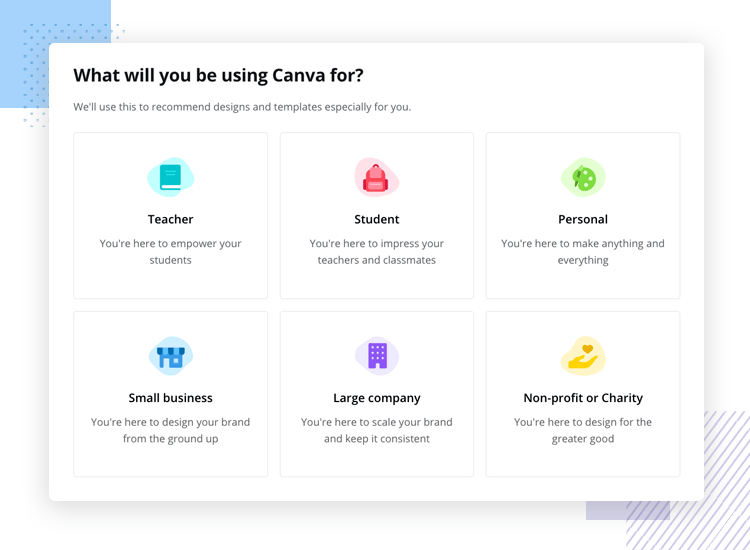
Instead of a general welcome, these should be tailored to match the customer’s goals, industry, or behavior.
Canva asks brief questions at the outset to customize the experience. The tutorial the platform provides afterward is tailored to meet the user’s expectations and teaches the exact skills they need to create the design they want.
The most common notifications of this kind are triggered by what users do (for instance, viewing certain products or marking them as favorites) or by what they don't (for instance, not completing a purchase when selected items remain in the cart).
Netflix tailors its personalized messages based on a user's viewing history and preferences. Using these insights, the streaming service recommends new releases, reminds viewers to continue watching series they have started, and suggests movies and TV shows in genres they enjoy.
.jpg)
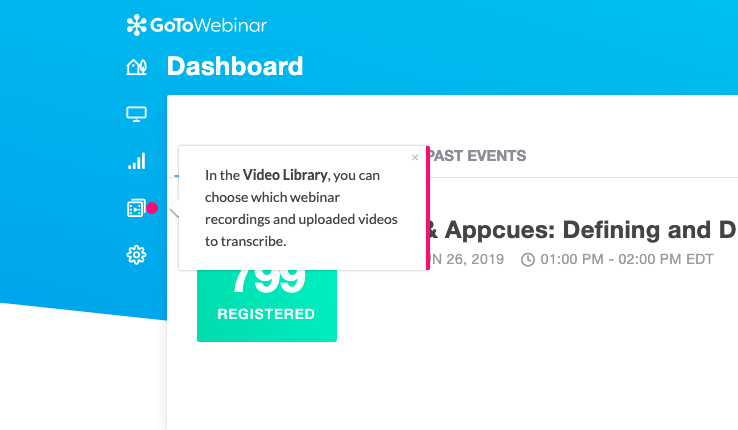
These are also event-triggered, but in this case, all events relate to the usage of specific application features. As a result, users receive timely, relevant messages that guide or support them.
Look at what GoToWebinar does. Since this online conference solution offers a range of capabilities, new users may easily get lost and spend quite some time trying to figure out what to do. Realizing this, the platform displays a message with a brief feature description, inviting users to explore it.
Here, the messages are sent to the customer’s inbox. They are personalized, delivered in well-timed series, and driven by previous purchase and browsing history.
Spotify leverages this personalized messaging approach in its annual emails. In its “Your Year Wrapped” section, users learn about their listening statistics for the previous year; “Release Radar” informs them about the latest tracks aligned with their preferences; and “Upcoming Concert Alert” highlights future events that may interest them.
.jpg)
This is essentially a way of saying, “We miss you,” typically accompanied by product updates and exclusive offers designed to encourage a return. Here is an example of personalized messaging by LinkedIn.
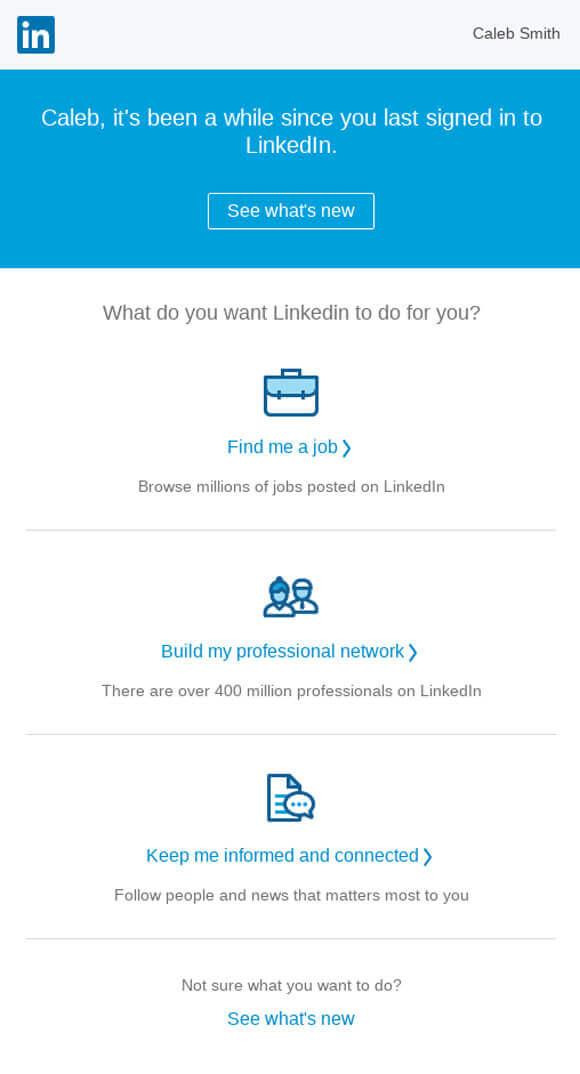
The user's name in the subject line grabs their attention. The email itself shows what Caleb might be missing and clearly encourages a smooth, hassle-free return to the platform.
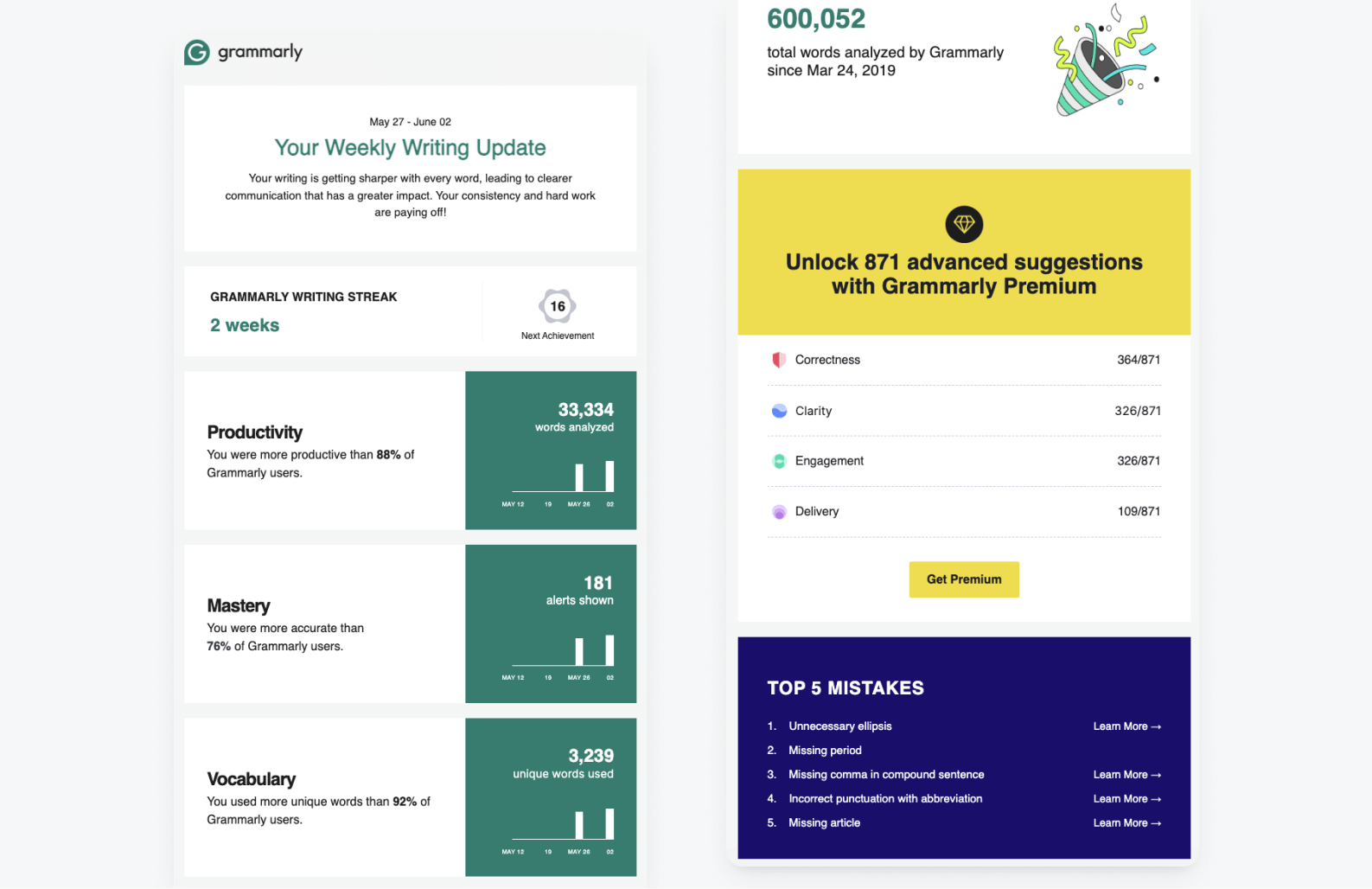
The first type of message is sent in response to customer transactions, whereas the second is tailored to the specific stage of the customer journey the user is in. In the following example, Grammarly provides a progress report as part of its lifecycle personalized messaging. This AI-powered writing assistant uses email to validate the user's efforts and celebrate achievements. Additionally, a touch of gamification sparks interest and encourages continued engagement.
Feel inspired by these examples? Then get in gear and follow suit. However, you need proper software to truly hit the bull's-eye with your personalized messaging.
Reteno offers a robust SaaS platform that can revolutionize mobile push notifications and in-app messages. Personalized messaging in Reteno is a multifunctional solution that sets businesses up for success thanks to:
This feature enables businesses to coordinate their personalization efforts across multiple message types (SMS, push notifications, in-app messages, and webhooks) using consistent user profiles.
Your audience is segmented based on user behavior, attributes, and events. These segments are dynamic, as the personalized messaging database updates in real time to ensure timely communication.
Reteno helps you stay informed about user actions and in-app events, using them as triggers for messages. As a result, communication is based on actual user behavior rather than assumptions.
Each message can include conditional content blocks that allow for personalized recommendations and dynamic values, helping you connect with every customer more effectively.
Workflows for onboarding, retention, and reactivation are automated, with each message tailored to the user’s lifecycle stage.
The platform is designed to track personalized messaging performance across all interaction channels, providing valuable insights to optimize and refine personalization strategies over time.
Message personalization is a powerful marketing strategy that enables businesses to tailor SMS, emails, and push notifications to each customer's unique needs and preferences. By collecting customer data from all available sources, tracking user behavior and events, performing data-driven audience segmentation, and leveraging advanced software, companies can increase engagement, reduce churn, improve conversions, and boost sales, turning personalized messaging into a true competitive advantage.
(1).png)
(1).png)
.png)

George Johnson
|
June 20, 2025
Discover the types, benefits, and strategies behind AI-driven personalization engines that boost customer satisfaction

Alex Anikienko
|
October 13, 2025
Learn how to replace risky third-party tracking with personalized strategies that protect privacy, reduce churn, and boost revenue

Are your pushes as compelling as they could be? Find out with our free preview tool. Instantly see how your notifications will display on iOS and Android, in both expanded and collapsed views.
This is your chance to fine-tune your messages to ensure they're not just seen but felt. Make every character and every push work harder for your engagement goals


