
Alex Anikienko
Expert Writer
July 16, 2026
Alex Anikienko
Expert Writer
July 16, 2026
Customer retention is the Holy Grail of mobile-driven businesses. According to mobile app marketing insights, acquiring a new client costs companies 5-7 times more than retaining an existing one. That is why marketers do all in their power to improve customer engagement, boost repeat purchases, reduce churn, and launch successful activation campaigns. However, implementing one or even several of these tools is often insufficient to reach the desired retention metrics. The logical thing to do here is to combine them in a coherent lifecycle marketing strategy.
This article explains what lifecycle marketing is, compares traditional and customer lifecycle campaigns, and describes the 9 common types of lifecycle campaigns used in retention marketing. It also includes a guide to creating loyalty-building campaigns and examples of famous brands that leveraged customer lifecycle marketing to foster long-term engagement and increase app revenue.
Lifecycle campaigns are the building blocks of the lifecycle marketing approach, a strategy focused on sending personalized, behavior-driven messages to clients during their entire customer journey. Ideally, the messages should accompany customers as they move down the sales funnel — from the awareness stage and the engagement stage through the acquisition stage and the activation stage to the post-purchase and retention stage.
Simply put, lifecycle marketing is a form of trigger-based messaging. It consists of three major components:
How do these behavioral campaigns differ from classical campaigns employed in marketing?
The main difference between the two lies in the goals they aim to achieve. Traditional marketing campaigns aim to increase brand awareness, while lifecycle campaigns are more concerned with customer satisfaction. In other words, marketers shift their focus to the client and try to address their needs via lifecycle messaging.
In addition, several important elements of the lifecycle and traditional marketing campaigns are handled very differently.
As you can see, lifecycle campaigns are quite different from their traditional counterparts. How are they used to improve retention?
The strategies on this list are known to deliver the best results when it comes to customer retention.
The first-time user experience is crucial, as the initial impression often serves as the yardstick for assessing how a brand interacts with its clientele. During the onboarding stage, a company should share its values and highlight the product’s unique features. If the lead has engaged, congratulate them and encourage them to move on; if they haven't, ask if they need help. Finally, invite them to join the brand's community on social media and introduce the product's advanced features.
These are designed to bridge the gap between the initial transaction and the first use of the product. Such a campaign includes pro tips, tutorials, and case studies to demonstrate how other users succeeded with the product. You should ensure the customer immediately understands the value of leveraging the product and learns to avoid the common pitfalls associated with using it.
This kind of campaign is launched if the customer doesn't proceed to finalize the purchase after adding the product to the cart or doesn’t complete the subscription. After about 2 hours post-abandonment, a gentle nudge shaped as a friendly, personalized message with the product's picture can work wonders. If you don’t get a response within 24 hours, contact the customer again and present a brief review of the product's value. If the product remains in the cart for another couple of days, send another reminder via email or SMS and recommend a similar product.
These should be highly personalized and tailored to fit various stages of the customer journey – from onboarding and early engagement to win-back and churn prevention. Each recommendation should be behavior-triggered and display the next-best product, thereby maximizing upselling and cross-selling.
You should give dormant customers a valid reason to return. First, remind them of the value of your products or services in a short email. An automated follow-up tool can help ensure these re-engagement messages are sent consistently based on customer behavior. In the next message, showcase new features and recent product updates. After that, try to attract them with free shipping or a time-limited discount. Then, send a survey to discover the reason for disengagement. Finally, warn the client that you’re going to remove them from your active list and offer a single-click option to stay tuned.
Such campaigns can take various forms — from welcome points and discounts to milestone rewards, tier-based incentives, and repeat-purchase benefits. And remember that these tools shouldn’t be laid to rest after the first purchase. Design regular events that support every stage of the customer journey and offer timely, behavior-driven perks.
Ideally, your renewals should take into account the duration of the client's absence. Upgrade campaigns shouldn't be random; instead, they should arrive when the client's engagement is at its peak, offer access to premium features, and highlight the value they can get.
Behavioral data and seasonal behavior shifts are a powerful combo that can drive retention immensely and boost customer lifetime value. Seasonal offers are the condiments to the main dish you serve, and should ultimately be based on past purchase data. It is equally vital to avoid making your customers feel like you’re pushing them to purchase the product. Instead, sprinkle promotions with educational and entertaining seasonal content to sound supportive rather than intrusive.
Sent soon after the sale, these campaigns can achieve multiple aims at once: to thank the consumer for the purchase, to reassure them that their decision was correct, to improve their product interactions (through tutorials and how-to guides), to offer customer support, to ask for reviews, to introduce your loyalty program, to monetize upselling and cross-selling opportunities, and more.
To succeed in conducting any of these campaigns, you should understand how to build them properly, which may be tough if you’re new to the field.
The roadmap for creating an effective lifecycle campaign includes 7 basic steps.
You should have a clear vision of your interactions with the client across all the possible touchpoints, sales conversations, support tickets, etc. The five stages of a typical customer journey are awareness, consideration, conversion, retention, and advocacy.
Simple demographic segmentation can’t give you a complete picture of your audience. The clients’ actions are more important, so factor in usage frequency, customer tenure, engagement level, feature adoption, etc.
You can use emails, mobile push notifications, SMS, or in-app messages depending on the stage of the user’s journey, the urgency of the message, and customer preferences.
Each message should be carefully crafted based on the client’s profile data (name, location, age, etc.) and behavioral data (last engagement, last purchase, abandoned cart, etc.). You can get the data from your CRM or marketing automation platform.
Set up if/then rules in your marketing solution to initiate tailored communications based on the three major trigger types: behavioral, transactional, and time-driven.
You should use appropriate KPIs to assess the effectiveness of your strategy at various customer journey stages. OKR tracking software can help marketing teams align lifecycle campaign metrics with broader business objectives and monitor progress toward retention goals. For awareness and acquisition, the most indicative metrics are customer acquisition cost (CAC) and click-through rate (CTR); for onboarding, you should assess email open rate and feature adoption rate; for retention, look at LTV and churn rate. What’s more, consider the efficiency of each communication channel separately.
Experiment with different message types, send times, and channels, and conduct continuous A/B testing to determine what works best. Then, tweak and fine-tune your campaign accordingly.
How did blue-chip brands leverage lifecycle campaigns built in line with these principles in their customer retention initiatives?
Learning a foreign language requires consistency that few users can achieve on their own. Realizing this universal truth, Duolingo is always ready to re-engage inactive customers.
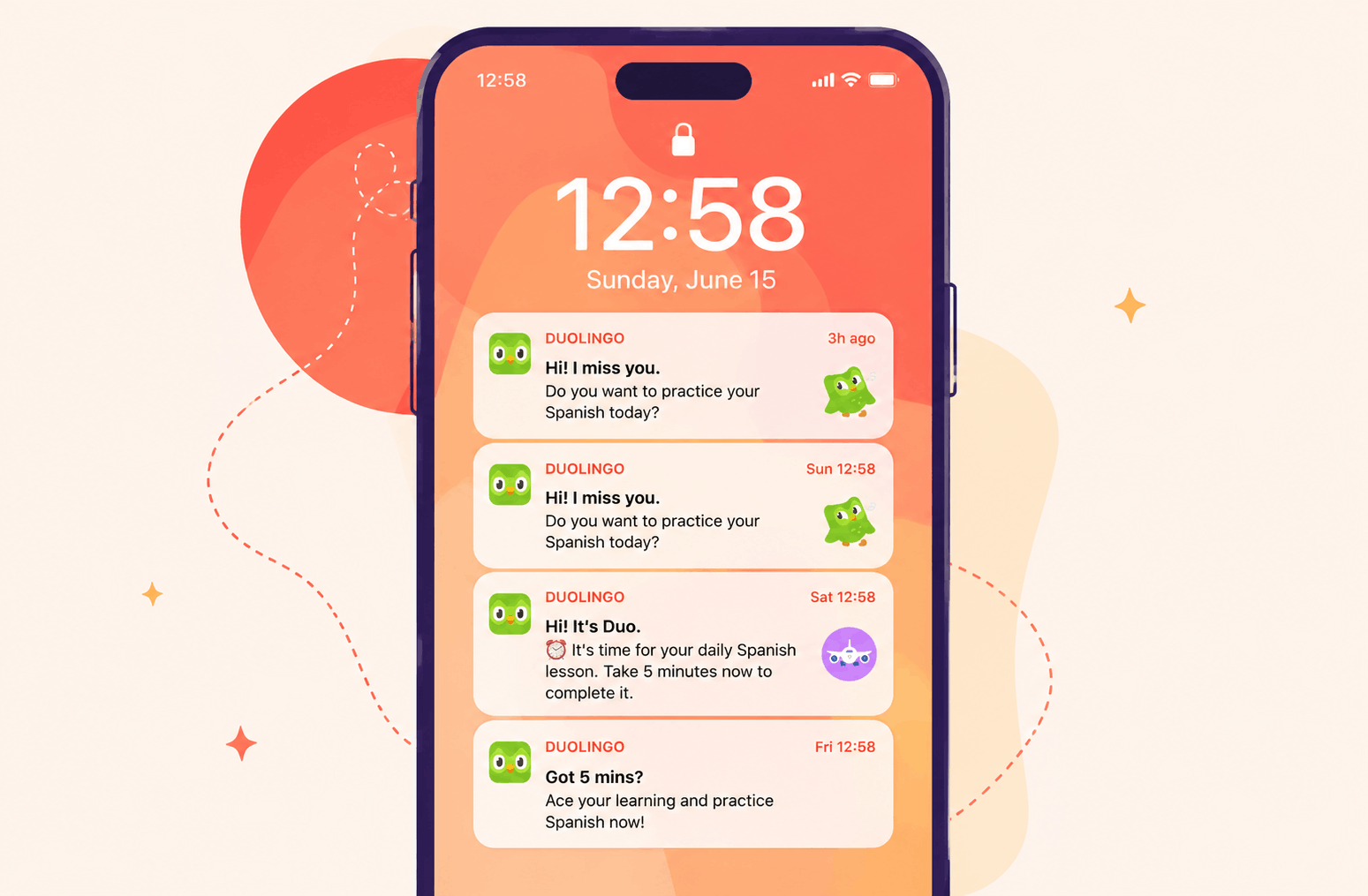
The app’s notifications are unrelenting and guilt-tripping. Sent by the AI-fueled Bandit algorithm, the messages are selected based on the user’s past decisions, so only the ones the person usually responds to are used to remind them about their language-learning routine.
Spotify goes the extra mile to know its users inside out. By regularly analyzing its users’ musical tastes, the app offers tailored recommendations.
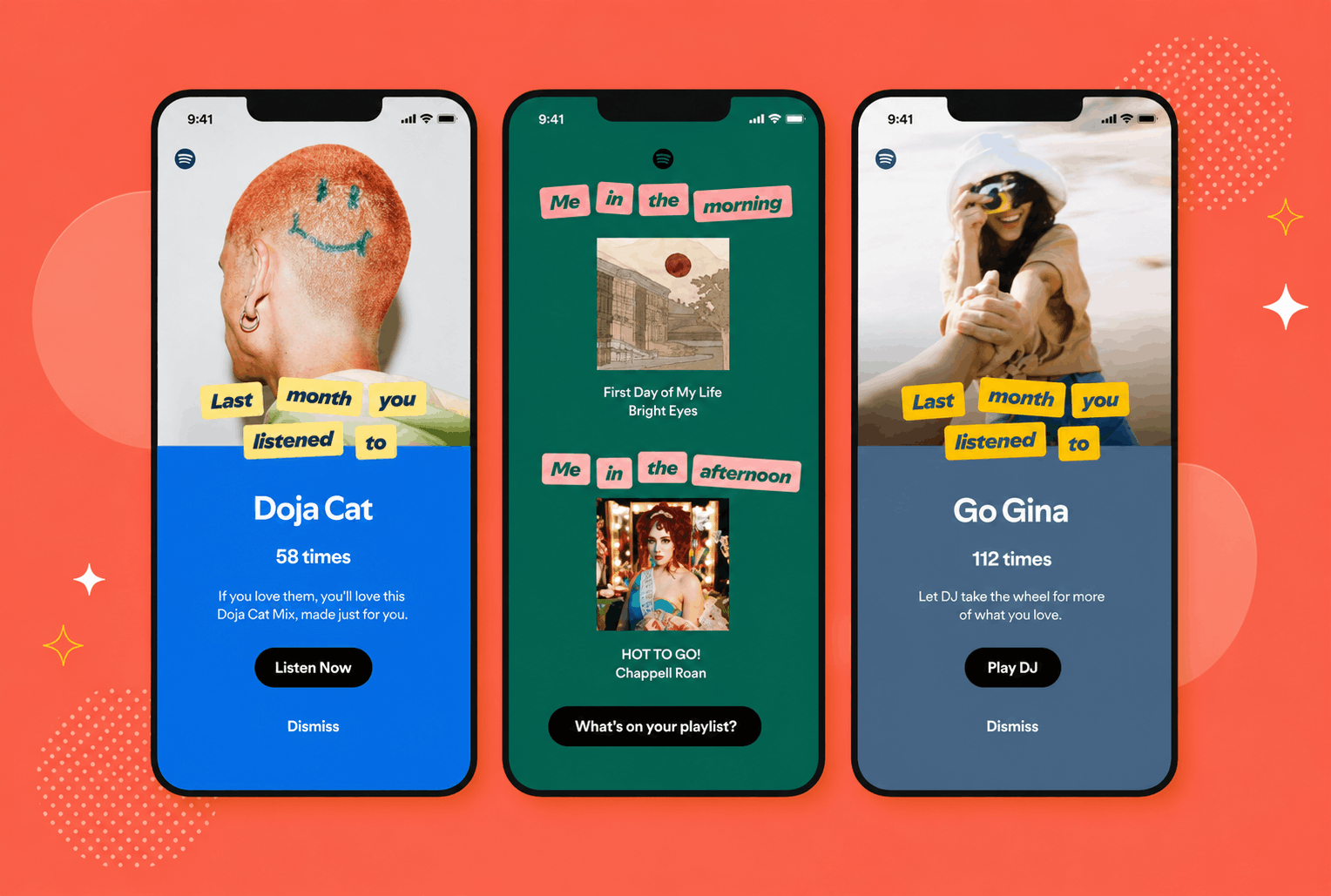
Moreover, the company openly provides statistics to support the reasoning behind the recommendations.
Nike has those aplenty.
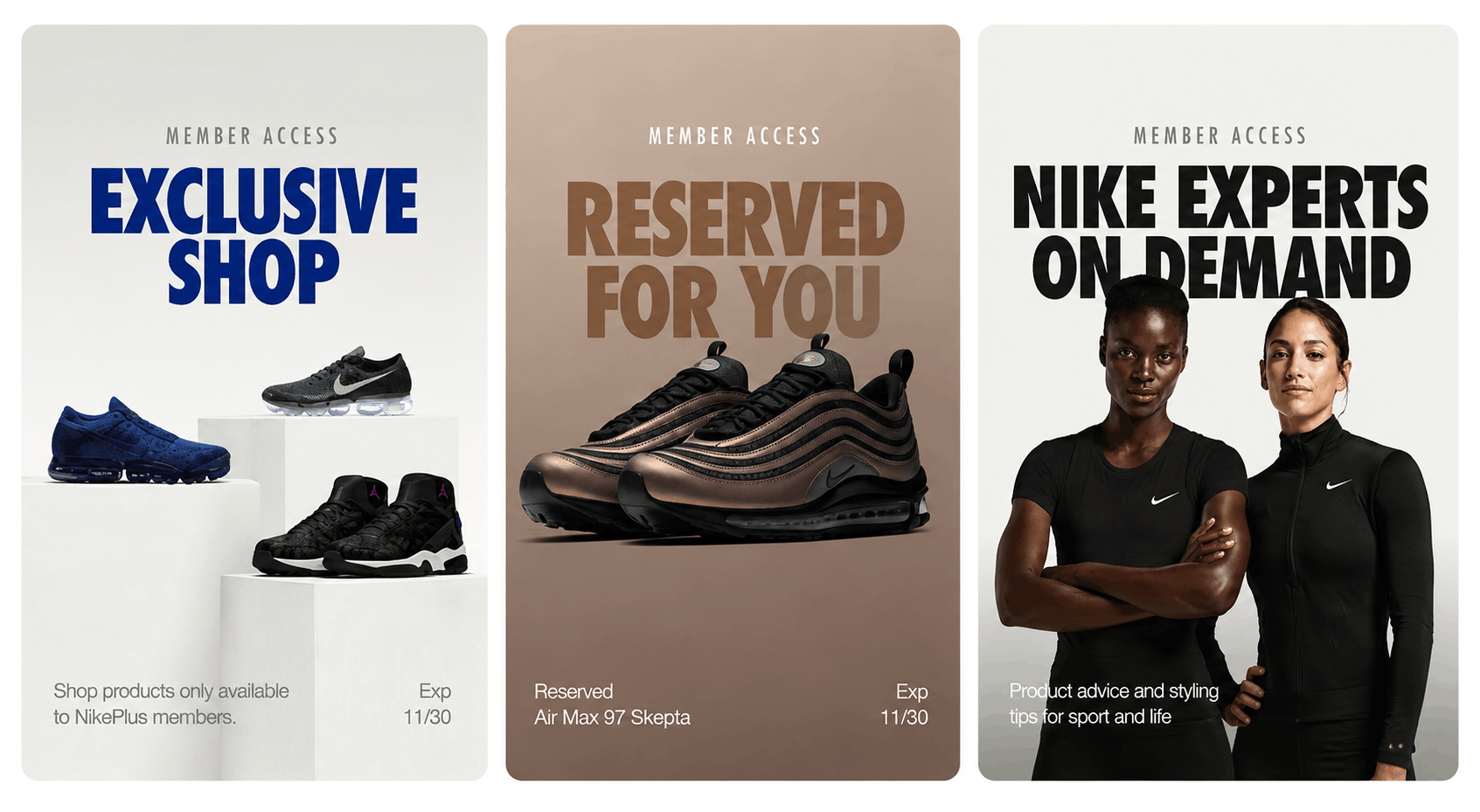
This sportswear behemoth has ditched classical, point-based rewards programs, replacing them with gamified activity milestones, exclusive member days and experiences, partner perks, and surprise gifts across both digital and physical touchpoints.
Starbucks offers rewards throughout the entire customer journey – from pre-load promotions and onboarding email series to status tiers, birthday rewards, double & triple star days, and bonus star challenges.
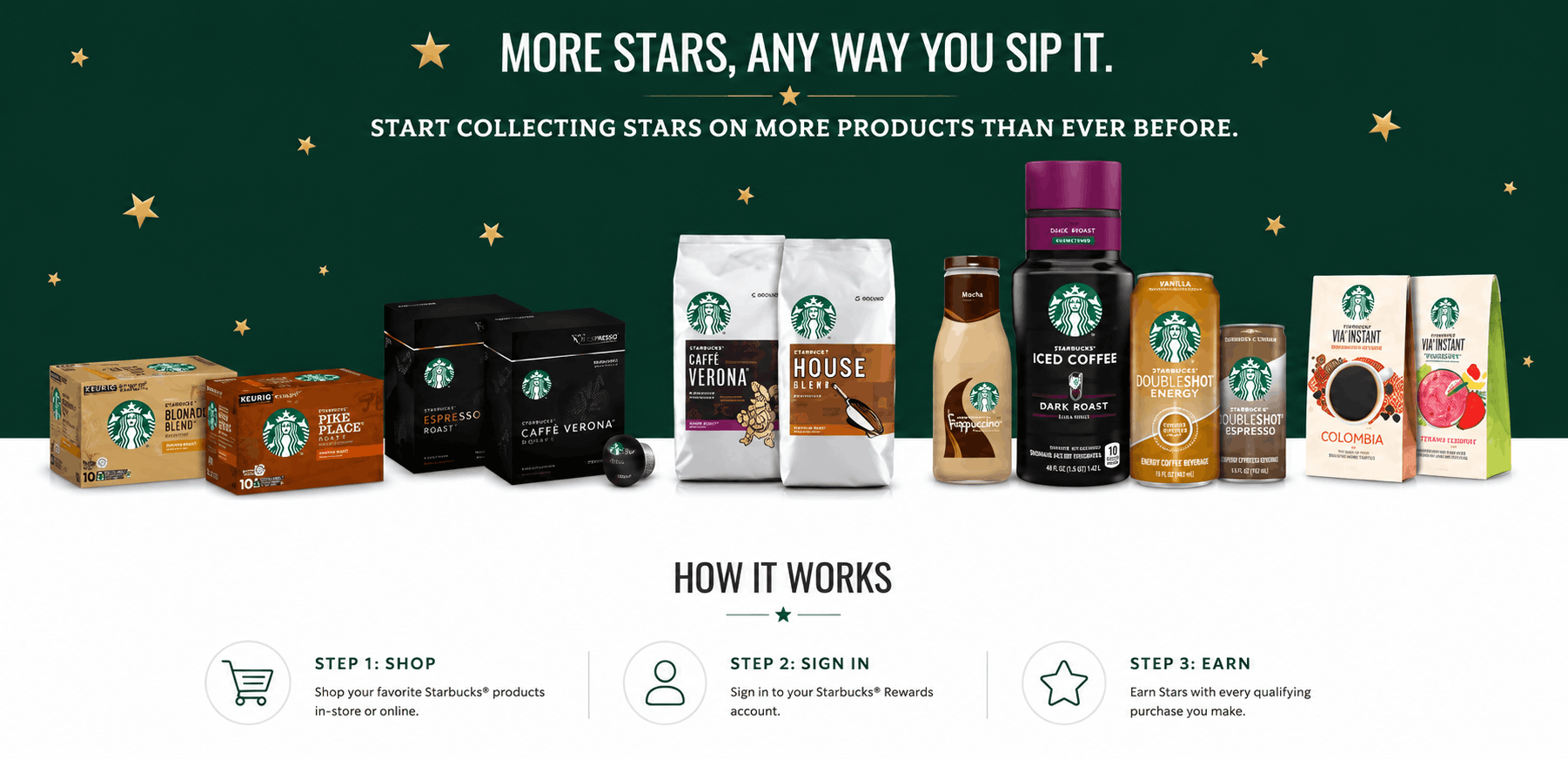
The image above is used to introduce new customers to the brand’s rewards programs.
Google Store knows how to implement it efficiently.
.png)
The bright blue color and the compelling headline create a sense of urgency blended with a sense of FOMO (Fear Of Missing Out). The recipient is reminded that there is a chance the item in their cart will sell out if they don’t finalize their purchase as soon as possible.
You can share the lifecycle marketing success of these major-league brands if you leverage robust software.
Reteno is a comprehensive messaging SaaS platform purpose-built for mobile-first businesses. It offers improved customer retention through lifecycle automation and AI-powered personalization. With Reteno, marketers can effectively perform granular, behavior- and purchase-based segmentation with the help of purpose-built AI agents and with the close assistance of dedicated customer success managers. You’ll receive the instruments and data needed to craft targeted emails, SMS, in-app messages, and push notifications to members of each client segment, and accompany them at every stage of their customer lifecycle journey with timely, tailored recommendations, promotions, and incentives.
As a result, apps can generate 5-15% of total app revenue through email and push notifications.
Unlike traditional marketing that relies on short-term blasts of generic messages, lifecycle marketing focuses on offering clients highly personalized, behavior-based incentives at each stage of their customer journey. The most effective lifecycle strategies are welcome and onboarding messages, first-purchase activation campaigns, tailored product recommendations, re-engagement campaigns for inactive users, rewards and loyalty campaigns, subscription renewals, seasonal messages, and post-purchase follow-ups. Building a lifecycle campaign involves determining customer journey stages, segmenting the audience, selecting communication channels, generating personalized messages, automating campaign triggers, assessing performance, optimizing campaigns in line with customer data, and leveraging high-quality marketing lifecycle software.
(1).png)
(1).png)
.png)

Alex Anikienko
|
May 5, 2025
Learn how campaign analytics helps you avoid marketing flops, optimize ROI, and target smarter across all your campaigns
.png)
Alex Danchenko
|
December 14, 2022
Find amazing examples of mobile marketing campaigns to improve or develop your own from scratch

Are your pushes as compelling as they could be? Find out with our free preview tool. Instantly see how your notifications will display on iOS and Android, in both expanded and collapsed views.
This is your chance to fine-tune your messages to ensure they're not just seen but felt. Make every character and every push work harder for your engagement goals


