
George Johnson
Expert Writer
May 14, 2026
George Johnson
Expert Writer
May 14, 2026

Modern brands with a strong digital footprint go to great lengths to reach out to their target audience and keep them engaged for as long as possible. They simplify the login flow, leverage push notification best practices, run behavior-triggered campaigns, implement past-purchase targeting, and use other strategies to reduce app churn.
Yet, very often, a significant portion of their customers quietly drop out of all interactions with the brand, turning into lapsed users. So companies should not only focus on steps to increase active users on a mobile app but also direct their efforts toward preventing inactive users from becoming fully churned users who are lost to the brand forever. How can you do that? The answer is simple: re-engage inactive users by giving them compelling reasons to return.
This article defines what a dormant customer is, explains how to identify them, outlines the main reasons for inactivity, shows why app re-engagement is critical for businesses, and offers nine customer reactivation strategies that have helped real-life companies re-engage churned customers on a large scale.
Before exploring ways to re-engage inactive customers, let’s clarify what qualifies a customer as inactive. Simply put, this is a person who previously interacted with a brand by responding to emails, engaging with social media ads, or making purchases but has since stopped all actions that indicate engagement. Typically, their account or subscription remains active, so they are still reachable for communications and offers.
This lack of engagement is one of the early churn signals and is crucial for churn prediction strategies. Once a customer enters the inactivity segment, marketers should act quickly and launch a win-back campaign to restore mobile engagement before the user disappears completely by canceling their subscription or closing their account.
What criteria help define a dormant customer?
However, before launching an app reactivation strategy, it’s essential to understand why the customer stopped engaging.
To successfully re-engage inactive customers, companies analyze each user’s journey. This can be done through behavior-based segmentation, identifying high-intent and low-intent users, reviewing communication history, sending surveys, and more. Most customers become inactive for one of the following reasons.
When a person has to wait too long for your customer support to respond to the complaint or request, deals with unfriendly or unqualified staff who fail to solve the problem, or cannot exchange a product or get a refund, they are likely to stop interacting with the company at least for a time.
Even the most helpful customer support won't save you if the product you sell doesn't work as it should, fails to meet the buyer's expectations, has a poor onboarding experience, or doesn’t deliver the promised value.
While you were resting on your laurels, competitors may have stayed ahead of the game and introduced a similar product with superior features, a lower price, or better support. Naturally, a customer may jump at that offer and forget about yours.
Incomplete app activation or a decline in purchases may have nothing to do with the company or its product. People may go through major changes, such as getting a new job, moving to another place, getting married, or having children, which can affect their shopping habits or shift their focus to more urgent or important matters.
Sometimes companies make mistakes in the way they communicate with customers. Overzealous lifecycle marketing initiatives can overwhelm people with excessive messages. A lack of tailored messaging can result in irrelevant offers instead of exclusive content. Relying too heavily on outdated discount offers can also cause loyalty reward programs to stagnate. Any of these issues is enough to alienate a customer.
By going the extra mile to re-engage inactive customers, you unlock the following benefits.
Statistics show that re-activating dormant customers costs businesses 5–7 times less than acquiring a new one. Why? Because these people already understand the product and trust the brand. As a result, they have a lower conversion barrier that requires less effort to overcome.
As CAC decreases, ROI increases. However, it happens only if a person’s customer lifetime value (CLV) is high. As a rule, reactivated increases show greater loyalty, which positively impacts their CLV.
Reactivating dormant customers is a key part of a company’s customer retention strategy. By increasing customer retention by just 5%, businesses can achieve profit growth of 25% or more.
If you are dealing with a customer you already know, your chances of selling them your products rise by 60–70%, significantly outstripping the success rate of selling to a new customer, which of selling rarely exceeds 20%.
Reactivated customers are more likely to become brand promoters and advocates. They are more inclined to recommend the brand (“see, these guys didn’t forget about me!”) and share their positive experience with family, friends, and colleagues.
When you re-engage inactive customers, you can validate client contact data, enrich user profiles, understand why they left, and identify behavioral patterns. Armed with these insights, companies can refine customer segmentation, improve personalized messaging with hyper-personalized incentives, enhance product offerings and customer support, and take other steps to deliver an exclusive, highly targeted customer experience.
The following methods work best for customer re-engagement.
Companies can send "we miss you" messages to people who have been out of touch for some time. A series of two or three emails is usually the most effective way to rekindle interest, especially when it includes value-driven content or a return-user bonus.
People love games. Various experiential incentives and tangible rewards, from progress bars and challenges to leaderboards and point systems, are highly effective tools for bringing back those who have grown indifferent and motivating them to engage again.
Sending exclusive updates is a good opportunity to remind almost-lost customers that you are still there and that they have a lot to lose if they continue to ignore you.
Because consumers are amateurs in most fields, they tend to respect the opinions of experts or people who have already tried the product. Including such proof in re-engagement messages can encourage dormant customers who may have had doubts about the product to return. These stories ease their concerns, rebuild trust, and even create the well-known FOMO, or fear of missing out.
Fresh content alerts and product improvement messaging are low-friction, non-obtrusive ways to rekindle the interest of dormant customers. These hooks help reestablish contact and demonstrate that the brand has evolved to meet both existing and emerging consumer needs.
When you improve your product or introduce new services, don’t hesitate to inform customers about it. This is especially important if your innovations address your customers’ specific interests and pain points, which you may have previously identified from surveys or personal communication. A message about a new, easy resubscribe flow combined with a limited-time offer can make a person feel valued and create a sense of urgency, an ideal combination for re-engagement.
Free is a magic word that few consumers can resist. Even if they haven't interacted with a brand for a while, a preview of what you can enjoy in the coming weeks and months can encourage them to return to the company and its products.
A discount is almost as powerful as a free gift incentive. It lowers the repurchase barrier and brings back lapsed customers. For an even stronger effect, use a tiered discount ladder that starts small and increases in value down over time.
To succeed, omnichannel customer engagement and re-engagement require a synchronized platform that consolidates all customer client data and enables coordinated communication across SMS, email, in-app messages, and ads. With such a system, you can hyper-personalize interactions and automate win-back campaigns.
Now, let's see how modern brands implement all these strategies.
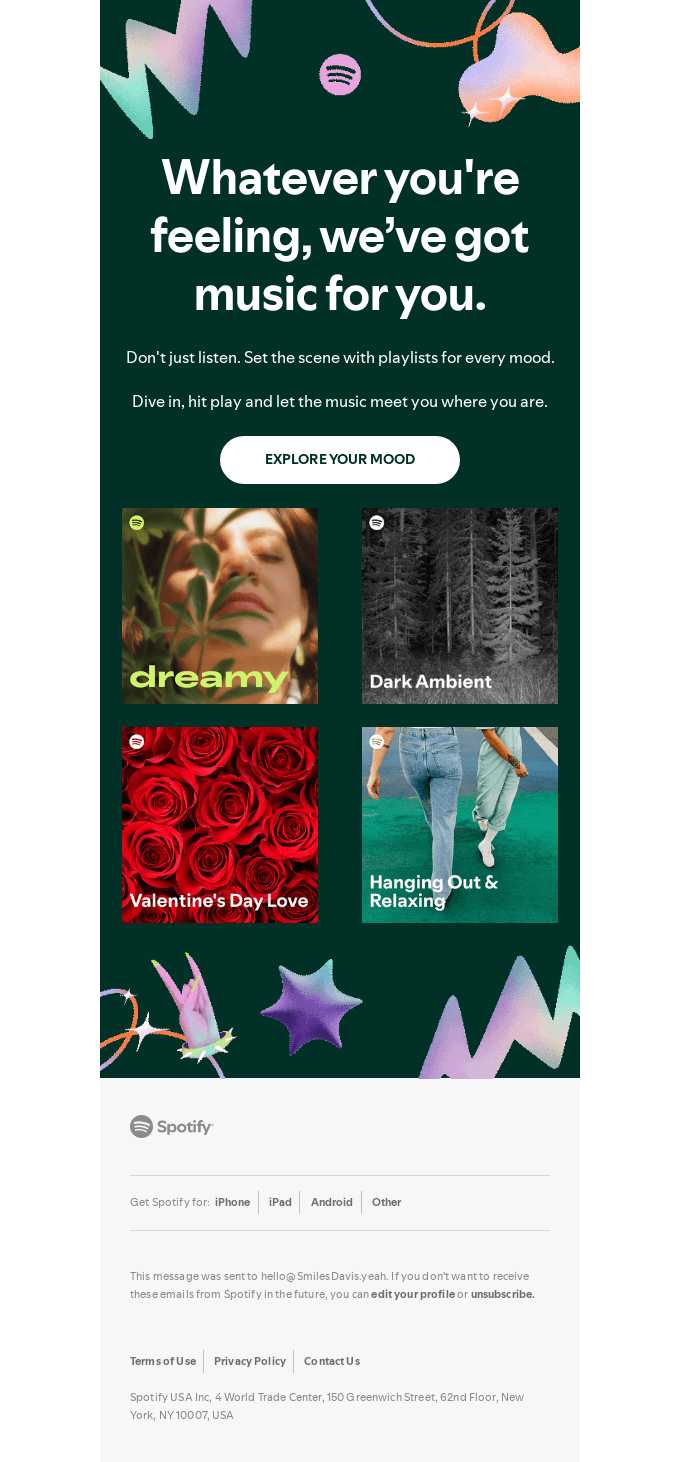
Knowing customer's tastes from their listening history, Spotify aims to re-engage inactive customers by offering a range of musical options in a vertical, mobile-friendly format. These fresh recommendations spark curiosity and tap into familiar vibes, gently nudging users to choose a track that matches their mood.
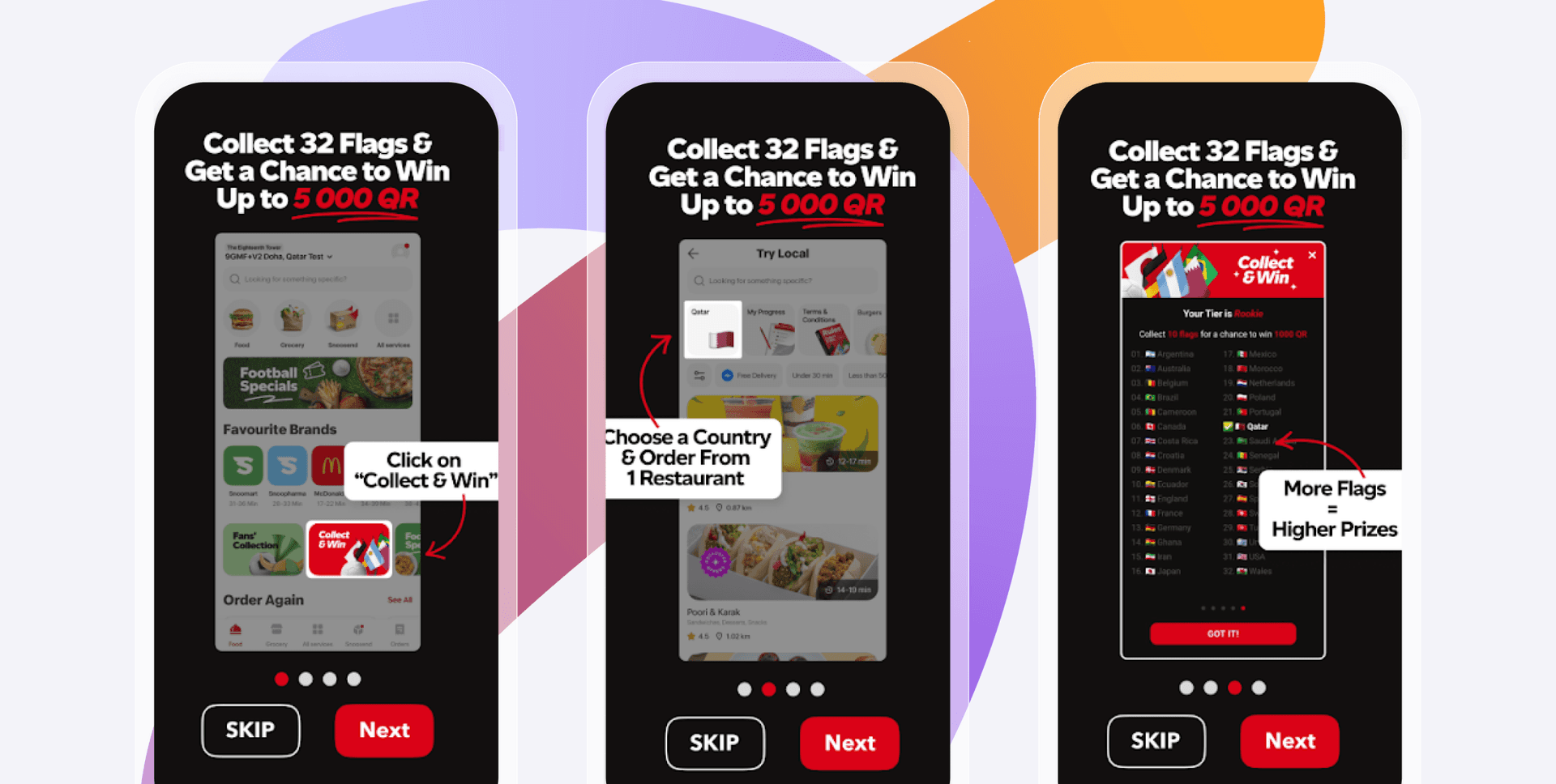
To combat seasonal slowdowns, Snoonu, a Qatar-based company providing one-stop shopping solutions, launched a gamified in-app campaign with numerous badges and achievements. In this campaign, customers collected country flags by ordering food from restaurants serving national cuisine. Once users collected all 32 flags, they could enter a draw for a substantial financial prize or even a gold bar.
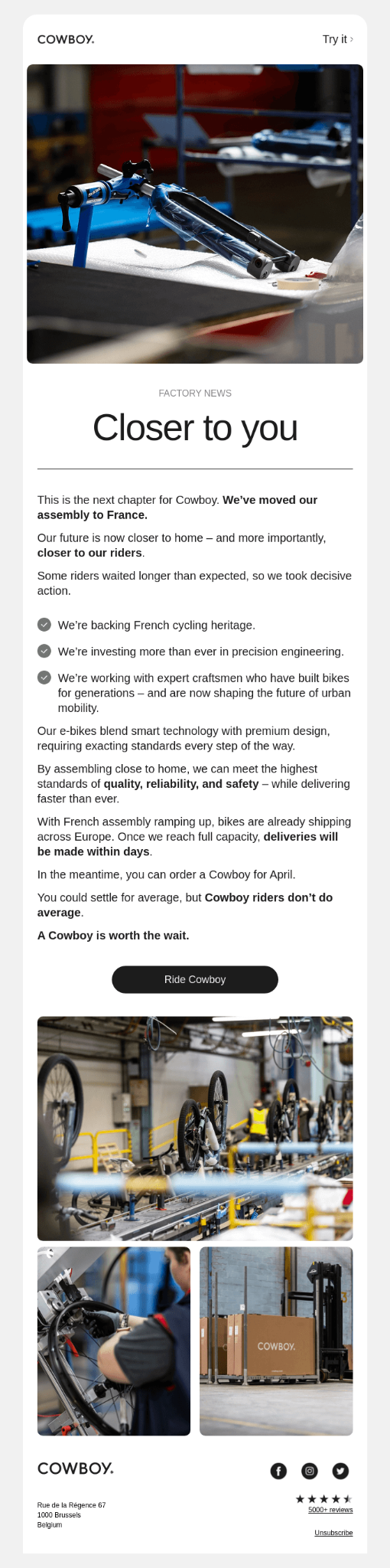
Belgian electric bike company Cowboy announced the opening of its new headquarters in France. The message, designed to re-engage inactive customers, not only shares the story of its journey and expansion into a new market but also reinforces its message to urban riders and showcases its values, creating a sense of community among its audience.
In the healthcare and beauty industries, credible proof from professionals and real users is mission-critical when re-engaging inactive customers, and Bubble understands this well. This skincare brand sent an email featuring recommendations from both dermatologists and real users. The message is clear and straightforward, building trust and credibility through results and relatable experiences.

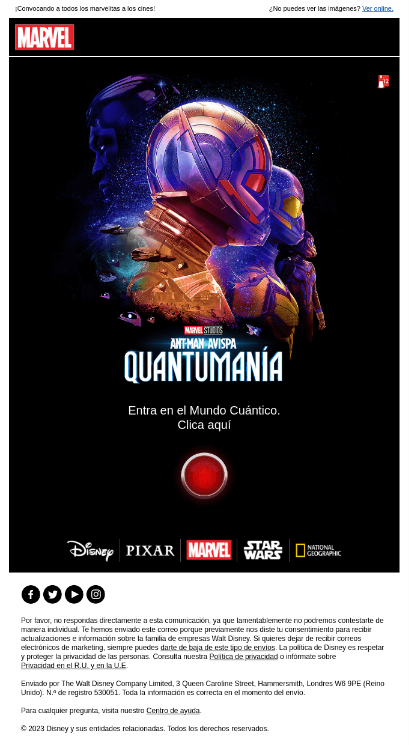
Despite having a huge fan base, Marvel does not let its audience drift away and actively uses strategies to re-engage inactive customers. The email announcing a new movie is direct and compelling. It reminds inactive users of their passion for the Marvel universe and encourages them to dive back in.
Grammarly re-engages users by sending data-backed emails with progress updates. These messages are designed to re-engage inactive customers by highlighting their achievements and appealing to their desire for personal growth, a strong incentive to continue their efforts.

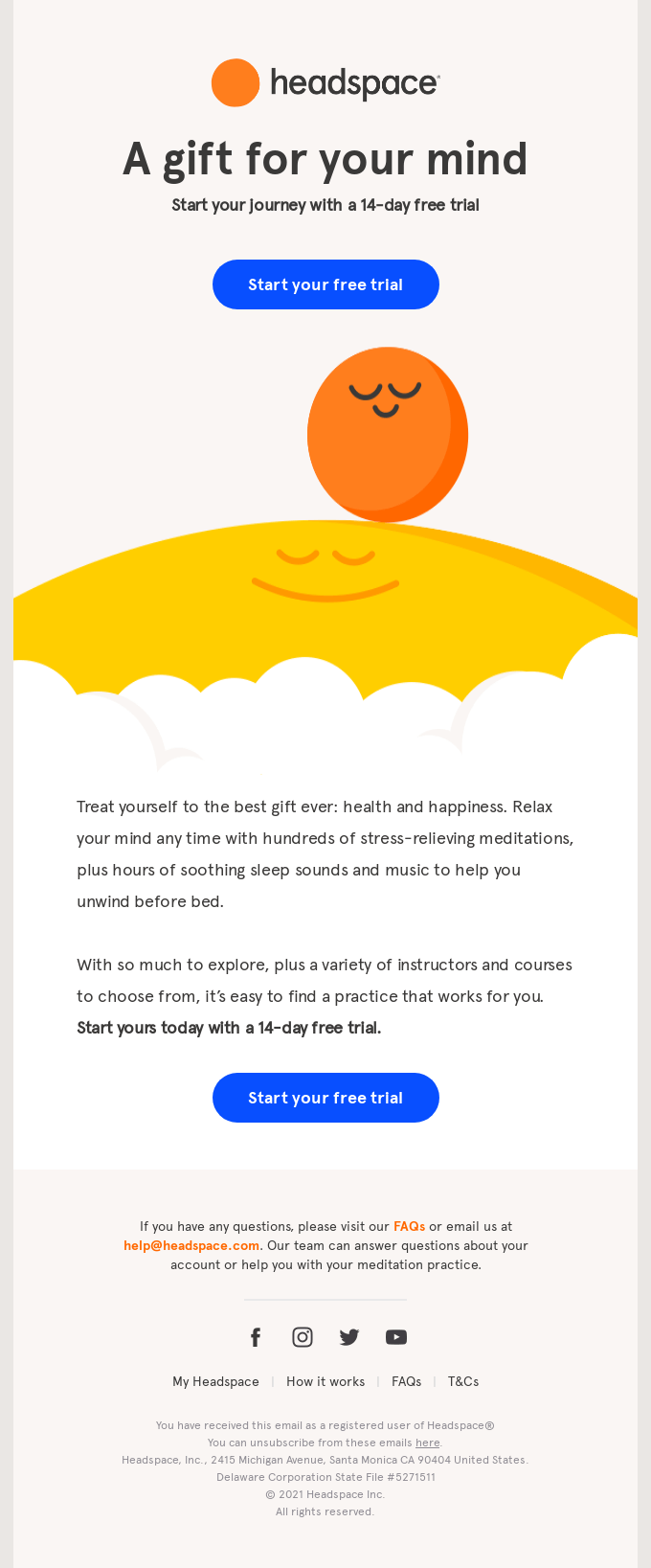
Headspace offers a 14-day trial of its meditation app, inviting lapsed customers to dive into a relaxing experience without any hard-sell pressure and leaving the decision up to them.
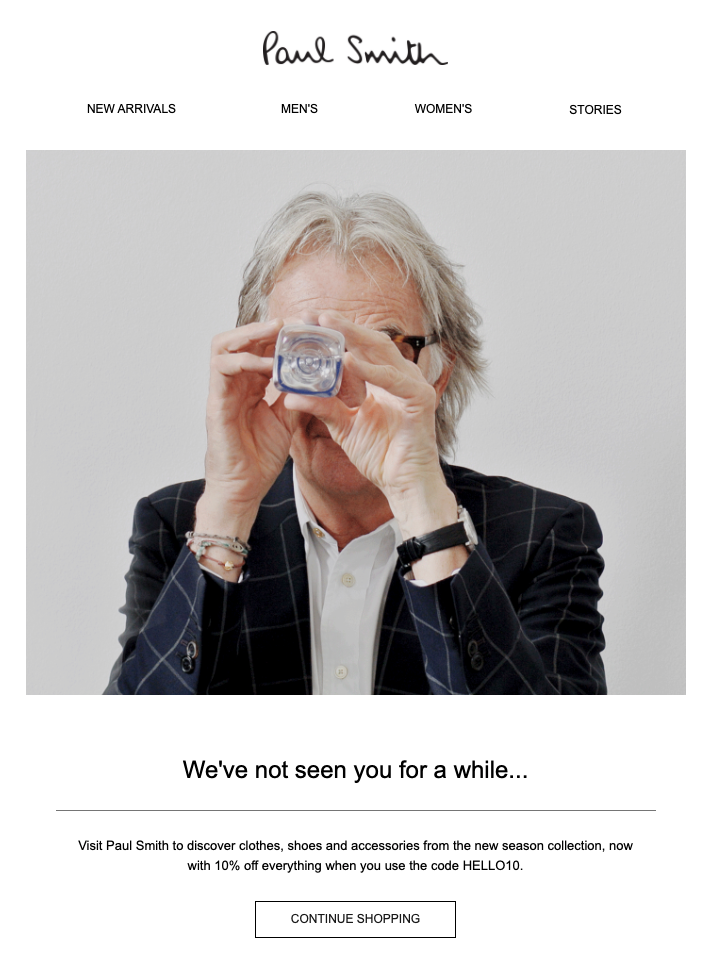
Even luxury brands re-engage inactive customers from time to time. As part of its re-engagement campaign, Paul Smith offered a 10% off coupon to inactive customers. Including "we miss you" in the subject line helps establish an emotional connection with lapsed clients and encourages them to make another purchase.
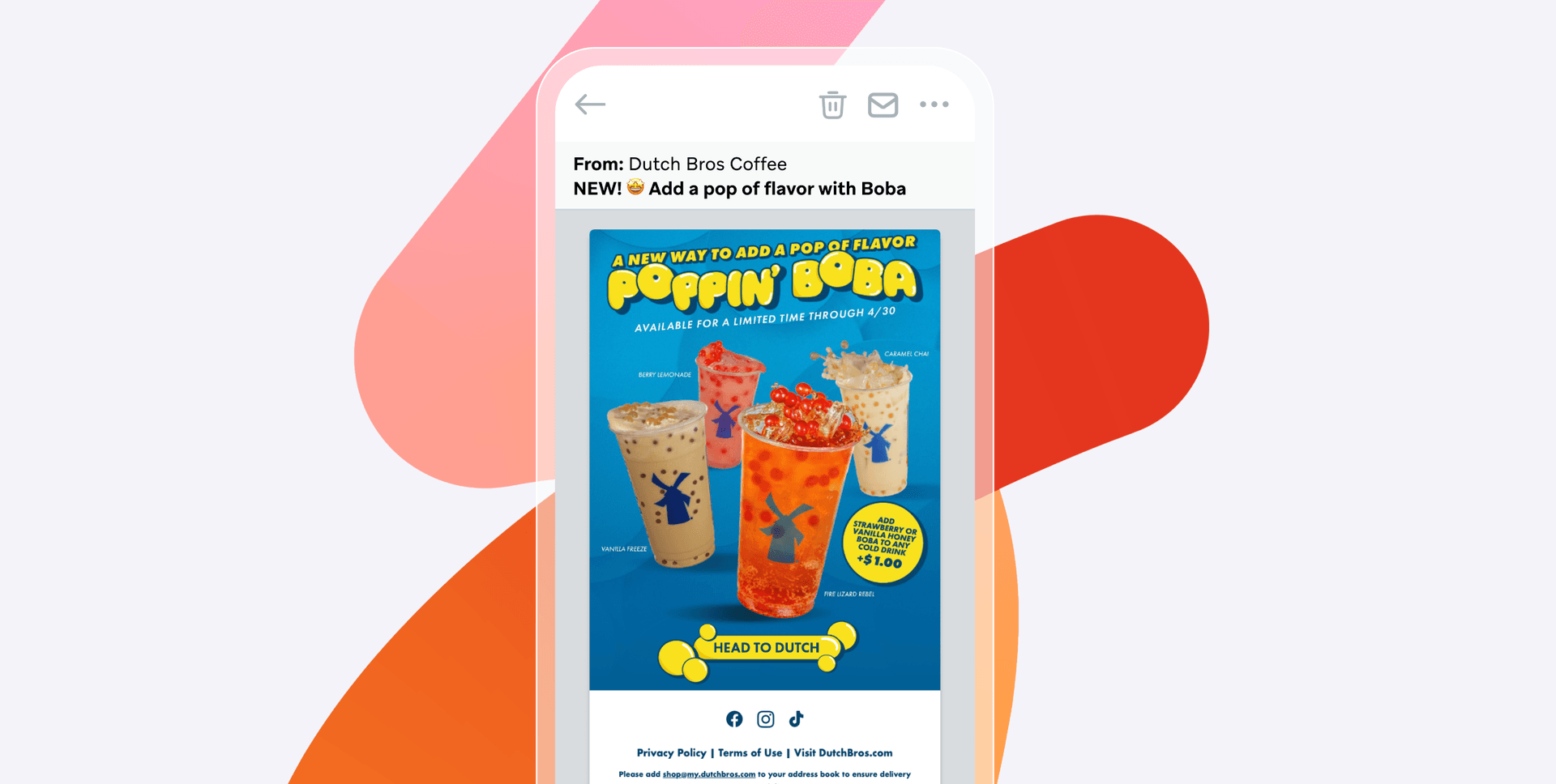
Dutch Bros, a drive-thru coffee chain with more than 800 physical locations, struggled with high operational costs due to fragmented messaging and inconsistent interactions. By launching a unified platform, the company achieved a high level of message coordination across all customer touchpoints.
However, the success achieved by those brands in re-engaging dormant customers would be impossible without top-notch software honed for this purpose.
With the comprehensive AI messaging platform for mobile retention by Reteno, re-engaging lapsed customers becomes simple. This robust tool offers multiple features that help you avoid losing customers during personalized marketing campaigns and stay in touch with your entire audience through emails, SMS, and in-app messages.
Thanks to the platform, you can gain a 360-degree view of every user’s activity across all channels from a unified profile, perform smart segmentation based on diverse parameters, create highly personalized user experiences, craft AI-powered mobile push notifications and other messages for re-engagement, run multi-channel, event-based marketing, manage dynamic content and offers, conduct automated A/B testing throughout the entire user journey, and more.
Sign up to enjoy our platform and build lasting relationships with your customers.
Dormant customers are a major challenge for businesses that rely on digital tools for customer acquisition. You can re-engage lapsed customers by sending targeted emails and company updates, sharing social proof, announcing new releases, offering discounts and free trials, and more. However, any re-engagement initiative can achieve its goals only if it is supported by high-end software tools with a wide range of powerful features.
(1).png)
(1).png)
.png)

Alex Anikienko
|
January 20, 2026
Discover eight proven mobile app growth strategies that drive long-term value, with practical examples of brands successfully putting them into action

Alex Anikienko
|
June 18, 2025
See how AI messaging drives conversions and revenue by turning user behavior into real-time personalization

Are your pushes as compelling as they could be? Find out with our free preview tool. Instantly see how your notifications will display on iOS and Android, in both expanded and collapsed views.
This is your chance to fine-tune your messages to ensure they're not just seen but felt. Make every character and every push work harder for your engagement goals


