The State of App Messaging 2026
How subscription apps turn traffic into revenue with messaging
This report analyzes 6+ billion messages sent via the Reteno platform. Discover key trends and communication benchmarks from 2025 to market better in 2026.

Key Findings
4.6%
Messaging (primarily email and push campaigns) drove a median 4.6% of app revenue
86%
Abandoned subscription campaigns brought paywall apps 86% of messaging-driven revenue
13.2%
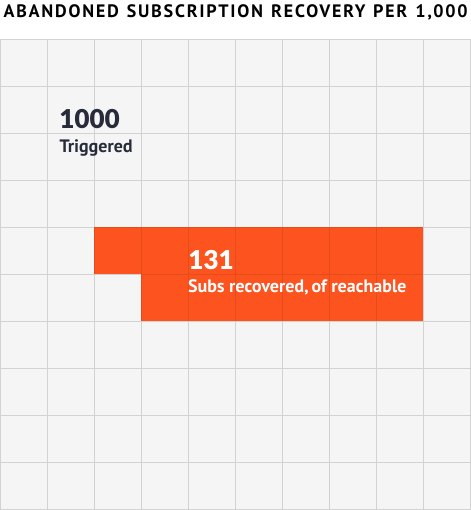
An average 13.2% of abandoners eventually convert — among those reachable via opt-in channels
Understanding the 2026 App Funnel
The 2026 app funnel is defined by three critical stages:
User acquisition - where paid traffic lands on a web funnel (quiz, landing, or pricing page) before reaching the store/app
Monetization - where apps decide on monetization model(s) (paywall / trial / freemium), when each appears in the journey, and whether users can skip or delay payment
Consent - where establishing at least one contact channel with the user (email or push) becomes crucial for generating revenue from future messaging.
Each stage shapes the next. The data reveals that capturing intent early, communicating value confidently, and prioritizing email over purely in-app channels are what’s winning the app subscription economy.
Where Data Comes From
500+
Apps in Health & Fitness, Education, Utilities, etc.
67
Countries across Europe, LatAm, North America, Asia, and Australia
500 million
Unified user profiles across web, iOS, Android platforms
Traffic & acquisition
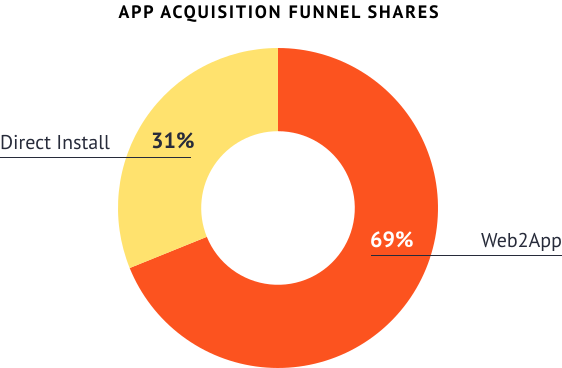
In 2025, over 2/3 of users arrived at subscription apps via web2app rather than direct install.
This shows that most apps bet on email-first high-intent workflows, trying to capture emails before purchase. Later, apps use this contact channel to make Abandoned Subscription their core money flow, as most revenue lift comes from returning non-subscribers.
The direct install funnel leverages in-app prompts and mobile push, email is secondary. Abandoned Subscription recovery via email is only possible if the email is captured pre- or mid-checkout.
Monetization
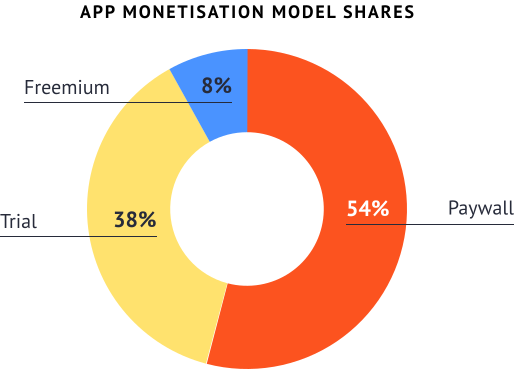
There are 3 monetization models in subscription apps - paywall, trial, and freemium.
In the paywall model, users are to pay immediately after onboarding. Trialoffers free access for a limited time (typically 7 days), then auto-charge. Finally, there’s freemium - always-free tier with locked premium features. If you can dismiss the paywall (e.g., by tapping X) - this app is freemium.
Despite offering the easiest entry point, freemium models generate the least conversions, while paywall - with all its friction - dominates the field, unlocking revenue instantly.
The Rise of Email
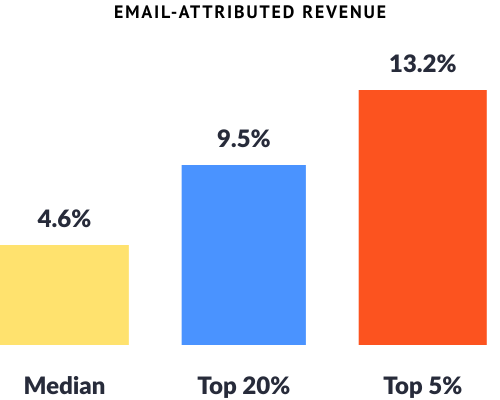
Email is becoming the #2 revenue channel for mobile apps after paid social - yet most teams critically under-monetize it.
Top subscription apps can push email-attributed messaging revenue into double digits. While the current median is around 4%, top 5% best-performing teams showcase the revenue of around 13%+ with the potential to reach up to 20%+.
The way to bridging this gap is not “send more emails,” it is system + consent + triggers + iteration.
Role of AI: Generated content beats human copy
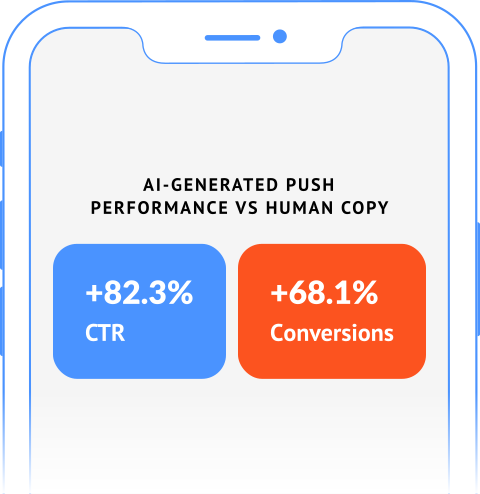
In the 2025 funnel, AI tools showcased that they are no longer a side experiment but have the potential to become a major revenue driver.
In Promova’s case (language learning app with 20 mln users worldwide), AI-generated push notifications, tested and scaled automatically inside Reteno workflows, beat human-crafted copy in terms of CTR and conversions by a landslide.
Instead of writing and A/B testing every message manually, apps can now set guardrails and let AI explore variants, turning virtually every funnel stage - from acquisition to conversion - into a compounding source of additional subscriptions.
Data capture / consent
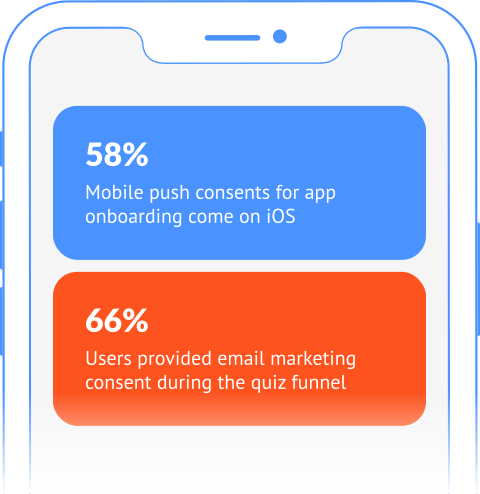
Successful subscription apps establish at least one contact channel - email or push - before users decide whether to pay.
Web2app funnels naturally capture email during onboarding quiz.
Direct install apps typically choose consent channel to match their category's user expectations:early push opt-in for utility and on-demand apps; and emails for habit-building apps (H&F, education, wellness). Push notifications get introduced once users are engaged.
Messaging Campaigns
That Drive Subscriptions
Most subscription apps fail to consistently increase revenue from messaging because they do not systematically convert existing intent into paid plans.
In our dataset, the strongest revenue gains come not from “one-off blasts”, but from a small set of always-on campaigns that nudge users at the exact moment they are closest to subscribing: after paywall exposure, during trials, at key feature gates, and when a user has already paid on the web but has not yet become an active app user.
Our analysis shows that a small set of flows drives a large share of revenue. These flows should be designed and optimized first, emphasizing event-triggered messages (viewed paywall, started trial, completed a core action).
Below, you’ll find 3 core campaign types that consistently turn intent into subscriptions, and where they sit in the user journey.
Abandoned subscription / Paywall recovery
Goal: Convert users who showed clear purchase intent but didn’t subscribe — where consent enables follow-up messaging.
Trigger examples:
User opens paywall but doesn’t subscribe.
User selects a plan but drops at payment step.
User reaches a feature gate and closes the paywall.
Typical channels:
Email for web2app quizzes and follow-up sequences.
Mobile push and in-app for direct install.
Key campaign elements include:
Short delay before first reminder (1-60 minutes after abandonment),
Clear value reminder (what they unlock, not just the price),
Social proof or outcomes (“X users improved Y in Z days”),
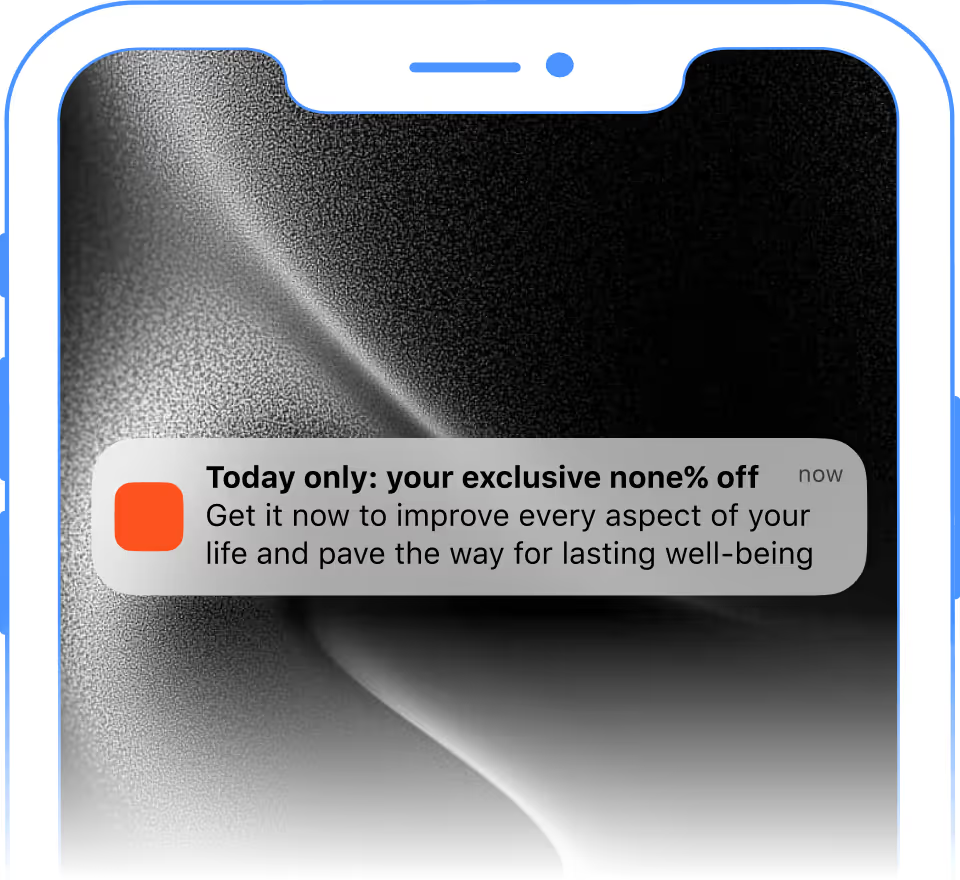
Time-bound incentive where appropriate.
Abandoned subscription flow breakdown
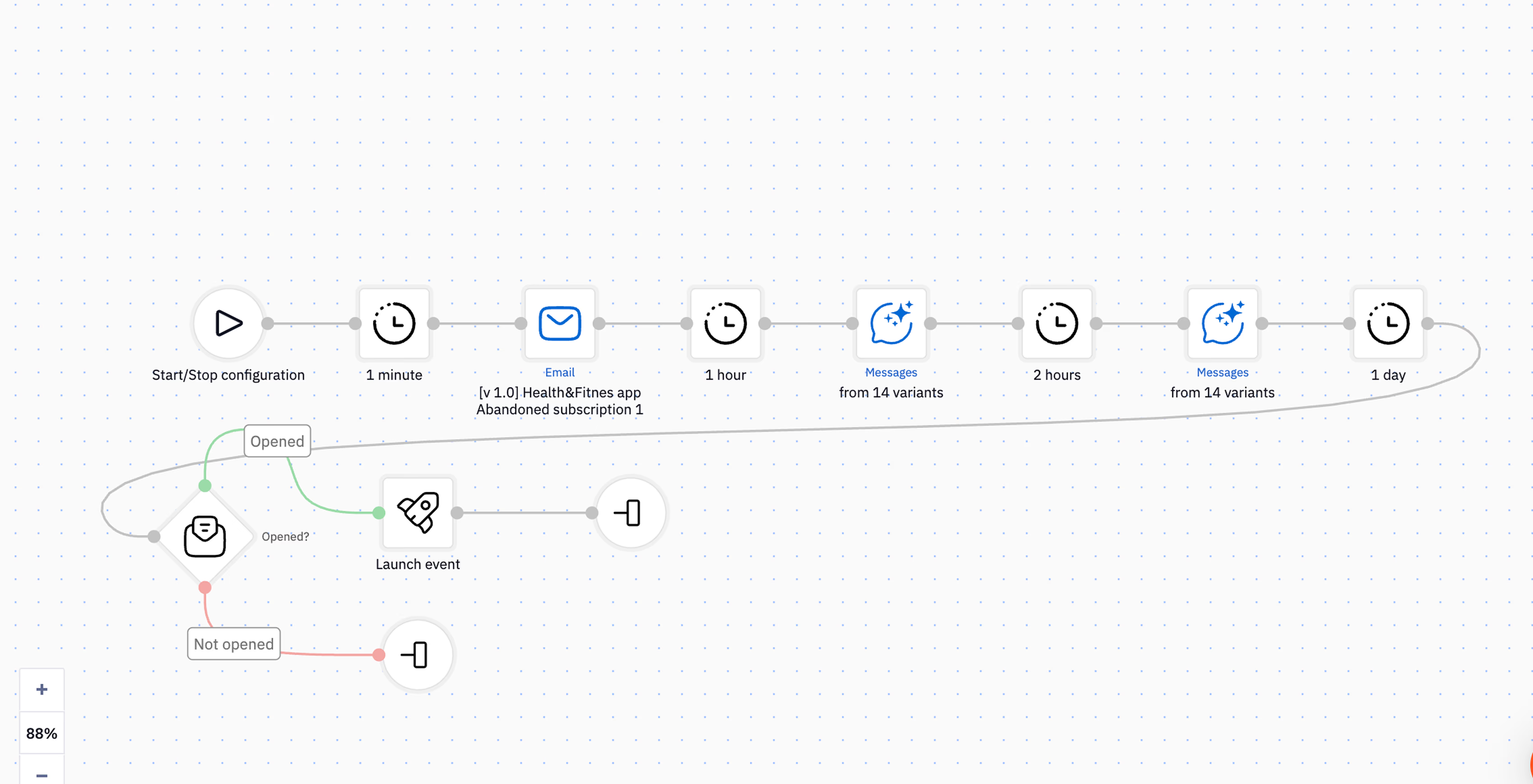
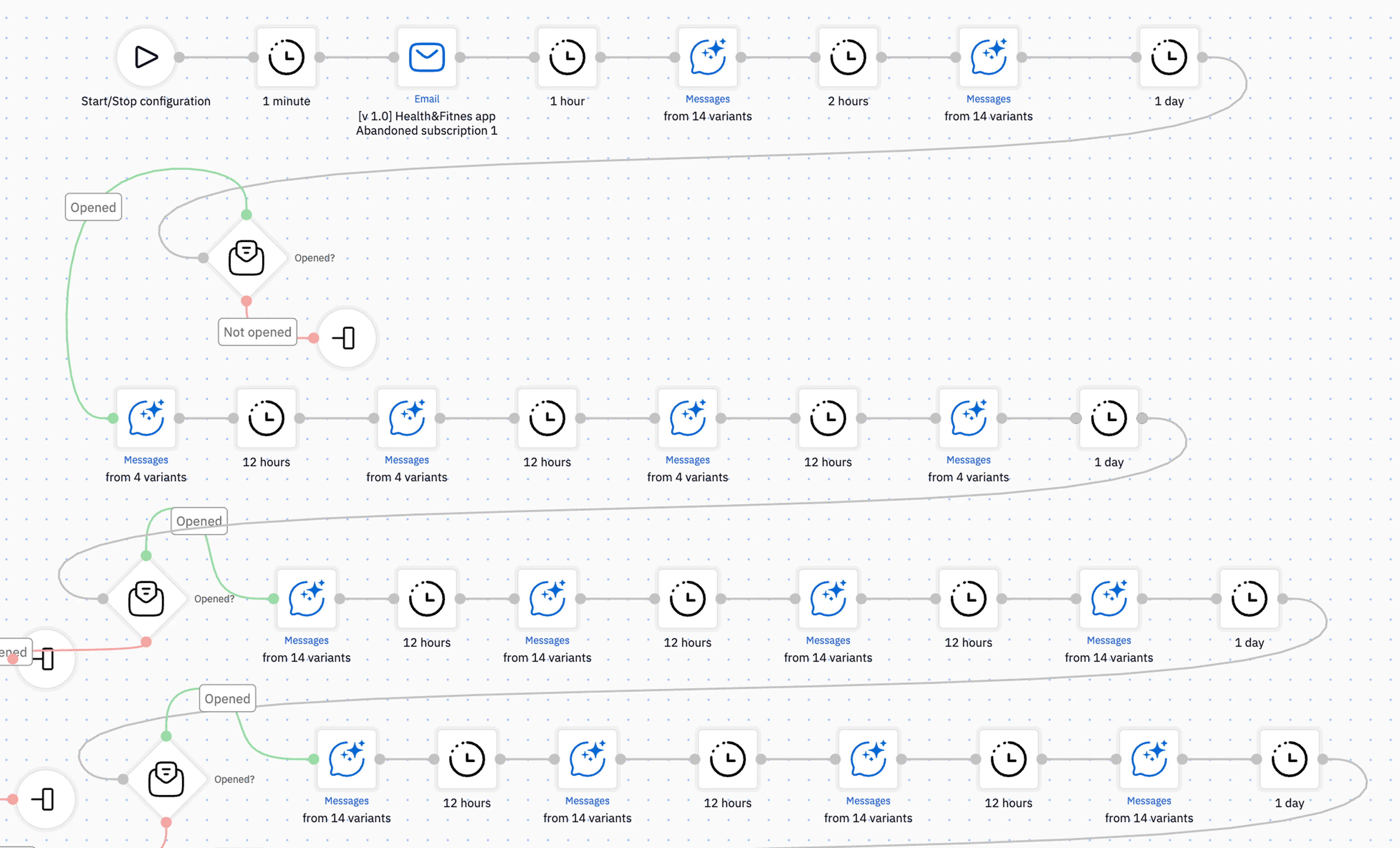
Different apps need different recovery lengths as purchase intent decays fast, but attention spans vary.
Short flows (1 day / ~3 messages) are designed to capture “hot” intent while it’s fresh — ideal for users who were seconds away from paying.
Long flows (up to 14 days / up to 30 messages) work better when the decision is slower (higher price sensitivity, more comparison, longer habit commitment), but only for users who keep engaging — otherwise the sequence turns into background noise.
Short flow - 1 day & 3 messages
Long flow - up to 14 days & 30 messages
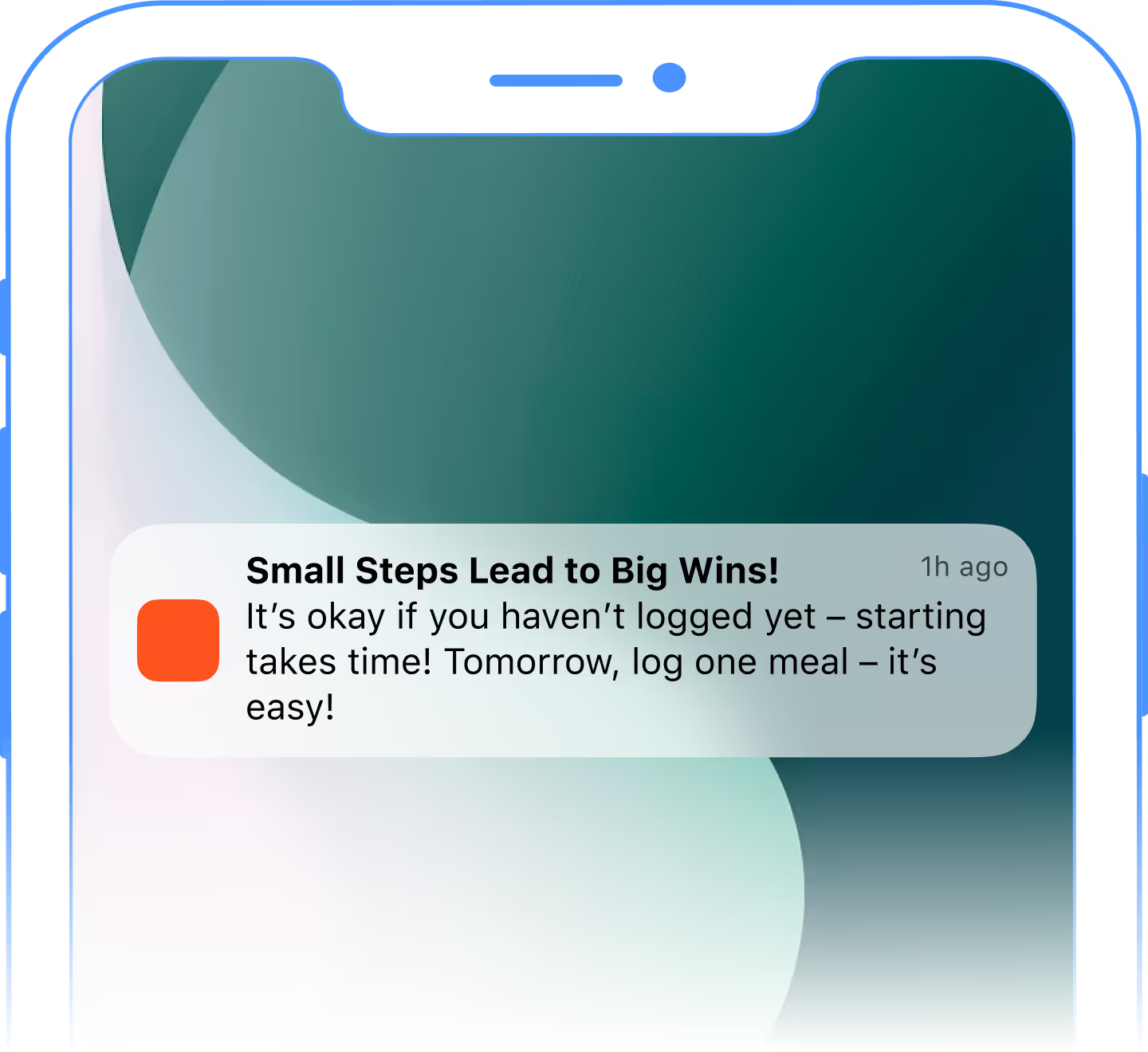
Recommended flow - start fast and send more on opens
A recommended, mid-length flow includes 7 messages within 7 days. It captures the highest-intent window immediately while staying short enough to avoid fatigue. It’s also a flexible baseline to personalize and then extend dynamically based on engagement.
Start
Launch right after a user reaches the paywall, but does not subscribe - within minutes.
Frequency
Send a sequence of ~2-3 messages, and proceed with the next ones if user opens or clicks them
Channel mix
For web2app - emails.
For direct install (SKAN) - push & in-app notifications
Trial activation / Trial-to-paid
Goal: Turn trial users into committed subscribers by ensuring they experience core value early and often.
Trigger examples:
Trial started.
Trial user has not completed the core action within set period.
Trial end approaching.
Typical channels:
In-app guidance and tooltips.
Push reminders tied to missed sessions or features.
Email sequences that walk through benefits and use cases.
Must-have campaign elements:
Day 0 / Day 1 nudges to push users to the first “aha moment”.
Behavior-based messaging (e.g., different flows for active vs inactive trial users).
Clear communication of what happens when the trial ends (auto-renew, pricing, benefits).
Final “trial ending soon” nudge with a strong value proposition.
Freemium upgrade to Premium
Goal: Convert engaged free users into paying subscribers at the moment when they feel the limitations of the free tier most acutely.
Trigger examples:
User hits a hard limit (e.g., workouts/lessons per week/day).
User tries to access premium-only content or functionality.
Usage pattern indicates high engagement but no subscription after N days.
Typical channels:
In-app paywall with contextual messaging.
Push and email follow-ups after feature lock.
App inbox to house ongoing upgrade offers and plan explanations.
Must-have campaign elements:
Messaging focused on “continue your current momentum” rather than generic upsell.
Side-by-side plan comparisons to reduce friction and confusion.
Personalized upgrade prompts (e.g., referencing completed progress, streaks, or goals).
Campaigns That Prevent Churn
Most teams think of churn-prevention only in terms of “win-back” campaigns. In reality, the biggest impact on user lifetime value (LTV) is often determined much earlier - in the first days after they subscribe.
In our framework, churn-prevention campaigns fall into three layers:
Post-purchase activation - what happens in the first days and weeks after subscription.
Retention - ongoing messaging that keeps active subscribers engaged and progressing.
Reactivation - recovering value from at-risk, failed, or lapsed subscribers.
This section highlights the core campaign types that consistently prevent churn, form the retention backbone of a messaging strategy, and extend subscription lifetime.
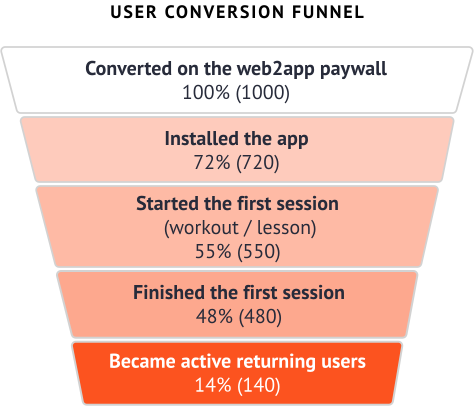
Post-purchase activation
Goal: Earn app usage after subscription by moving users through these steps: install the app → first session → first workout/lesson.
Trigger examples:
Subscription started (trial → paid or direct paid subscription).
Plan upgrade (monthly → annual, basic → premium).
First login after purchase / first session as a subscriber.
Typical channels:
In-app messages and guided tours during the first sessions.
Push notifications to prompt key actions in the first days.
Email sequences that explain value, features, and next steps.
Best-practice elements
“Welcome as a subscriber” sequence - confirm the plan, renewal logic, and key benefits, as well as suggest user’s next steps.
Fast path to the “aha moment” - nudge users toward 1-3 core actions strongly linked to long-term retention (e.g., first workout / lesson / tracking event, etc.).
Day 1 / Day 2 / Day 3 nudges for early habit formation and giving structure (challenges, streaks, or plans).
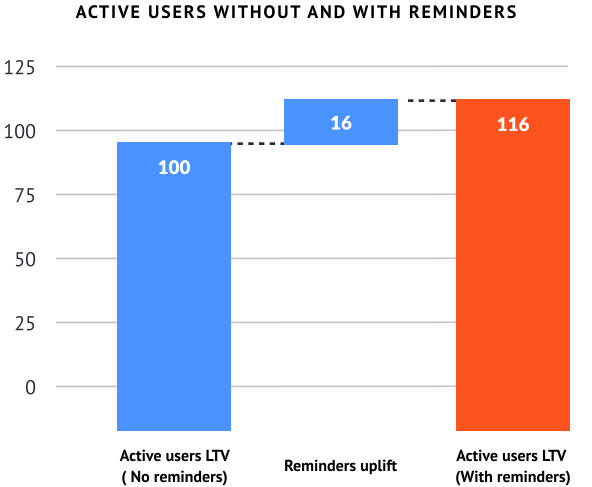
Retention via reminders
Goal: Prevent subscribers from drifting into disengagement, which is a leading indicator of future churn.
Trigger examples:
User has not completed today’s core action (workout, lesson, meditation, tracking session).
User is about to lose a streak or fall below their historical activity pattern.
Low-usage subscribers (e.g., one session per month) in high-ARPU plans.
Typical channels:
Mobile push for fast “come back now” nudges.
In-app messages when the user returns, reinforcing goals and progress.
Email for for deeper content (new programs, updates, milestones).
Best-practice elements
Positive, motivational tone tied to user goals rather than guilt.
Specific, actionable prompts (“Finish Day 4 of your plan today”) instead of generic “come back.”
Streak mechanics (soft resets, “one free pass”, challenges) to make coming back feel rewarding.
Intelligent frequency caps to avoid spamming.
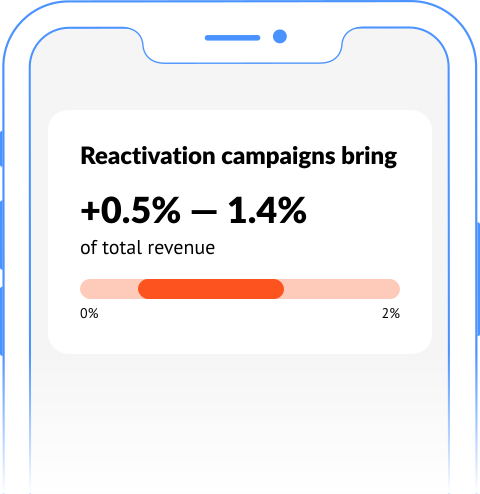
Reactivation & recovery
Goal: Systematically recover revenue and relationships from subscribers who are at risk of leaving or have already left.
Trigger examples:
Failed renewals and first-charge attempts (payment failure).
User initiates cancellation or chooses not to renew (conscious cancel).
Subscription expired in the last N days, or subscriber has become dormant (recently lapsed & dormant).
Typical channels:
Email as primary channel for explanations, offers, and next steps.
In-app messages and banners when the user returns with a broken or inactive status.
Push notifications for concise nudges where appropriate.
App inbox for comeback offers and updated plans for returning users.
Best-practice elements
Clear, non-alarming language: explain what happened and what the user should do next.
React fast, but not often: make multiple attempts with sensible spacing (e.g., 3-5 reminders across several days).
Direct, low-friction, one-click links to “fix it” actions where possible.
Targeted save offers based on reasons (e.g., pause plan, lower tier, temporary discount).
Channel & Geo Benchmarks
Choosing the right channel is not only a creative decision; it is a performance decision. Different channels excel at different stages of the funnel and in different countries.
This section gives a high-level view of how the main messaging channels perform in 2025, and how engagement and conversion vary by region.
The goal is not to crown a single “winner” channel, but to help teams design the right channel mix for acquisition, activation, monetization, and retention.
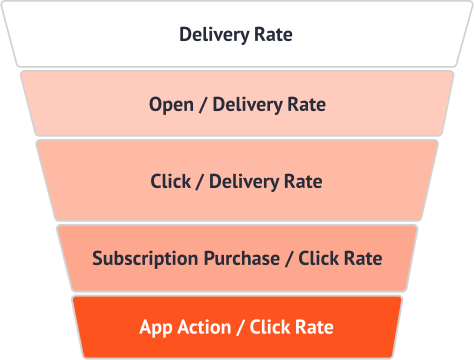
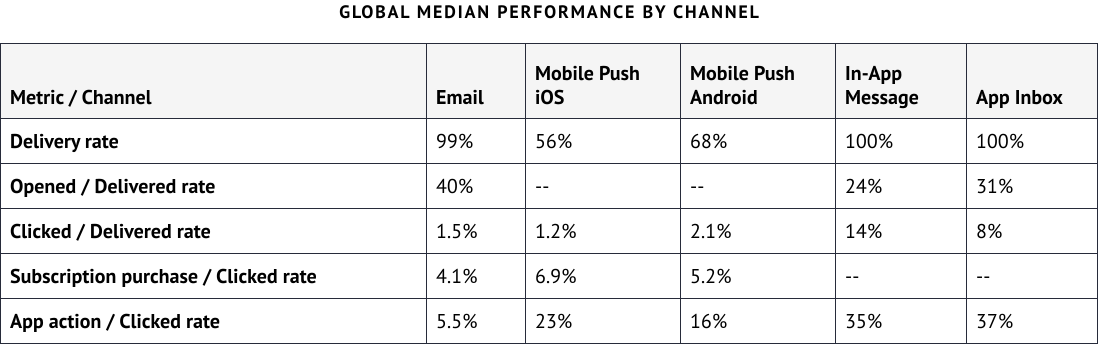
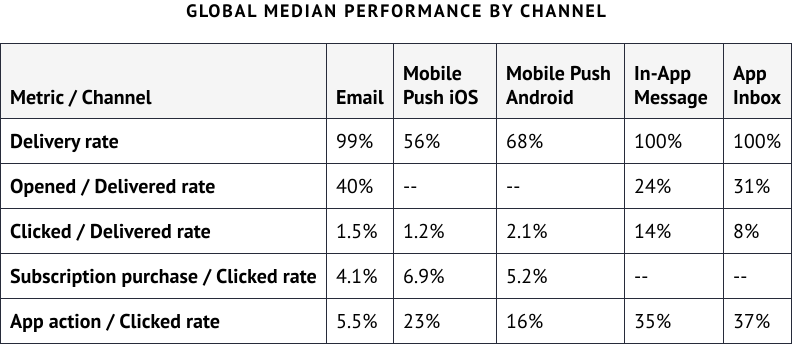
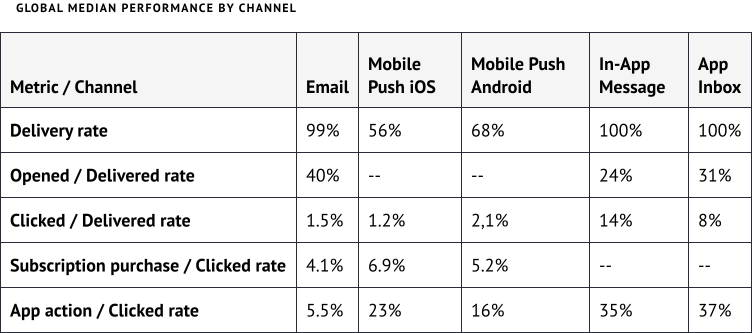
Global funnel benchmarks by channel
Each channel has its own strengths in the subscription funnel. In this section, we compare them across a simple, consistent funnel:
Delivery rate - messages successfully delivered.
Opened to Delivered - this metric shows whether recipients are interested enough to open a message, reflecting the strength of “user-facing” elements (subject line, sender, send time, etc.).
Clicked to Delivered - this metric shows how effectively a message produces a target click given that it was delivered.
Subscription to Clicked & App action to Clicked - key outcome, how often a click turns into the conversion (subscription or core action within the app).
Country & regional variation in email deliverability
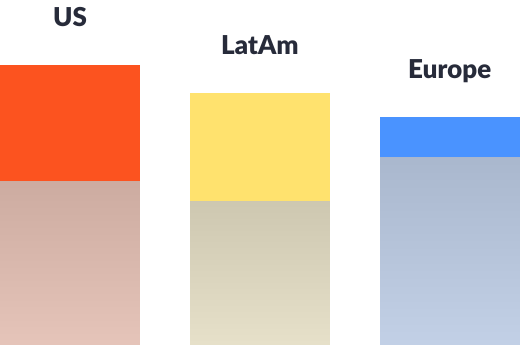
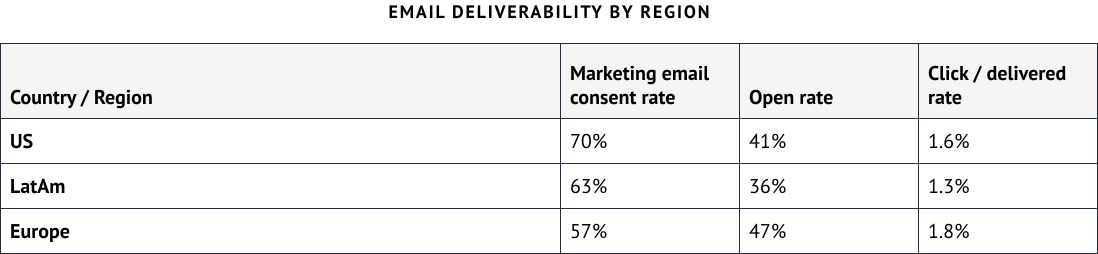
Email performance varies widely by region. The table below compares three key indicators across the US, LatAm, and Europe:
Marketing consent rate,
Open rate, and
Click-to-delivery rate.
This data can be used to benchmark list quality and engagement, and to spot where optimization should focus - permission, inbox attention, or post-open action for every campaign.
What’s Next in 2026
App messaging is shifting from “send campaigns” to “run an intelligent system.”
AI, better integration, and journey-first thinking are reshaping how teams design, launch, and optimize communication - with revenue as the most important KPI.


AI as the default optimization layer
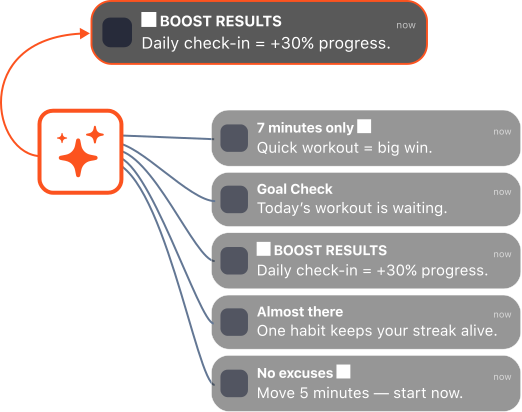
AI is moving from “nice-to-have assistant” to built-in optimization layer inside messaging platforms.
The goal is not “using AI,” but sending messages that convert better: more subscriptions, higher LTV, lower churn.
AI raises the ceiling by:
Generating multiple variants of the same message (subject, copy, CTA, layout, send time).
Running continuous experiments in the background instead of occasional A/B tests.
Auto-selecting winning variants per segment, rather than forcing teams to manually read test reports.
Platforms like Reteno are investing in multi-variant selection blocks (“One from Many”) as part of this broader trend: marketers define guardrails, AI explores options and silently optimizes for uplift.
Platform integration: From coding to guided setup
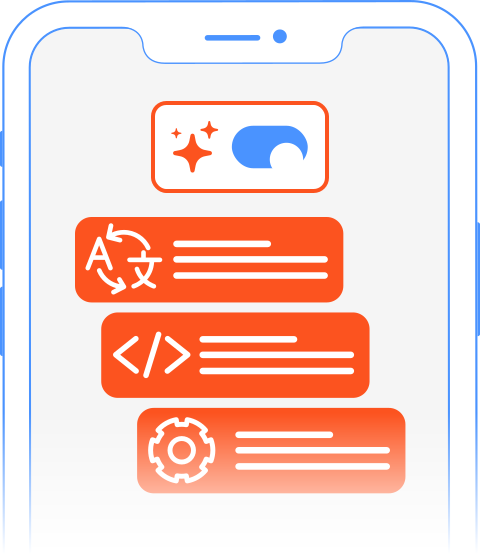
For years, the main bottleneck in adopting messaging platforms has been technical integration: SDKs, events, schemas, and custom code.
The next wave is about turning complex integration process into:
Guided instead of bespoke - AI-assisted setup wizards that inspect app structure and propose event mappings.
No-code - more configuration, no custom scripts.
Self-validating - platforms warning about missing events or inconsistent states before launch.
Vendors, including Reteno, are working toward a 2026 reality where a typical team can “Connect the app → Confirm subscription model → Accept suggested event schema → Switch on starter flows” in hours, not days or weeks – with almost no dependency on developer bandwidth.

Messaging revenue share’s growth
The direction of travel for 2026 is clear: raise the median closer to what the best are already achieving.
In 2025, median apps generated around 4.6% of revenue from messaging (mainly email and push), while the best teams - those with robust lifecycle flows and strong experimentation practices - reached roughly 13.2%. Overcoming this gap is becoming a central strategic question for apps, which see messaging as one of the core revenue engines.
Platforms are aligning their roadmaps (Reteno among them) around this trend: out-of-the-box workflows, AI optimization, and better analytics aimed at shifting most apps from ~4-5% to double-digit revenue shares from messaging.
From channel-first to journey-first orchestration
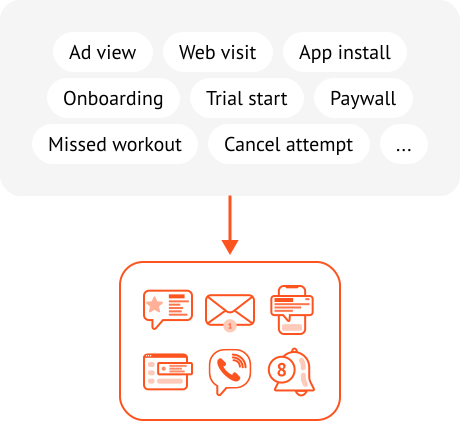
The industry is shifting from channel-centric tactics (“send more emails / more push”) to journey-first orchestration: flows that follow the user from first impression to subscription and beyond.
Less batch & blast, more funnel integration and event-driven messaging: ad view, onboarding, paywall, trial start, missed workout, cancel attempt, lapse, return. Messages across all channels share the same story, style, tone, and personalization logic.
Journeys start before install (web2app) and extend past first purchase, covering activation, retention, and reactivation.
Consent and preferences become part of the experience, not just compliance: contextual prompts, granular controls by channel, and preference changes that are easy to make - and automatically respected.
What will pay off in 2026
The future of app messaging will not be defined by who has the most channels, but by who:
Integrates quickly and cleanly
Designs journeys that match real user behavior
Harnesses the power of AI to generate, test, and optimize messaging at scale.
In that world, AI is not a buzzword. It is the invisible engine pushing your messaging performance steadily toward the level of today’s best teams—and then beyond it.
Key Takeaways
1
Median app messaging revenue is 4.6%. Top reaches 13.2% - and can be boosted higher
2
AI-assisted, no-code platform integration will cut time-to-value for messaging
3
AI shifts from copy helper to built-in optimization layer for full user journeys
4
Post-purchase activation is crucial as it drives more LTV than late win-back campaigns
5
AI copy, multi-variant testing plus auto-winners beat manual A/B tests at scale
6
Web2App funnels will keep dominating acquisition over direct store installs
Trusted by 500+ brands building intelligent lifecycle messaging