Revenue Attribution

Alex Anikienko
Expert Writer
October 5, 2026
Expert Writer
October 5, 2026
A sale almost never comes from one neat little click. Usually, it is a pile-up of small moments: a paid ad, a product page visit, an email opened on the train, a push notification noticed two days later, maybe a discount code that finally tips the mood from “maybe” to “fine, I’m buying it.” That messy chain is exactly where revenue attribution comes in.
Revenue attribution is essentially the answer to a question every marketer eventually has to face: where did the money actually come from? Not which channel racked up impressions. Not which campaign generated a flurry of clicks that went nowhere. Which specific effort — which channel, message, or moment — is connected to someone actually spending money.
That gets complicated the moment you look at how purchases actually happen. A shopper notices a Nike retargeting ad, glances at a few reviews, opens a brand email on the train, ignores it, googles the product two days later, and finally buys after a push notification arrives at the right moment. Who gets the credit? The ad? The email? Search? The push? Revenue attribution exists because the honest answer is often “more than one thing.”
In everyday work, revenue attribution helps teams connect sales to the steps that happened before the purchase. That includes ads, emails, organic search, referrals, in-app messages, SMS, sales calls, demos, and other touchpoints. Instead of staring at a report full of “engagement” and trying to guess whether it mattered, teams use revenue attribution to see which efforts are tied to revenue in a way that is at least measurable, practical, and worth acting on.
This is especially useful when the customer journey is not short and tidy. And let’s be honest – it usually is not. Take a beauty brand: awareness starts on TikTok, email does the nurturing, SMS handles the close, and app messages bring people back for a second order. Or a B2B SaaS company: a LinkedIn ad brings in the lead, webinars build the case, a demo happens, follow-ups go out, and the deal closes three weeks later. Revenue attribution is what stops all of those steps from collapsing into one lazy line in a spreadsheet.
In practice, revenue attribution is a tracking problem first. Brands pull signals from UTM parameters, analytics platforms, CRM data, ad networks, website sessions, and mobile SDKs. For app businesses, this work often runs alongside mobile attribution — particularly when the goal is connecting paid acquisition to installs, app conversions, subscriptions, or in-app purchases.
The less tidy part comes next: assembling those signals into something coherent. A user clicks a paid ad on mobile, browses on desktop later, opens an email, and then converts in the app. A solid setup tries to link those events into a single conversion path instead of counting each one as a separate, unrelated session. If identity matching is weak, revenue attribution gets blurry fast. That is why data quality and systems integration matter so much. Bad stitching leads to bad storytelling.
Once the path is there, the business applies an attribution model. That model decides how the revenue credit is split. Some models reward the first interaction. Some hand everything to the last one. Others spread value across several touches.
Take a simple ecommerce example. A customer first finds a skincare brand through Instagram, signs up for email, later clicks a “top-rated serums” Google result, and finally buys after receiving an abandoned cart email. With revenue attribution, the brand can decide whether the first ad deserves the credit, whether the email closed the sale, or whether all those steps deserve a slice.
That is why attribution reports matter so much. They turn raw behaviour into something a team can actually use: revenue by channel, campaign, source, audience, or funnel stage. Not perfect truth – that does not exist here – but something much better than shrugging and saying, “Well, paid social seems good.”
Without revenue attribution, channel budgeting can get weirdly emotional. Paid media claims it drove demand. CRM says email closed the sale. Brand says nothing would have happened without awareness. Sales says marketing loves taking credit for deals it did not close. Everyone has a chart. Everyone has a theory. Nobody really relaxes.
Revenue attribution does not magically end those arguments, but it gives people something firmer to stand on. If one paid campaign drove plenty of clicks but almost no attributed revenue, that is useful. If a smaller lifecycle campaign quietly produced better ROAS than the flashy prospecting push, that is even more useful. According to Nielsen’s 2025 Annual Marketing Report, marketers continue to rank revenue growth and ROI pressure among their top concerns, which is exactly why attribution work keeps moving from “nice to have” to “please fix this now.”
Most dashboards make the buying process look far neater than it actually is. Users browse, stall, forget, get pulled away by something else, and eventually return on their own timeline. Revenue attribution helps expose those loops. That is gold for teams trying to understand whether upper-funnel content is doing real work or whether all the value sits in bottom-funnel retargeting.
For example, a fashion retailer may discover that YouTube rarely gets the last click but appears early in a high number of converting journeys. That does not mean YouTube is weak. It may mean it is doing the early persuasion while email and search collect the final click. Without revenue attribution, that channel might be cut unfairly.
A lot of “optimisation” is really just educated fiddling. Subject lines get tweaked. audiences get shuffled. bids are adjusted. creatives are swapped. Sometimes results improve, but teams are not always sure why. Revenue attribution gives them a cleaner way to spot patterns.
Maybe a push notification sent within two hours of cart abandonment works far better than one sent the next day. Maybe welcome emails bring traffic, but SMS drives higher-value purchases. Maybe search ads produce fewer orders than affiliate traffic, yet the average order value is much stronger. Those are not abstract insights. They are the kind of details that actually change strategy.
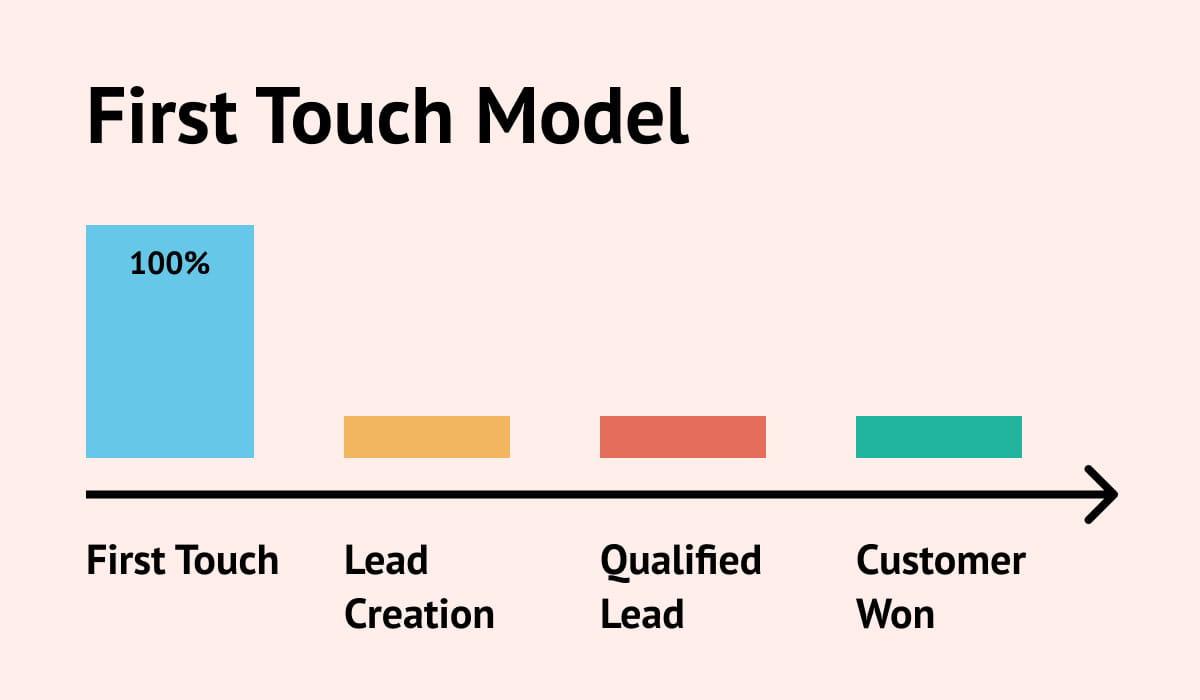
In first-touch revenue attribution, all the value goes to the interaction that introduced the customer to the brand. This model is attractive because it answers a very practical question: what is opening the door?
A travel app, for example, may find that influencer content on Instagram is not closing bookings directly, but it is responsible for a large share of first visits from new users. For top-of-funnel analysis, that is genuinely useful. The problem is that first-touch can overpraise the opening scene and ignore the rest of the film.
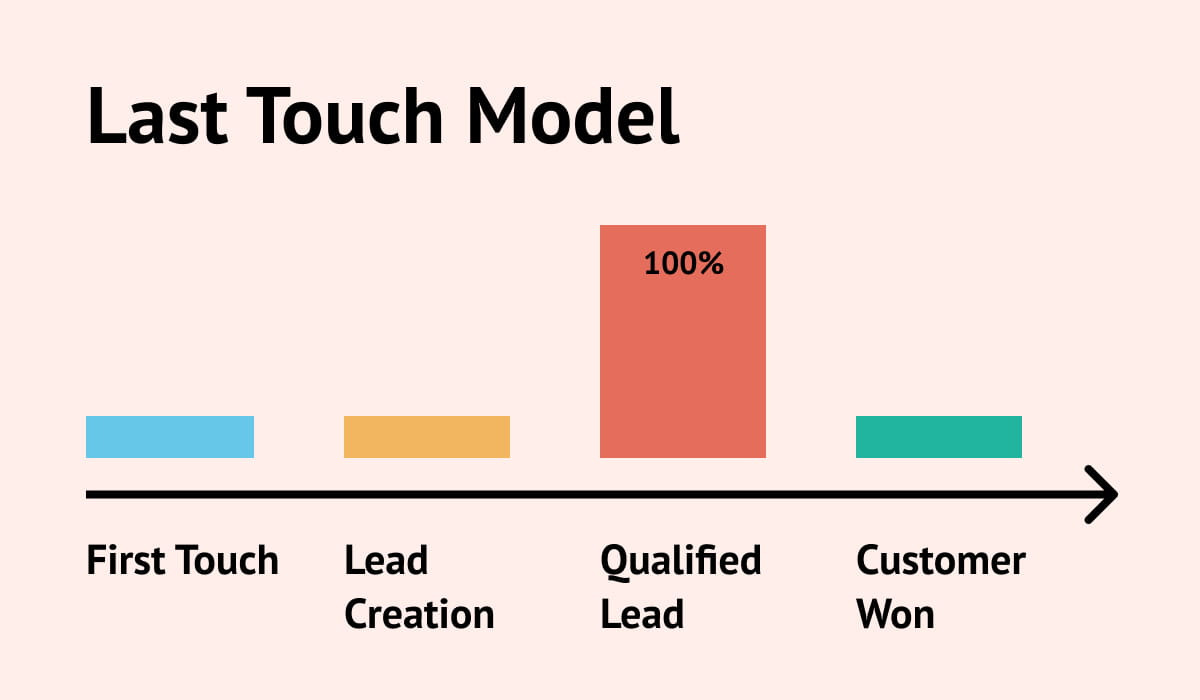
Last-touch revenue attribution hands all the credit to whichever interaction happened just before the purchase. Its main appeal is simplicity — it is straightforward to explain, not difficult to set up, and produces reports that do not require much interpretation.
A customer spends a week browsing Sephora, does nothing, then opens a promotional email on Sunday night and places an order. Under last-touch, that email collects the full credit. Sometimes that is fair enough. Sometimes it is a little like giving the waiter credit for the recipe.
This is why teams should use last-touch revenue attribution carefully. It is useful for evaluating closing tactics, but it can make mid-funnel and awareness work look weaker than it really is.
Single-touch revenue attribution is the broad family that includes first-touch and last-touch approaches. It works best when the path to purchase is short, the product is simple, and there are very few meaningful touchpoints.
A food delivery app running a one-day acquisition campaign may get away with single-touch revenue attribution because many users click, install, and order fairly quickly. But once journeys stretch out, single-touch starts trimming away too much reality.
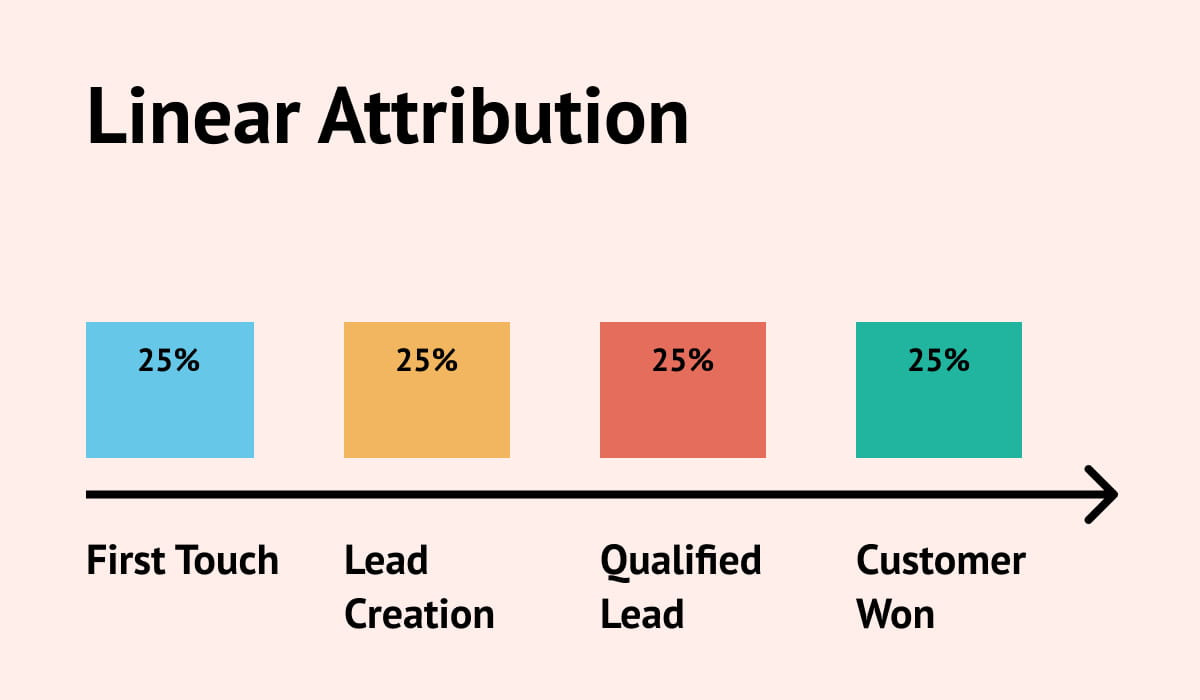
Linear attribution splits the credit evenly across every interaction in the path. Four touches, four equal shares — each gets 25% of the attributed revenue. A linear attribution model tends to appeal to teams that want a more balanced read and are wary of a setup that funnels all recognition to either the opening or the closing move.
The obvious limitation is that equal splits can be a little too diplomatic. A casual blog visit and a product demo are not the same kind of event, and treating them identically flattens something that probably matters. Still, as a starting point for marketing attribution, linear is a reasonable and honest place to begin.
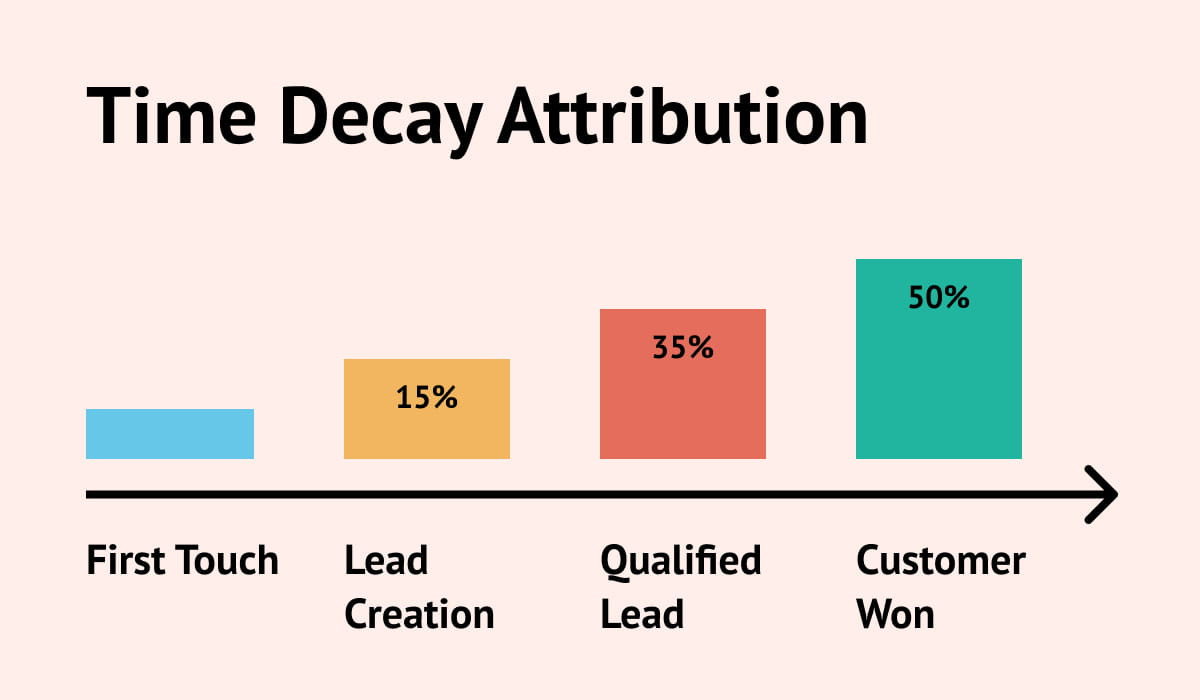
Time-decay attribution puts more weight on the touches that happened closer to the purchase date. It is a natural fit for categories where deadlines, scarcity, and timely reminders are what actually convert interest into action.
Picture a ticketing platform with a limited-run event. Someone hears about the show weeks out but does nothing. A retargeting ad runs two days before tickets sell out. An email reminder lands the next morning. That combination pushes the purchase over the line — and time-decay gives those later touches proportionally more credit while still acknowledging the earlier ones.
Multitouch revenue attribution is usually the most realistic option when the buying journey has layers. Rather than crediting a single touch with the whole sale, it distributes value across the interactions that shaped the journey. This becomes particularly relevant for brands with extended funnels, subscription models, or products that require real deliberation before a purchase.
A SaaS company, for instance, might track a path that runs from LinkedIn ad to ebook download to webinar to demo to pricing page to signed contract. In that case, multitouch revenue attribution usually paints a much more honest picture than either first-touch or last-touch alone.
This is the headline metric: how much revenue each channel influenced. Email, paid social, organic search, affiliates, SMS, referral, in-app messaging – the point is to connect channels to actual money, not just activity.
Once spend data is added, revenue attribution gets much sharper. Teams can compare attributed revenue against cost and look at return on investment (ROI) and ROAS. This is where hidden winners often show up. A channel with modest traffic might quietly outperform a high-volume one once cost enters the room.
Strong campaign tracking lets teams move beyond broad channel analysis. They can compare launch campaigns, retention flows, reactivation pushes, and paid audiences. In B2B, it also helps connect lead generation and opportunity stages to closed revenue rather than treating pipeline as the final story.
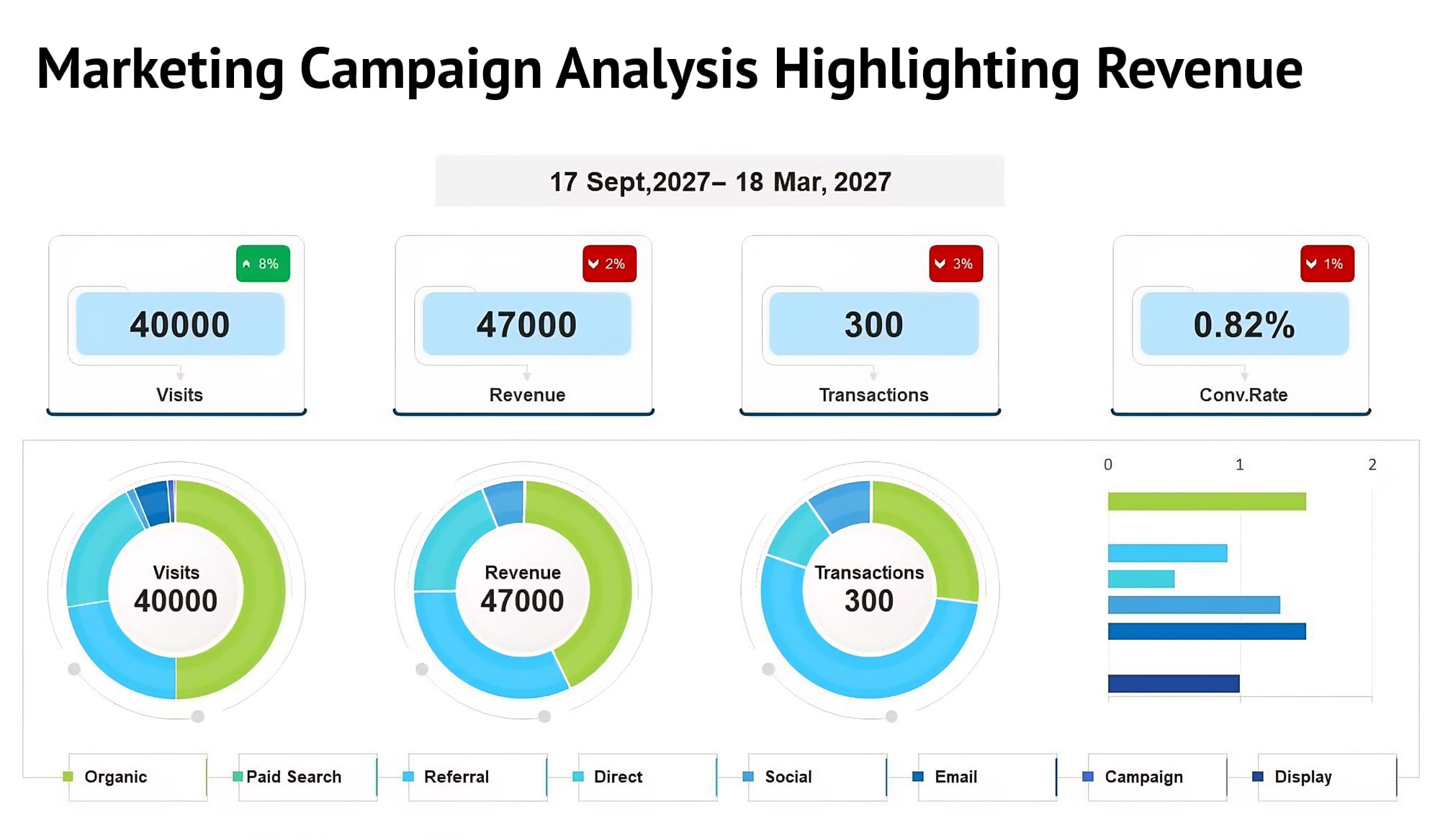
If the buying cycle is quick and impulse-led, simpler revenue attribution may be enough. But if customers compare products, wait for payday, or bounce between desktop and app, a broader model will be more honest.
B2B buyers rarely convert after one tidy interaction. There are usually demos, sales emails, internal approvals, follow-ups, and repeat visits. In that world, revenue attribution should reflect multiple customer touchpoints, not just the closed deal.
App-first businesses need attribution that covers the full picture — installs, re-engagement sessions, subscription starts, and app conversions across every channel feeding into the product. When push notifications, paid acquisition, and lifecycle messaging are all part of how users move through the funnel, the attribution model needs to reflect that complexity rather than collapsing it into a single line.
A complicated model with shaky tracking is like expensive shoes on a broken ankle. Start with a version of revenue attribution your team can explain, trust, and maintain. Then improve it.
The goal is not to crown one channel the hero every month. The real value of revenue attribution is seeing how channels support one another. That is where smarter experiments and better data-driven decisions come from.
A brand that relied mostly on email and paid search last year may now depend on push, affiliates, retail media, or app re-engagement. Revenue attribution should evolve with the mix. Otherwise, it starts measuring today’s business with yesterday’s map.
Good revenue attribution will never be perfectly clean, because customers are not perfectly clean. They wander, hesitate, compare, scroll, disappear, and come back when you least expect it. But that is exactly why attribution matters. It gives marketers a way to make sense of the chaos, assign revenue credit more fairly, and build reporting that is actually useful in digital and mobile marketing.


(1).jpg)