
George Johnson
Expert Writer
June 6, 2026
George Johnson
Expert Writer
June 6, 2026
.jpg)
Most marketers spend years looking for proven frameworks: templates, best practices, winning campaign structures. The assumption is simple: if someone else already solved the problem, why reinvent it?
But the longer you work in growth and retention, the more obvious another reality becomes. The best-performing teams rarely follow playbooks. They build their own.
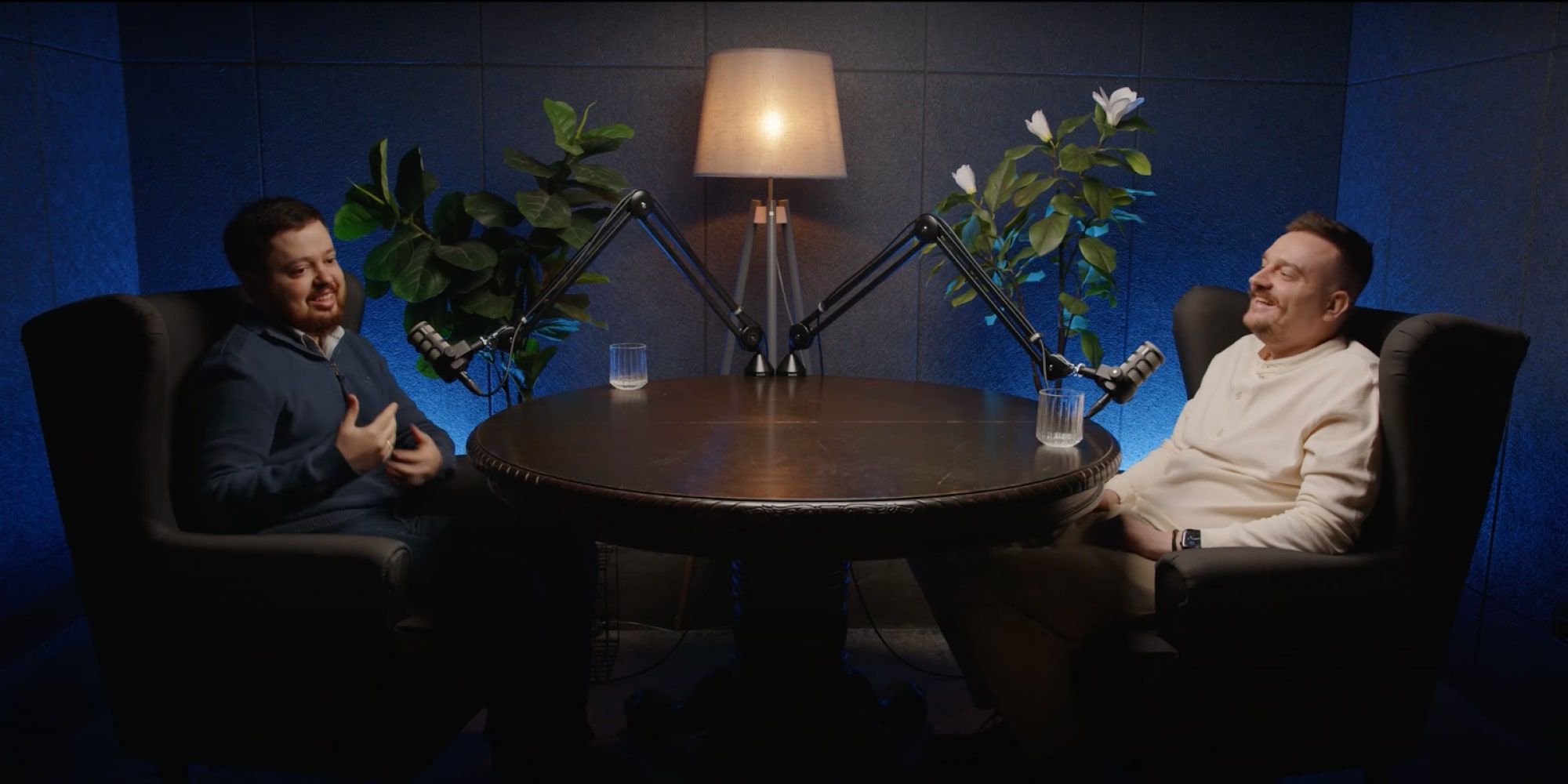
That was one of the most interesting ideas from our conversation with Oleksii Choban, Lifecycle Marketing Manager at Superhuman, who previously helped build lifecycle programs at Grammarly, Speechify, and Amboss.
His career path is unusual. Before entering product and lifecycle marketing, he trained as a pediatric surgeon. But perhaps that's exactly why his perspective stands out. Because while the tools, channels, and technologies keep changing, Oleksii approaches products the same way he once approached medicine: as systems. And in a world increasingly shaped by AI, that mindset may matter more than any playbook.
A few years ago, lifecycle marketing was often viewed as a communication layer: emails, push notifications, a few onboarding campaigns, maybe a win-back sequence.
Today, that definition feels outdated. Modern lifecycle marketers sit at the intersection of product, analytics, experimentation, customer psychology, CRM infrastructure, and monetization.
As Oleksii explained, the role has gradually absorbed responsibilities that used to belong to multiple teams:
The result is a role that looks increasingly less like campaign management and more like growth orchestration. That shift matters because retention is no longer a standalone metric.
Retention influences monetization. Monetization affects acquisition economics.Acquisition quality shapes activation. And activation determines whether lifecycle messaging has a chance to work at all.
The customer journey has become too interconnected for isolated thinking.
.png)
One of the strongest opinions in the conversation was also one of the simplest.
"There is no playbook."
At least not in the way most people imagine.
Oleksii pushed back against the growing industry habit of sharing "proven frameworks" and "ready-made lifecycle strategies."
Not because those ideas are useless, but because products are different. Users are different. Business models are different.
The activation journey that works for a productivity app may fail completely inside a health platform. A successful retention strategy for medical education software may have little relevance for AI-powered productivity tools.
What teams can borrow are ideas. Not solutions, which is an important distinction. Many companies try to shortcut customer understanding by copying what worked elsewhere. The strongest lifecycle teams do the opposite.
.png)
One reason Oleksii's transition from medicine to marketing feels surprisingly logical is that both disciplines revolve around systems thinking.
Doctors don't treat symptoms in isolation.
They look for relationships.
Causes.
Dependencies.
Patterns.
The same principle increasingly applies to product growth.
Lifecycle marketers today need to understand:
Not because they need to become experts in everything, but because customer journeys now cross all of those domains.
The days when CRM teams could operate independently from product teams are disappearing. Customer engagement has become too deeply embedded into the product itself.
Every discussion about modern marketing eventually arrives at the same question:
Will AI replace us?
Oleksii's answer was refreshingly practical.
No.
At least not in the way many people fear.
What AI is actually doing is reducing operational friction. It makes research faster, content production faster, data exploration faster, experiment setup faster, learning faster…
The work itself does not disappear. The bottlenecks change.
As Oleksii put it, the real differentiator increasingly becomes operational efficiency. The marketers who know how to use AI effectively can run more experiments, process more insights, and move faster than before.
This is especially relevant in lifecycle marketing, where teams often operate across multiple platforms, datasets, channels, and customer segments simultaneously.
.png)
The AI conversation naturally expanded into something bigger - career resilience. Few people understand professional reinvention better than someone who spent years preparing for a career in surgery before building a career in marketing.
That experience shaped one of the recurring themes of the episode. Adaptability matters. Not because jobs disappear overnight, but because industries evolve.
Tools and customer behavior evolves. The people who continue growing are rarely the ones who predicted every change correctly. They're the ones willing to learn continuously.
That mindset appears repeatedly throughout Oleksii's story.
Another interesting idea from the conversation was how AI shifts the value of execution.
Historically, companies often gained advantages through scale.
More resources, people, and output. AI changes that equation. A smaller team can now produce more experiments, more research, more personalization, and more operational work than was previously possible.
That doesn't eliminate the need for talent. It raises the bar for how talent is applied. The winning teams will not necessarily be the ones using the most AI tools. They will be the teams that redesign workflows around those tools. This distinction is important.
Technology creates opportunities. Processes turn opportunities into results. And lifecycle marketing increasingly sits directly between those two worlds.
.png)
Throughout the conversation, one pattern kept emerging. Technical skills matter and the willingness to learn.
Because every major trend discussed in the episode, from lifecycle marketing evolution to AI adoption, ultimately comes back to adaptability. The channels, tools and customer journey will change. What remains constant is the need to understand people and create experiences that help them succeed.
That's why lifecycle marketing isn't disappearing. If anything, it's becoming more important. Because companies need more understanding. And there has never been a playbook for that.
"There is no playbook."
"The best lifecycle teams build their own frameworks."
"AI reduces friction. It doesn't replace thinking."
"Retention is no longer a channel. It's a business function."
"Customer journeys became too interconnected for isolated thinking."
"The future belongs to marketers who understand systems."
"Operational efficiency is becoming a competitive advantage."
"Curiosity may be the most valuable professional skill."
"AI changes bottlenecks more than it changes jobs."
"Companies don't need more messages. They need more understanding."
(1).png)
(1).png)
.png)

George Johnson
|
September 6, 2024
Join the conversation about Reface products, the structure of the ML team, methods for measuring Product-market fit, mistakes in conducting A/B tests, and much more.
George Johnson
|
November 23, 2025
Discover how Welltech’s CRM strategies drive app user engagement and retention, from A/B testing to AI-powered messaging

Are your pushes as compelling as they could be? Find out with our free preview tool. Instantly see how your notifications will display on iOS and Android, in both expanded and collapsed views.
This is your chance to fine-tune your messages to ensure they're not just seen but felt. Make every character and every push work harder for your engagement goals


