
George Johnson
Expert Writer
May 15, 2026
George Johnson
Expert Writer
May 15, 2026
.jpg)
Some apps grow fast. Others survive long enough to become part of how people use their devices.
Documents by Readdle belongs to the second group. It was among the first 500 apps on the App Store, launched back in 2008, and is still growing almost two decades later.
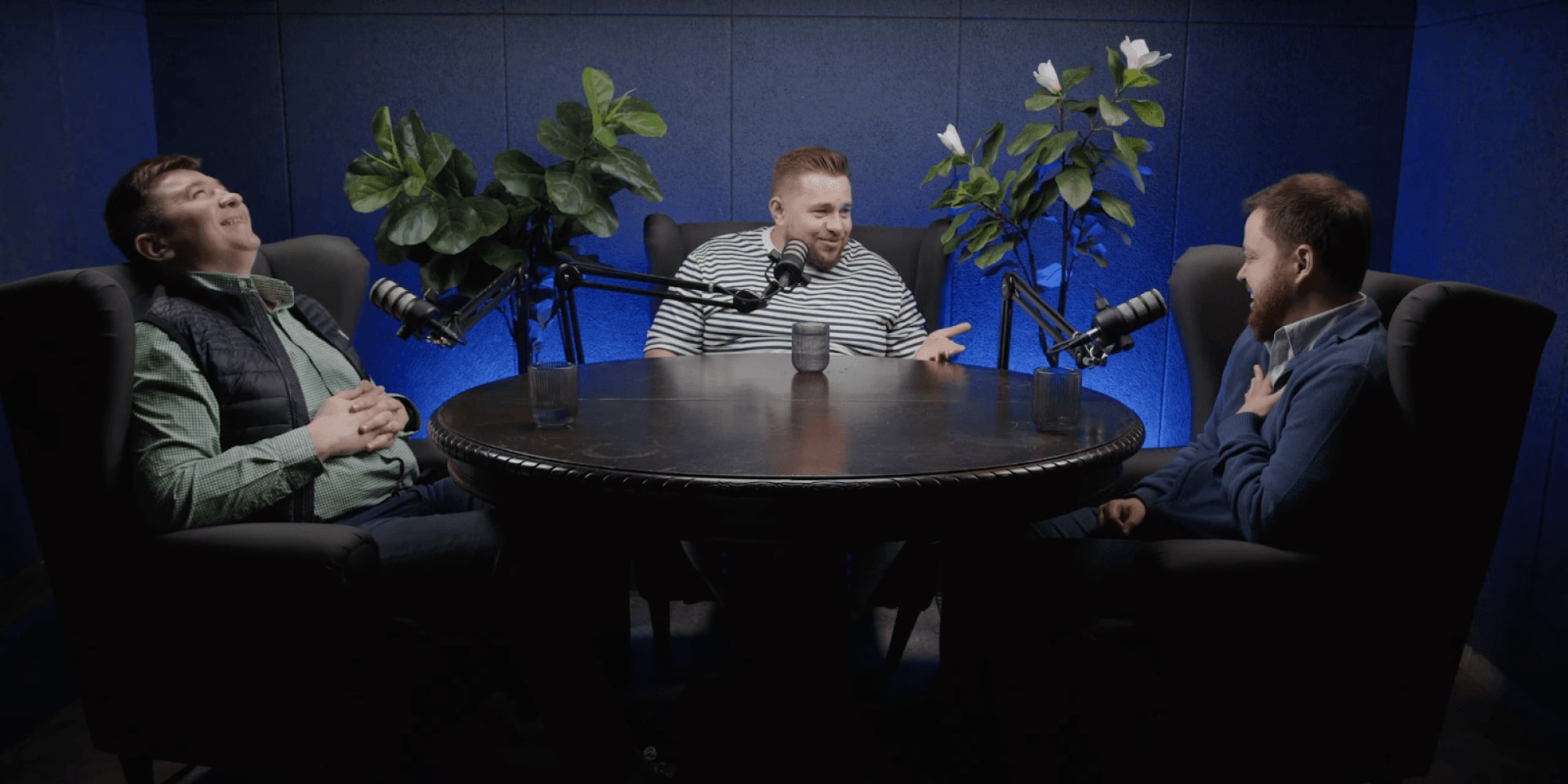
In this Reteno podcast episode, Oleg Lesov, CEO at Reteno, sat down with Paul Sakhatskyi, Head of Product Marketing at Readdle, to talk about what it takes to keep a product relevant for 18 years, turn a free utility into a business, move from one-time purchases to subscriptions, and build product marketing around real user behavior.
The conversation is about what happens when a product lives long enough to face every hard question: monetization, positioning, retention, AI, user research, experimentation, and the uncomfortable work of removing things that no longer fit.
Documents was born from a very specific gap in iOS.
At the time, if users wanted to open different file types, manage documents, listen to media, or store files, they needed separate apps for separate jobs.
Readdle built Documents around a simple idea: one place to store, manage, and work with different file formats.
As Paul puts it:
“The first principle: solve real, real problems.”
That may sound obvious. But it explains why Documents lasted.
Many mobile apps are built around trends. Documents was built around a system limitation. And when a product solves something fundamental, it has more room to evolve.
The product has changed from a file manager into something closer to an information management system. Because the user need has changed too.
People do not really want files.
They want what is inside them.
“People don’t need files. They need information.”
That shift matters for every productivity app. Storage is no longer the value. Action is.
One of the biggest transitions in Readdle’s journey was the move from one-time purchases to subscriptions.
For many apps, subscriptions are the default model from day one. But Readdle had products that people bought precisely because they were not subscription-based.
That creates a different kind of challenge.
You are not just changing pricing. You are changing the promise users thought they bought into.
“Transitioning a product from one business model to another is way more difficult than building a subscription business from scratch.”
The key lesson: you cannot treat existing customers like new users.
When Readdle introduced accounts and subscriptions in PDF Expert, many customers resisted. They were concerned about privacy, data, and the reason behind the change.
So the team added two explanatory screens before account creation and the paywall. Not a redesign. Not a pricing trick. Just a clear explanation of why the account was needed and how it benefited the user.
The result: churn in that flow dropped roughly by half.
The lesson is simple but often ignored.
Users can understand change. But they need context.
For years, Documents worked as a free product and a brand awareness channel for Readdle’s paid apps.
No ads. No direct monetization. Just a strong product experience that introduced users to PDF Expert, Scanner Pro, Spark, and other tools.
Later, the team decided to turn Documents into a standalone business. That required a different level of segmentation.
Documents is not a narrow single-use app. It is closer to a multi-tool. Different users come for different reasons: PDFs, downloads, media, studying, file management, and more.
That made one broad value proposition impossible.
Paul shared that around 20% of users worked with PDF files in Documents, which helped shape one of the main monetization paths. But even a seemingly clear segment like “students and educators” turned out to contain several very different groups.
“Students and educators” was an umbrella. Underneath, there were completely different audiences with different motivations."
That insight changed the activation strategy.
Instead of forcing one message on everyone, the team began moving toward segmented onboarding, communication, and value propositions.
For subscription apps, this is where monetization and lifecycle marketing meet. The business does not grow only by adding a paywall. It grows by understanding who the user is, what they came for, and what value they need to see first.
Readdle runs experiments, but not the kind that only change button colors.
The team aims for 10+ meaningful experiments per quarter. These are bigger bets: new flows, different onboarding logic, new monetization ideas, and major product experience changes.
Paul’s view is practical.
If you do not have massive traffic, tiny experiments often take too long to prove anything. Bigger changes give you a clearer signal faster.
“We are trying to scale big things.”
One example came from a back-to-school campaign.
The control group saw a standard offer screen. The test group saw a red backpack fall from the top of the screen and turn into the same paywall.
Same offer. Same paywall. Different attention mechanism.
Sales increased by 22%.
The insight was not “add animation everywhere.”
The insight was that attention principles from advertising also work inside the product.
“Sometimes we forget that the same principles work in user interface and activation flows and onboardings and offerings.”
This is a useful reminder for app teams. Lifecycle, onboarding, paywalls, and in-app offers are not separate from marketing. They are marketing surfaces.
Analytics can show what users do.
It cannot always show what they mean.
Paul shared a strong example from PDF Expert. The team had a feature called PDF editing and created SEO content around “how to edit PDFs.” The articles attracted traffic, but conversions were weak.
On paper, everything matched.
The user searched for PDF editing.
The article explained PDF editing.
The product had PDF editing.
But user research revealed the mismatch.
When people said they wanted to “edit a PDF,” they often meant something else: highlight text, add a signature, place a stamp, draw a circle, or annotate the file.
In professional product language, those are different actions. In user language, they are all “editing.”
“Our professional understanding of what things are is different from what people think.”
Once the team changed the content to match user language, performance improved.
That is the kind of insight no dashboard gives you on its own. You get it by talking to users.
Many teams treat experimentation like a conveyor belt.
Test idea.
Accept or reject it.
Move on.
Paul argues that this is too simple.
Markets change. Audiences change. Products change. A failed hypothesis today might work a year later under different conditions.
“In my view, experimentation is a circle.”
That is especially important for app teams running many tests. At scale, false positives and false negatives are inevitable. Even statistically significant results can mislead you if you never retest old assumptions.
Readdle’s approach is to keep velocity high, but stay humble about conclusions.
They also changed how they think about overlapping experiments. Instead of waiting too long for perfect isolation, they allow some experiments to run in parallel when the placements are far enough apart in the user journey.
It is not careless testing.
It is a more realistic way to learn inside a living product.
Paul’s definition of product marketing depends on the company context.
In large corporations, PMMs often own go-to-market for features or products. In performance-driven businesses, they often become funnel optimizers.
At Readdle, the role is broader.
PMMs work on competitor research, user research, positioning, go-to-market, experimentation, analytics, and new growth opportunities.
In other words, product marketing is not just messaging.
It is the connection layer between product, market, users, and revenue.
That is especially relevant for subscription apps, where the line between product and marketing is thin. Onboarding, paywalls, lifecycle messages, upgrade flows, and activation campaigns all shape the business model.
Readdle does not treat AI as a sticker to place on every product screen.
Paul makes a clear distinction: some products are AI-native, while others are AI-enhanced.
For Readdle, many products fall into the second group. AI is used to improve existing workflows, not replace the product logic.
Spark is the clearest fit because email naturally benefits from AI: drafting, translation, text work, and content help.
For Documents, the question is more careful. The team is exploring AI, but does not want to add a chat interface just to claim the product is AI-powered.
Internally, AI is already changing how the team works. It speeds up content creation, brainstorming, research, prototyping, design work, and knowledge sharing.
One strong example: user research summaries are turned into short AI-generated internal podcasts so the team can absorb insights between meetings.
Documents started in a world where file management was a major user problem.
Now the landscape is different.
Cloud storage made storage less valuable. AI is starting to change how people search, summarize, convert, and act on information. Younger users may not even think in files at all.
That does not make Documents less relevant. It changes the job the product needs to do.
The opportunity is not to help users “manage files” forever.
It is to help them get to the information and actions they need faster.
For app teams, this is the bigger lesson from Readdle’s story.
Long-term growth does not come from defending the original product forever. It comes from understanding which user problem still matters — and being willing to rebuild around it.
After 18 years, Documents is still here because the product keeps asking that question.
And that might be the real advantage.
Not being first.
Staying useful.
(1).png)
(1).png)
.png)
George Johnson
|
June 17, 2025
Discover how AI is reshaping hiring — from smarter sourcing to interviews — with insights from product pros
George Johnson
|
August 18, 2025
Discover the two product models, key growth metrics, and AI tactics Prom.ua uses to scale one of Ukraine’s largest marketplaces

Are your pushes as compelling as they could be? Find out with our free preview tool. Instantly see how your notifications will display on iOS and Android, in both expanded and collapsed views.
This is your chance to fine-tune your messages to ensure they're not just seen but felt. Make every character and every push work harder for your engagement goals


