
George Johnson
Expert Writer
March 31, 2026
George Johnson
Expert Writer
March 31, 2026
.jpg)
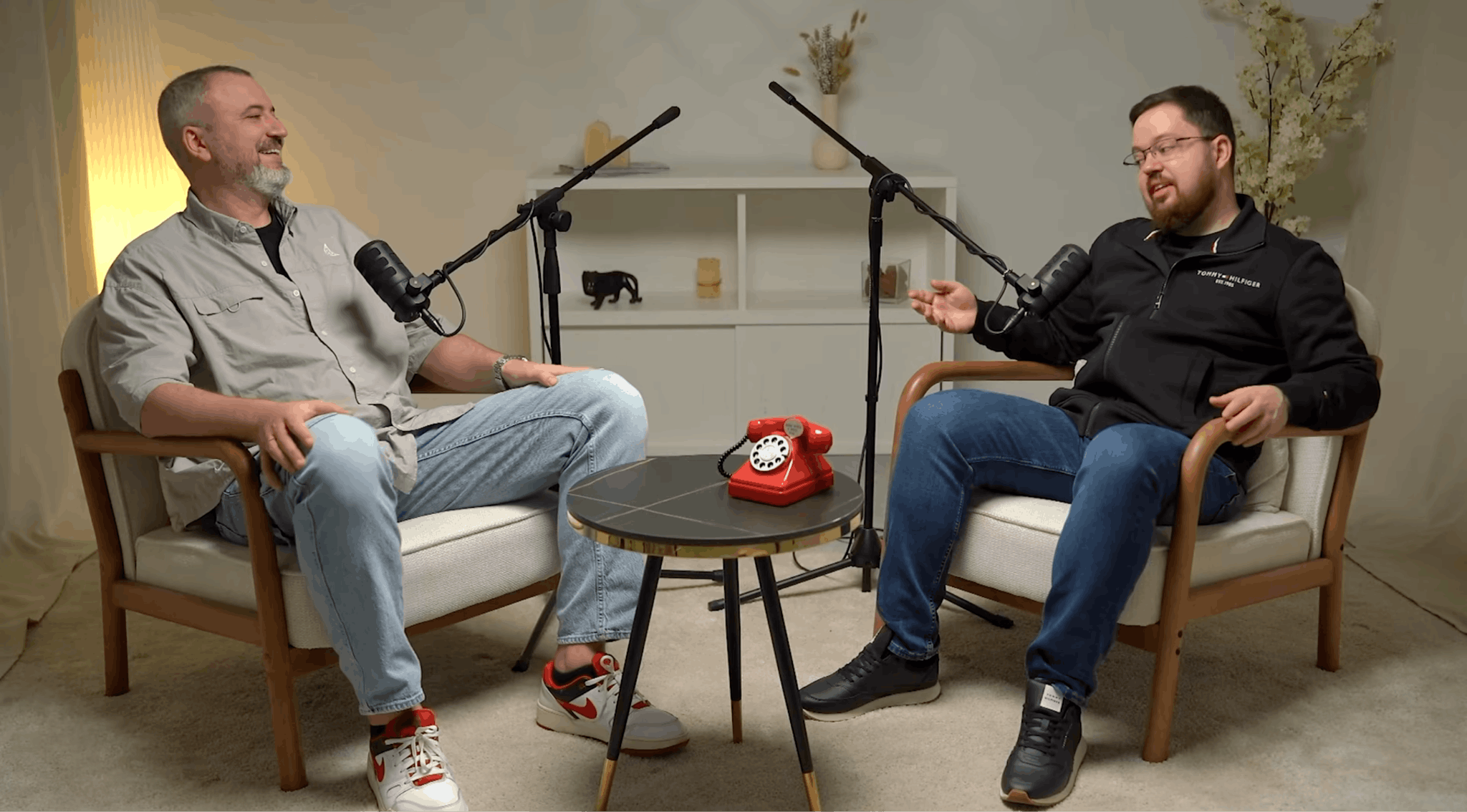
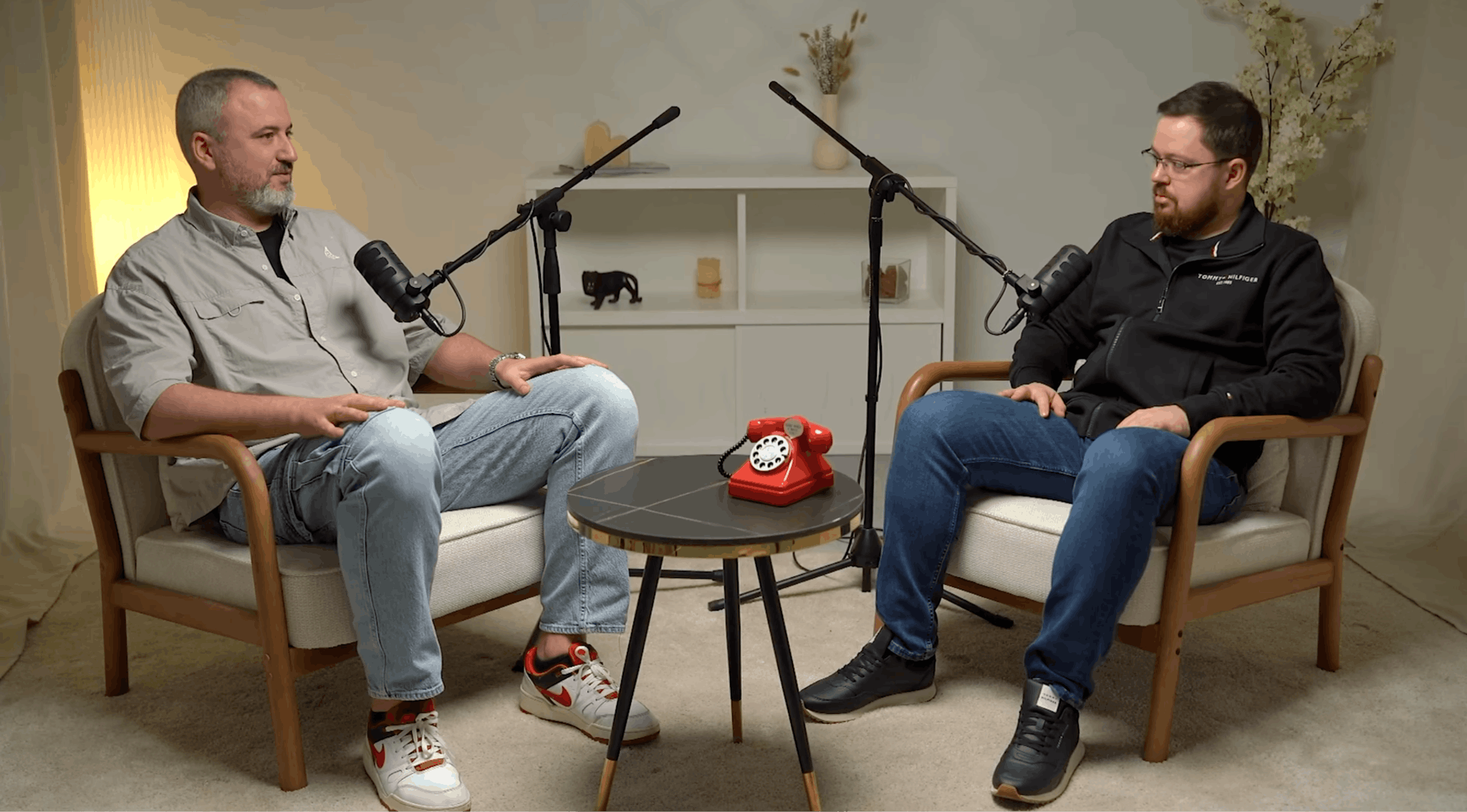
In Retention Podcast #64, we sat down with Viktor Mohyla, CEO of AppLyft — a Ukrainian-born product company that started with the Geozilla GPS Family Locator and has since grown into a broad portfolio of mobile apps.
At 5 million monthly active users and 20% quarter-over-quarter revenue growth, AppLyft is already playing a serious scale game. It's a conversation about what product expansion, new bets, and growth leadership look like when the business is already moving fast.
Here’s what stood out.

There’s always more ideas than resources. The real question isn’t what could be built — it’s what’s actually worth building now. When choosing between investing in the core product or launching something new, the thinking usually starts with the basics: market trends, competition, and whether the space is growing or shrinking. That part is fairly standard. But it’s rarely enough on its own.
What matters just as much is fit. Does the idea align with the team’s expertise? Does it feel natural to execute on? And just as importantly — is there genuine interest in building it?
Some markets may look more profitable on paper, but if the team isn’t truly engaged, momentum fades quickly. In the end, it’s not just about chasing the biggest opportunity. It’s about choosing something the team is both capable of building and actually motivated to push forward.

Deciding what to build is one thing. Deciding how long to keep trying is where it gets tricky. There’s no clear rule. Some products take months — even over a year — before they start showing real signs of life. Especially in new markets, teams need time to build intuition, understand the audience, and figure out what actually works. Early on, it’s less about results and more about learning.
At the same time, it’s easy to stay too long. That’s why the focus shifts to dynamics, not just numbers. If key signals — like acquisition cost — improve over time, it usually means something is starting to click. If they stay unstable or move in the wrong direction, it’s often a sign the idea isn’t working. The hardest part is telling the difference between “not yet” and “never.” And that rarely comes from one metric — it comes from watching how things change over time.
At some point, a product becomes so technically complex that adding anything new feels almost unnatural. Systems grow heavy. There are dozens of services working together, real-time processes, edge cases everywhere. And then suddenly, alongside all that engineering, new layers appear — subscriptions, trials, funnels, experiments. It can feel like two very different worlds colliding inside one product.
That’s where tension usually shows up. Teams that have spent years building deep technical systems don’t always welcome simpler, growth-driven ideas right away. But once those changes start bringing results, the perception shifts. What looked like a strange direction begins to make sense. In practice, growth rarely comes from inventing something completely new. More often, it’s about noticing what already works in the market and adapting it well enough to fit the product.
Three seconds is not a lot to work with. But in app stores, ads, and landing pages, that’s often the whole window. The message either lands right away or it doesn’t land at all. That’s why clear communication keeps beating elegant communication. Big text, simple wording, obvious value. No one is waiting around for subtlety.
This logic travels surprisingly well across channels. What works in ASO often works in paid creative and on landing pages too. If the value is vague, the user is already gone. Numbers help because they make the promise feel concrete fast. “Three minutes” does more work than a polished line about being the best. Sometimes the version that feels slightly too loud is the one that actually gets remembered.
A lot of growth problems start in the gaps between teams. Not because people are lazy, but because no one feels fully responsible for the outcome. One person owns the campaign, another owns the product, someone else owns the funnel, and the result ends up belonging to no one. In marketing-driven businesses, that usually slows everything down.
That’s also why co-founding models work so well in app companies. Money helps, but money usually isn’t the hardest part. The harder part is finding people who can take ownership, make decisions, and keep going when things get messy. That’s where track record and fit start to matter more than a polished background. These aren’t quick hires. They’re long commitments, and the best candidates are often the ones who’ve already made mistakes, learned from them, and kept moving.
Creative production is getting harder to scale the old way. A few years ago, the game was mostly about copying competitors faster than everyone else. That works much worse now. In many cases, a top-performing competitor creative won’t work for anyone else at all. The strongest results increasingly come from original ideas, new messages, and teams that actually know how to develop their own angles instead of endlessly tweaking the same template.
At the same time, more production doesn’t automatically mean more growth. Yes, making more creatives increases the odds of finding a winner — but only if the system around that volume is strong enough to support it. Without good reporting, clear automation, and a team that can quickly spot what’s working and scale it in time, volume just turns into noise. That’s why creative production is no longer just a creative business. It’s a martech business too. At scale, the teams with the stronger infrastructure usually win.
AI has already changed production in a very real way. It’s no longer some extra layer on top of the process — it’s inside the process. Teams use it to generate variations, remake competitors’ ideas faster, swap faces, rewrite messages, and spin up new versions of existing concepts in minutes. That obviously changes the pace of production, and it lowers the barrier to entry for almost everyone.
But that doesn’t automatically mean the world gets buried in soulless AI sludge. There’s a more optimistic view here: once access gets cheaper, more talent gets a shot. The same thing happened in music, when the tools became affordable and suddenly great work started coming from people who never had access to a proper studio. AI gives them a way in.
Profit may be the favorite metric, but it usually shows up too late to guide day-to-day decisions. By the time profit is visible, the story is already halfway written. That’s why teams pay close attention to the signals that come before it — ad costs, ROI, scaling dynamics, and predicted LTV. The real question isn’t just whether spending is growing. It’s whether that growth is moving toward profitability or simply getting bigger without getting healthier.
That’s also why predicted LTV matters so much in subscription products. It gives teams an early sense of how much value a user is likely to bring over time. But it’s still a forecast, not a guarantee. Sometimes it overpredicts and pushes teams into painful mistakes. Sometimes it underpredicts and makes a healthy business look weaker than it is. Either way, it becomes useful not as a perfect truth, but as an early signal that helps teams decide whether they’re heading in the right direction.
AI is doing far more than helping teams make creatives faster. A lot of the real impact shows up deeper in the product stack — in development, planning, and execution. It helps teams write specs, shape technical tasks, and move through unfamiliar territory without getting stuck. When a team suddenly steps into a new category, like games, AI can fill part of the gap. A few expert conversations plus the right tools are often enough to turn confusion into a usable starting point.
Another area where AI starts pulling real weight is analytics. The idea is simple: let people ask normal questions and get useful answers from their own data without waiting for someone to build every query manually.

AI tends to work best when it speeds things up without replacing judgment. The moment it starts generating long, polished responses for managers to paste into real communication, the value drops fast. Instead of saving time, it often creates something bloated, generic, and slightly painful to read. That’s usually the signal that AI has moved from “helpful assistant” into “please stop.”
Beyond that, the line is harder to draw. The feeling is less “AI failed here” and more “this still could be better.” In practice, that’s probably true across most workflows. When expectations are high, every implementation feels a little unfinished. So the bigger lesson isn’t that AI clearly fails in one specific place. It’s that teams still need taste, restraint, and a human filter — otherwise the output may look impressive while making the actual work worse.
Scaling a business is usually less about one big breakthrough and more about making good decisions consistently. New bets matter, but so does knowing which ones actually fit the market, the product, and the people building them. Once a company starts moving fast, almost everything becomes a balancing act: core product vs. spin-offs, speed vs. depth, original ideas vs. smart adaptation.
There’s also a simpler truth underneath all of it: systems help, but people still make the difference. Clear ownership, strong execution, and the ability to learn quickly under pressure matter more than any tool or framework. AI, martech, creative scale, predictive metrics — all of it can help. But none of it replaces taste, judgment, or the ability to make solid decisions when the picture is still blurry.
(1).png)
(1).png)
.png)
.jpg)
George Johnson
|
February 12, 2026
Find out how Boosters approaches PMF, paid testing, and AI retention through a disciplined, operator-first growth framework

Kseniia Petrina
|
October 31, 2022
Learn the secrets of attracting new customers through your existing audience

Are your pushes as compelling as they could be? Find out with our free preview tool. Instantly see how your notifications will display on iOS and Android, in both expanded and collapsed views.
This is your chance to fine-tune your messages to ensure they're not just seen but felt. Make every character and every push work harder for your engagement goals


