
Anastasiia Malyhina
October 23, 2026
Anastasiia Malyhina
October 23, 2026

After a previous platform migration had taken approximately four to six months, one consumer app had good reason to hesitate before switching again.
Its messaging setup included dynamic email personalization, complex automated journeys, and audience segments. The program sent millions of emails each month, with peak daily volumes of up to two million. Moving that operation required a practical plan for the logic, data, and sending capacity involved.
The company wanted a more cost-effective platform, but price was only part of its decision. It also valued Reteno’s focus on mobile apps and needed confidence that the migration would not become another major rebuilding project for its own team.
Reteno began with a live proof of concept that required no client development work. Its specialists then handled the messaging migration and a controlled sending ramp-up. Following the move, the app returned to its usual sending volumes in under three weeks.
Customer engagement technology is attracting significant investment. On October 20, 2026, Reuters reported that Salesforce had agreed to acquire Braze in a deal valued at approximately $5.66 billion, strengthening its AI and real-time personalized messaging capabilities.
The transaction remains proposed: Salesforce says it expects the deal to close in its fiscal year 2028, subject to regulatory and shareholder approvals.
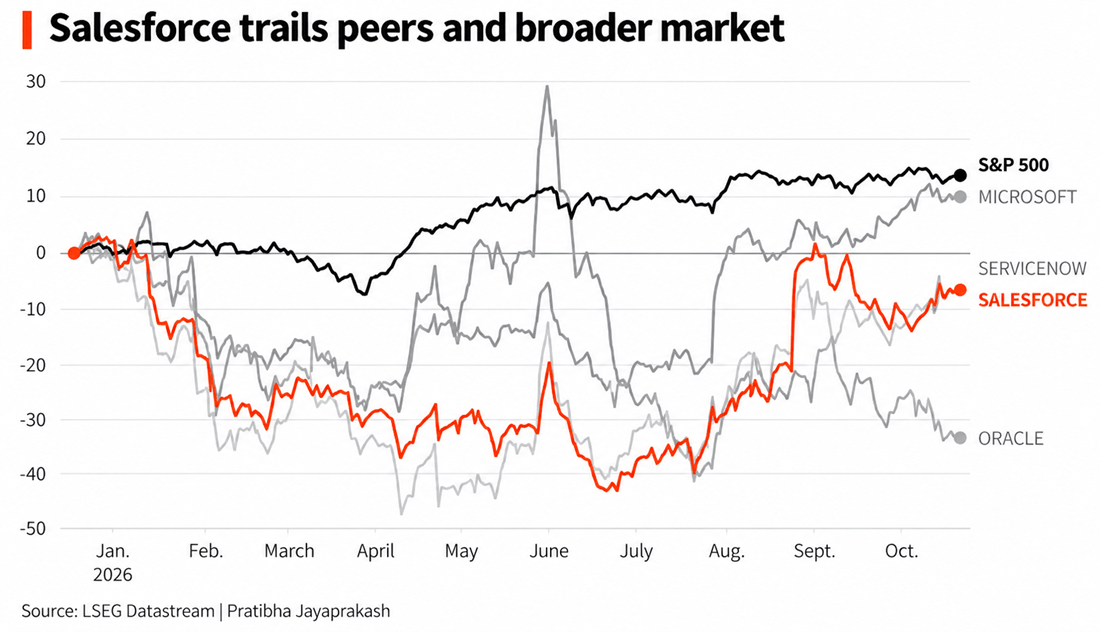
Our reading of this development is that customer engagement is becoming an increasingly important part of broader software platforms. For app teams, it also creates a useful moment to review what they need from their messaging provider: functionality, cost, integration requirements, and day-to-day support.
For this client, the decision to move predated the news. Its priorities were a better cost fit, relevant app expertise, and a migration approach the team could evaluate before committing to full integration.
One industry finding helps explain why platform costs deserve scrutiny.
Gartner’s 2025 Marketing Technology Survey reported martech utilization at 49%. In other words, respondents reported using roughly half of their stacks’ capabilities. This measures capability utilization — not the percentage of tools used or the share of spending wasted.
For a marketing team, that raises a practical question: how well does the platform’s cost match the capabilities the business actually needs?
The answer requires more than comparing subscription prices. Teams also need to account for implementation, specialist support, ongoing maintenance, and the work involved in moving.
That combination mattered here. The customer explicitly welcomed Reteno’s app focus. Its previous migration to Braze had required rebuilding every email despite expecting more help, making the support available during another move an important part of the decision.
Before investing engineering resources in full integration, the client wanted to see one existing Braze workflow operate in Reteno with real users.
Together, the teams selected the workflow and agreed on the share of users who would receive its communications through Reteno. Reteno recreated the emails, required personalization, contact data, and workflow for that scenario.
Reteno’s team then added blocks and webhooks to the existing Braze workflow. These created contacts in Reteno and passed the attributes and onboarding events needed to run the test.
The selected audience share received the workflow’s emails through Reteno, while the remaining users continued through the existing setup. No changes to the client’s app or backend were required for this pilot.
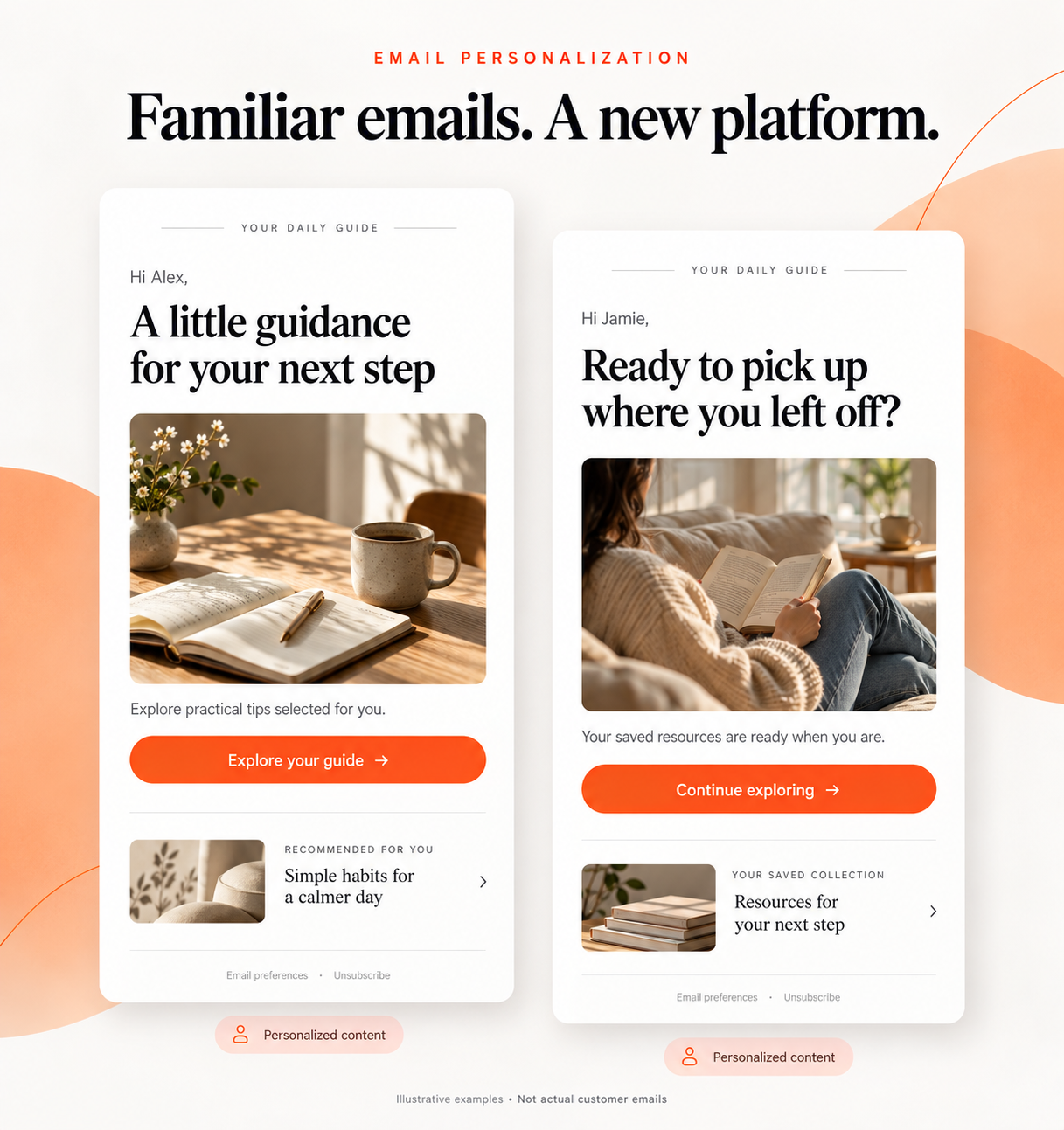
The client’s involvement was limited to agreeing on the scenario and audience share. Reteno handled the technical implementation on both platforms.
The pilot let the client evaluate the required communication logic and personalization before committing resources to the broader migration. Early customer feedback described open rates as comparable.
After the pilot, Reteno’s migration specialists transferred the existing email designs and copy and adapted their personalization using Velocity.
Dynamic emails rely on conditions that determine which content and profile values appear for each recipient. Reteno rebuilt these rules for its platform, preserving the required behavior alongside the visible design.
This adaptation accounted for a substantial share of the team’s work. The emails needed to function as intended, as well as look familiar.
The company’s automated communication workflows added another layer of work.
Reteno’s specialists recreated the workflows and migrated audience segments. During this process, they also refined the logic of complex scenarios so that they would operate according to their original purpose.
This distinction matters when evaluating a migration. Reproducing a workflow’s visible structure does not, by itself, establish that it will behave as intended in a different platform.
The team therefore focused on the communication behavior the client needed to preserve and adapted its implementation for Reteno.
The pilot required no client development work. The full migration did involve the client’s engineers, alongside testing and approvals from its team.
Reteno handled the messaging migration while the client took responsibility for integration, changes within its app and backend, data cleanup, and attribute backfills.
Client’s team:
Reteno’s team:
Client’s team
Reteno’s team
SDK installation and configuration
Email design and content migration
Event setup
Personalization logic adaptation using Velocity
Required app and backend changes
Workflow recreation and logic refinements
Data cleanup, attribute backfills, testing, and approvals
Segment migration, sending ramp-up, and ongoing support
This division kept the client’s team focused on the work that required its access and product knowledge. Reteno’s specialists took on rebuilding and adapting the messaging assets.
Reteno’s migration and integration teams supported the transition throughout. Its deliverability specialists also planned and monitored the sending ramp-up.
Moving the templates and journeys was only part of the transition. The company needed to return to its established sending volumes and prepare for a major promotional campaign.
Reteno’s deliverability team planned provider-specific sending batches, increased throughput, and monitored the ramp-up. This connected the technical migration with a practical plan for operating at the client’s scale.
Following the move, the app returned to its usual sending volumes in under three weeks. That period describes the sending ramp-up, rather than the entire migration project.
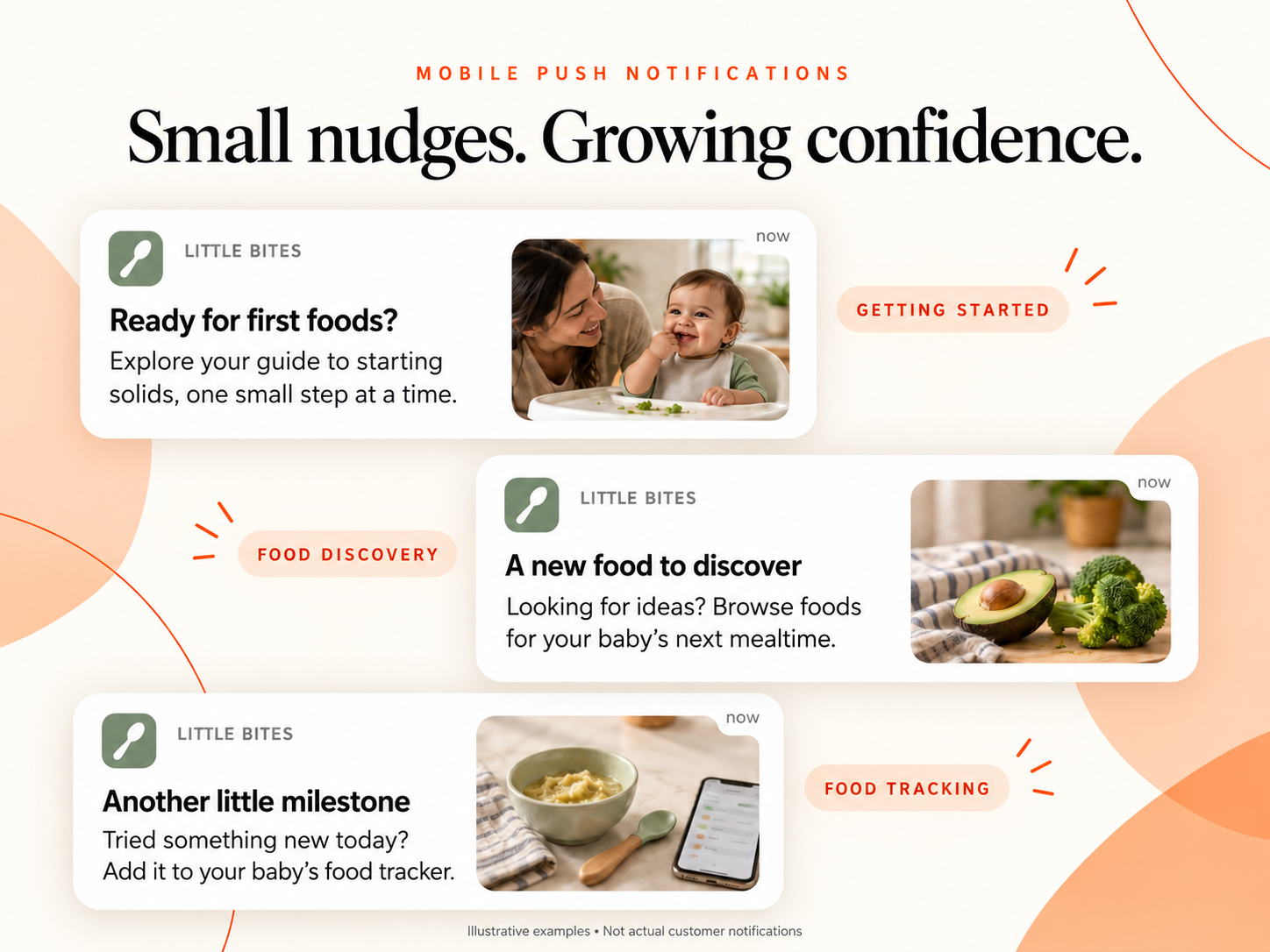
The company now runs email and mobile push through Reteno. Its email program sends millions of messages each month, with peak daily sending scale of up to two million. Required dynamic email functionality was preserved, and complex workflow logic was refined.
According to feedback shared with Reteno’s team, the client found the transition easier than expected after its previous migration experience.
This case highlights five questions to ask when discussing a move with a prospective messaging provider:
A platform decision involves both the destination and the effort required to get there. Understanding that effort makes it easier to assess whether a move fits your team’s budget, capacity, and messaging requirements.
For this app, the combination of a working pilot, hands-on migration support, app expertise, and a controlled ramp-up made the transition more manageable.
Considering a move from Braze? Book a Reteno demo to discuss a proof of concept, your existing messaging logic, and a migration plan for your sending volumes.



George Johnson
|
November 21, 2025
Дізнайтеся, як Promova переосмислила вивчення мов і збільшила свою спільноту до 17 мільйонів користувачів у всьому світі

Alex Anikienko
|
May 6, 2025
Дізнайтеся, як автоматичне A/B-тестування всього шляху користувача підвищує конверсії та дохід, постійно оптимізуючи кожне повідомлення без ручної роботи.

Чи достатньо переконливі ваші push-сповіщення? Перевірте за допомогою нашого безкоштовного інструмента попереднього перегляду. Одразу побачте, як сповіщення виглядатимуть на iOS та Android у розгорнутому й згорнутому вигляді.
Це ваша нагода вдосконалити повідомлення, щоб їх не лише помічали, а й відчували. Нехай кожен символ і кожне push-сповіщення ефективніше працюють на досягнення ваших цілей із залучення


